Posthole Sensor Performance in the USArray Transportable Array – Results from Testing and Initial Deployments in Alaska and Canada
Abstract:
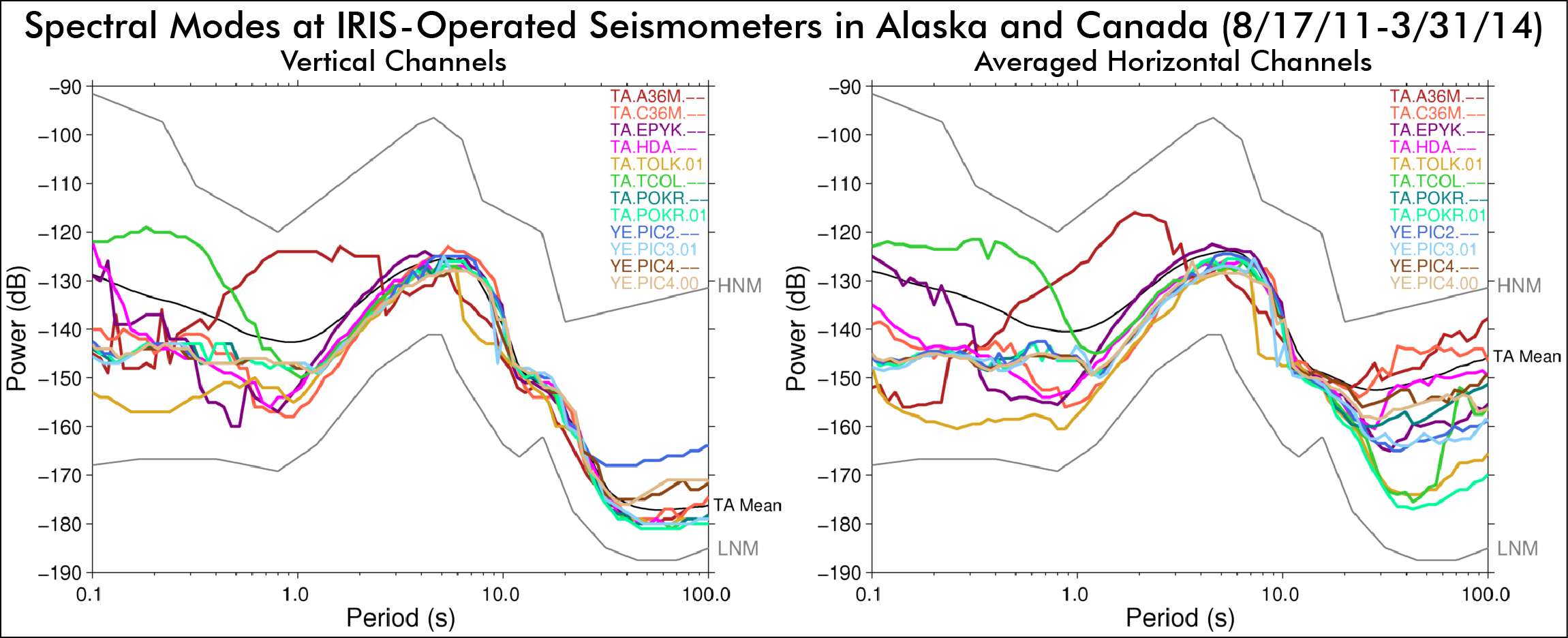
Current emplacement methods use a portable rig to auger or hammer-drill a hole 2.5-5 meters deep, in unconsolidated materials and permafrost, or by diamond bit coring 1-3 meters into rock. These emplacements are used at new TA installations and upgrades to existing AK network stations, and we compare their performance to the lower-48 TA vault installations. Through July 2014 there are eight TA and six upgraded AK stations operating under USArray; including five since at least October 2012, providing a detailed record of seasonal and/or site-specific behavior. We also discuss testing of different downhole configurations for 13 stations deployed at Piñon Flat Observatory in California since April 2014.
Station performance is presented and compared using probability density functions summed from hourly power spectral density calculations. These are computed for the continuous time series of seismic data recorded on each seismic channel. Our results show that the noise performance of seismometers in Alaska with cased- or core- hole installations sometimes exceeds that of the quietest TA stations in the lower-48, particularly for the horizontal channels at long periods. We analyze and discuss the performance of example stations, comparing to other nearby seismometers. We also examine the performance of AK stations before and after they have been converted from surface vault to posthole configuration. At Piñon Flat, different methods for packing the seismometer and clamping its cables within cased holes has guided development of field procedure. The new posthole emplacements generally improve upon the mean performance of the lower-48 TA vaults.