A Novel Permeable Reactive Barrier (PRB) for Simultaneous and Rapid Removal of Heavy Metal and Organic Matter – A Systematic Chemical Speciation Approach on Sustainable Technique for Pallikarani Marshland Remediation
Abstract:
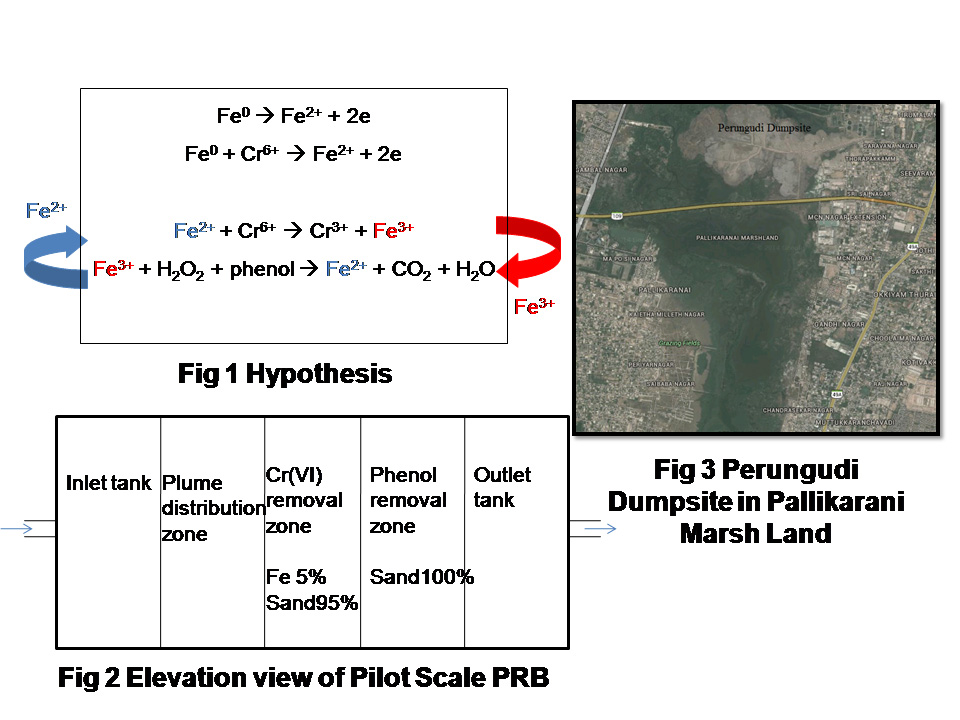
Preliminary batch studies were conducted at different modes i) concurrent removal ii) sequential removal. The sequential removal was found better for in-situ PRB applications. PRB was designed based on kinetic rate slope and half-life time, obtained from primary column study. This PRB has two segments (i)ZVI segment[Cr(VI)] (ii)iron species segment[phenol]. This makes treatment sustainable by (i) having no iron ions in outlet stream (ii)meeting hypothesis and elongates the life span of PRB. Sequential removal of contaminates were tested in pilot scale PRB(Fig 2) and its life span was calculated based on the exhaustion of filling material. Aqueous, sand and iron aliquots were collected at various segments of PRB and analyzed for precipitation and chemical speciation thoroughly (UV spectrometer, XRD, FTIR, electron microscope). Chemical speciation profile eliminates the uncertainties over in-situ PRB’s long term performance.
Based on the pilot scale PRB study, ‘field level PRB wall construction’ was suggested to remove heavy metal and organic compounds from Pallikaranai marshland(Fig 3)., which is contaminated with leachate coming from nearby Perungudi dumpsite. This research provides (i)deeper insight into the environmental friendly, accelerated, sustainable technique for combined removal of organic matter and heavy metal (ii)evaluation of the novel technique in PRB, which resulted in PRB’s increased life span (iii)designing of PRB to remediate the marshland and its ecosystem, thus save the habitats related to it.