A new multi-angle remote sensing framework for scaling vegetation properties from tower-based spectro-radiometers to next generation "CubeSat"-satellites.
Abstract:
As an alternative to traditional, mono-angle techniques, multi-angle remote sensing can help overcome some of these limitations by allowing vegetation properties to be derived from comprehensive reflectance models that describe changes in surface parameters based on physical principles and radiative transfer theory. Recent results have shown in theoretical and experimental research that multi-angle techniques can be used to infer and scale the photosynthetic rate of vegetation, its biochemical and structural composition robustly from remote sensing. Multi-angle remote sensing could therefore revolutionize estimates of the terrestrial carbon uptake as scaling of primary productivity may provide a quantum leap in understanding the spatial and temporal complexity of terrestrial earth science.
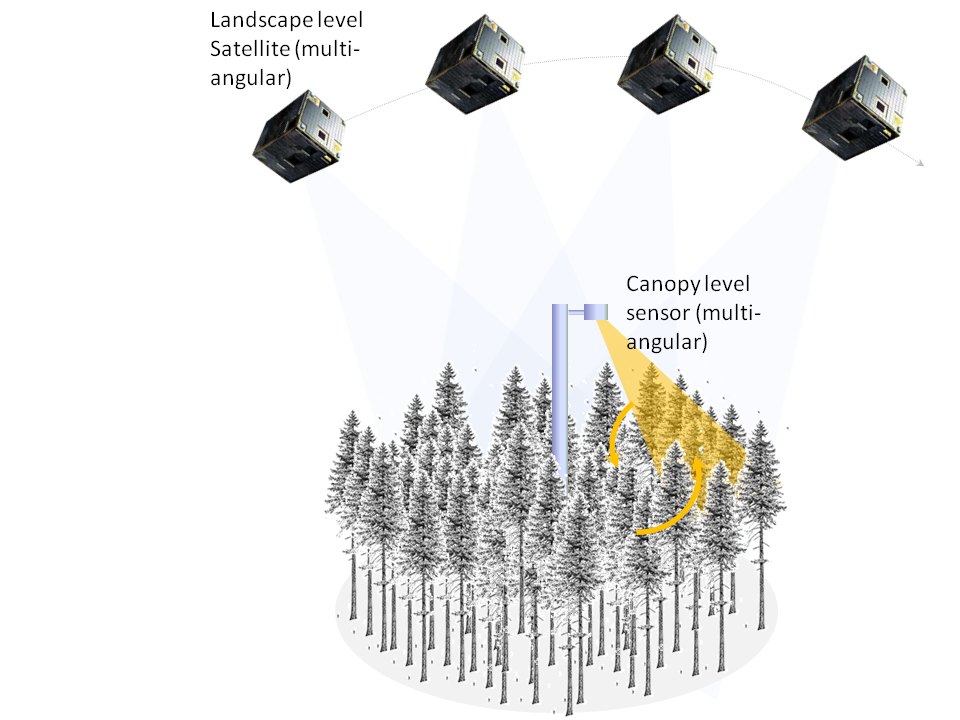
Here, we introduce a framework of next generation tower-based instruments to a novel and unique constellation of nano-satellites (Figure 1) that will allow us to systematically scale vegetation parameters from stand to global levels. We provide technical insights, scientific rationale and present results. We conclude that future earth observation from multi-angle satellite constellations, supported by tower based remote sensing will open new opportunities for earth system science and earth system modeling.