Novel Measurements and Techniques for Outlet Glacier Fjord Ice/Ocean Interactions
Novel Measurements and Techniques for Outlet Glacier Fjord Ice/Ocean Interactions
Abstract:
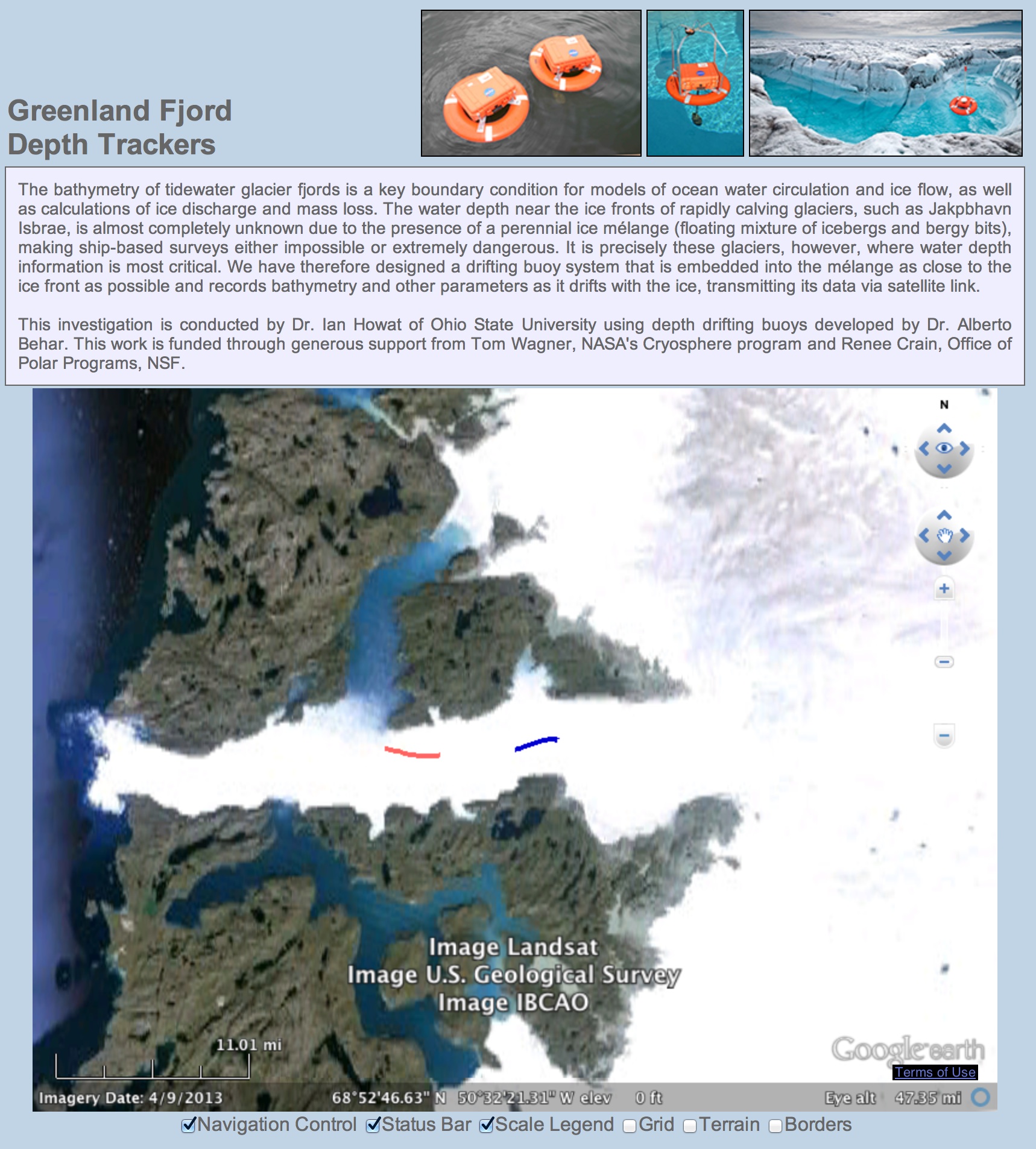
Glacier fjord bathymetry and conditions indicate that they play fundamental roles for outlet glacier dynamics and thus knowledge of these parameters is extremely beneficial to upcoming models that predict changes. In particular, the bathymetry of a fjord gives important information about the exchange between fjord waters close to marine-terminating glaciers and the shelf and ocean. Currently, only sparse bathymetric data near the ice fronts are available for the majority of fjords in Greenland. The challenge in obtaining these measurements is that the fjord melange environment is a terrible one for mechanical gear, or ship or any other kind of access. There is hope however, and this work focuses on novel ways of obtaining this data using a multitude of upcoming technologies and techniques that are now being tested and planned. The span of the techniques described include but are not limited to: 1) manned helicopter-based live-reading instruments and deployable/retriavable sensor packages http://www.motionterra.com/fjord/ 2) remote or autonomous unmanned miniature boats (Depth/CTD), and 3) UAV’s that either read live data or deploy small sensors that can telemeter their data (ice-flow trackers, image acquisition, etc.). A review of current results obtained at Jakobshavn and Upernavik Glaciers will be given as well as a description of the techniques and hardware used.