Air Quality, Energy Budget, and Offset Policy in South Africa’s Low-Income Settlements
Abstract:
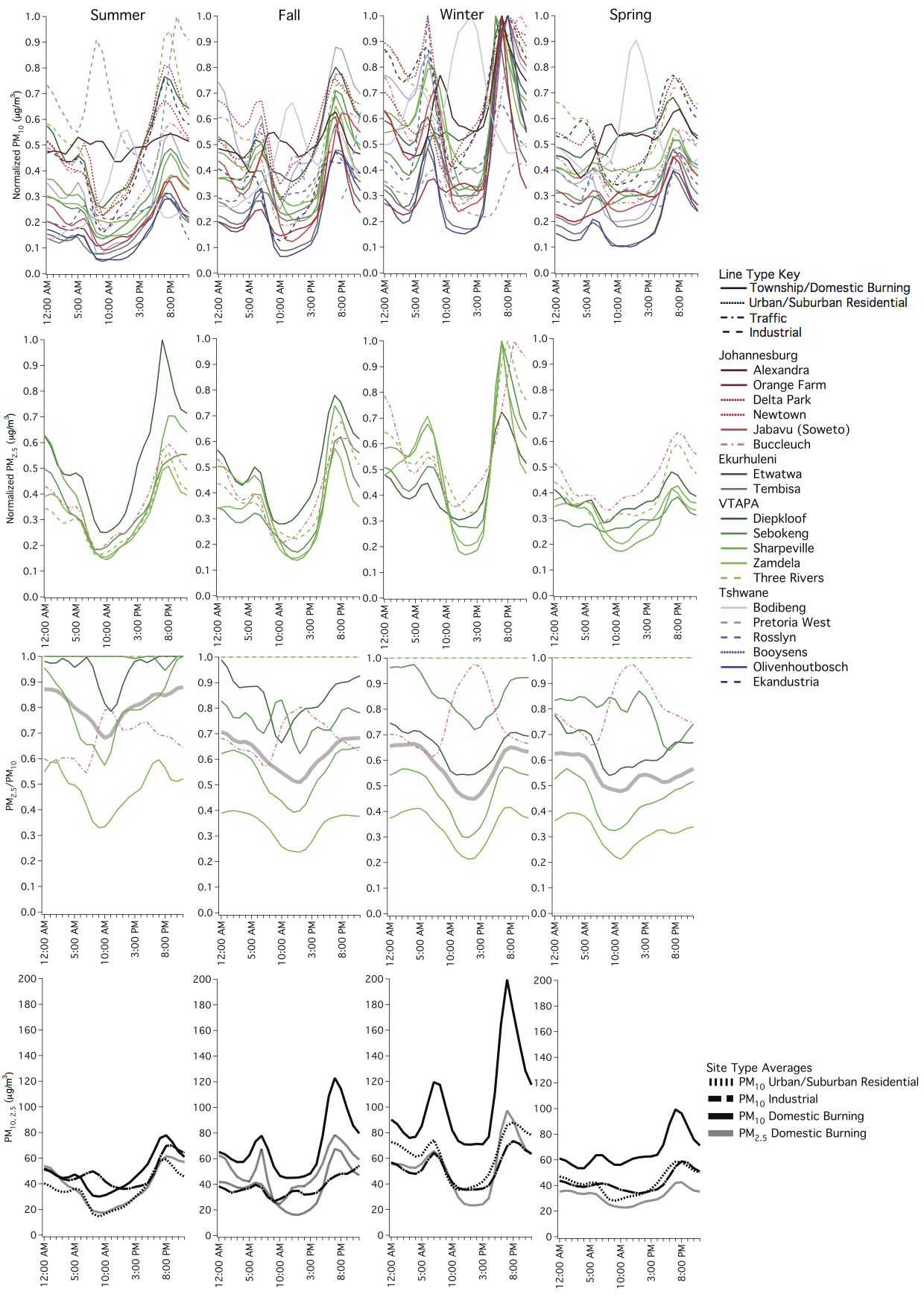
Here we analyze data from observations of human-atmosphere systems in: 1) 19 ground monitoring sites in Gauteng Province (Johannesburg and Pretoria), and 2) an intensive sampling campaign in a township in Mpumalanga Province (Industrial Highveld). From ground monitoring, we quantitatively describe seasonal and diurnal trends in PM10 and PM2.5 typical in low-income settlements as compared with industrial and developed suburban areas, and demonstrate the impact of low-income settlements on regional air quality. We also explore the implications of economic development in townships (increased household income, expanded commercialization and widespread electricity usage) on local and regional air quality. Data from the intensive township sampling study provides a seasonal energy budget for domestic burning in low-income settlements and suggests that indoor and ambient air quality are independent systems requiring unique interventions. We conclude with a preview of innovative strategies being developed by industry, government, and academic stakeholders for a not-like-for-like emissions offset policy in South Africa, focused on investments directly into low-income settlements that are aimed at reducing PM exposure.