Enhanced Methane Concentrations over the East-Siberian Arctic Shelf: Explanation Hypothesis Based on the Analysis of Data from Land, Marine, and Satellite Observations.
Abstract:
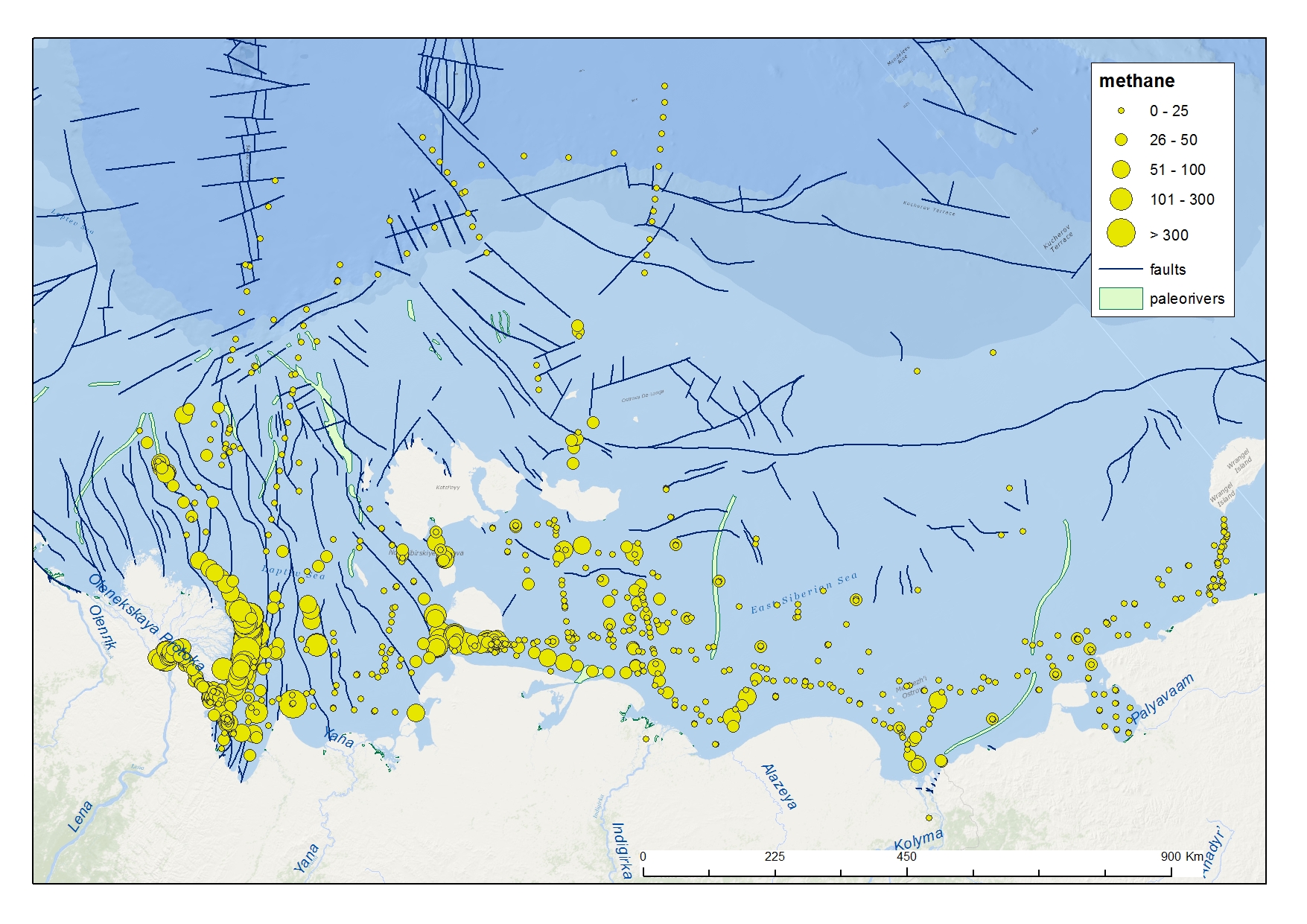
We analyzed data from land, marine and satellite observations and developed the conceptual model that consistently explains the atmospheric methane field in the Arctic in the context of the past, present, and future environmental changes. We explore the hypothesis, according to which enhanced concentrations of methane are associated with the geological history of ESAS. We hypothesized that observed enhanced methane venting is bound to unfrozen bottom sediments surrounding fault zones and paleo river beds, where permafrost never existed in the bottom sediments, while elsewhere on the inner shelf of ESAS sediments remain frozen and impermeable for gases since the last glacial maximum. We tested this hypothesis through analysis of the geological and paleo data, constructing the digital high resolution map of the fault zones and paleo river beds, comparing it with locations of the hydrographic stations where enhanced methane fluxes have been observed (Fig. 1), and performing spatial statistical analysis. We demonstrated that (1) the current rate of methane concentration rise over the ESAS does not exceed that in the rest of the Arctic and in the Northern hemisphere, and (2) the probability of methane concentrations being above the average decreases with the distance to the nearest fault zone or paleo river bed. These results do not support the hypothesis of the so-called “methane bomb” at ESAS.
Acknowledgement. This study is supported by the Russian Science Foundation, project 14-17-00037.