From Mantle to Microbe to Mollusc: How Animal-Microbial Symbioses Influence Carbon and Sulfur Cycling in Hydrothermal Vent Flows.
Abstract:
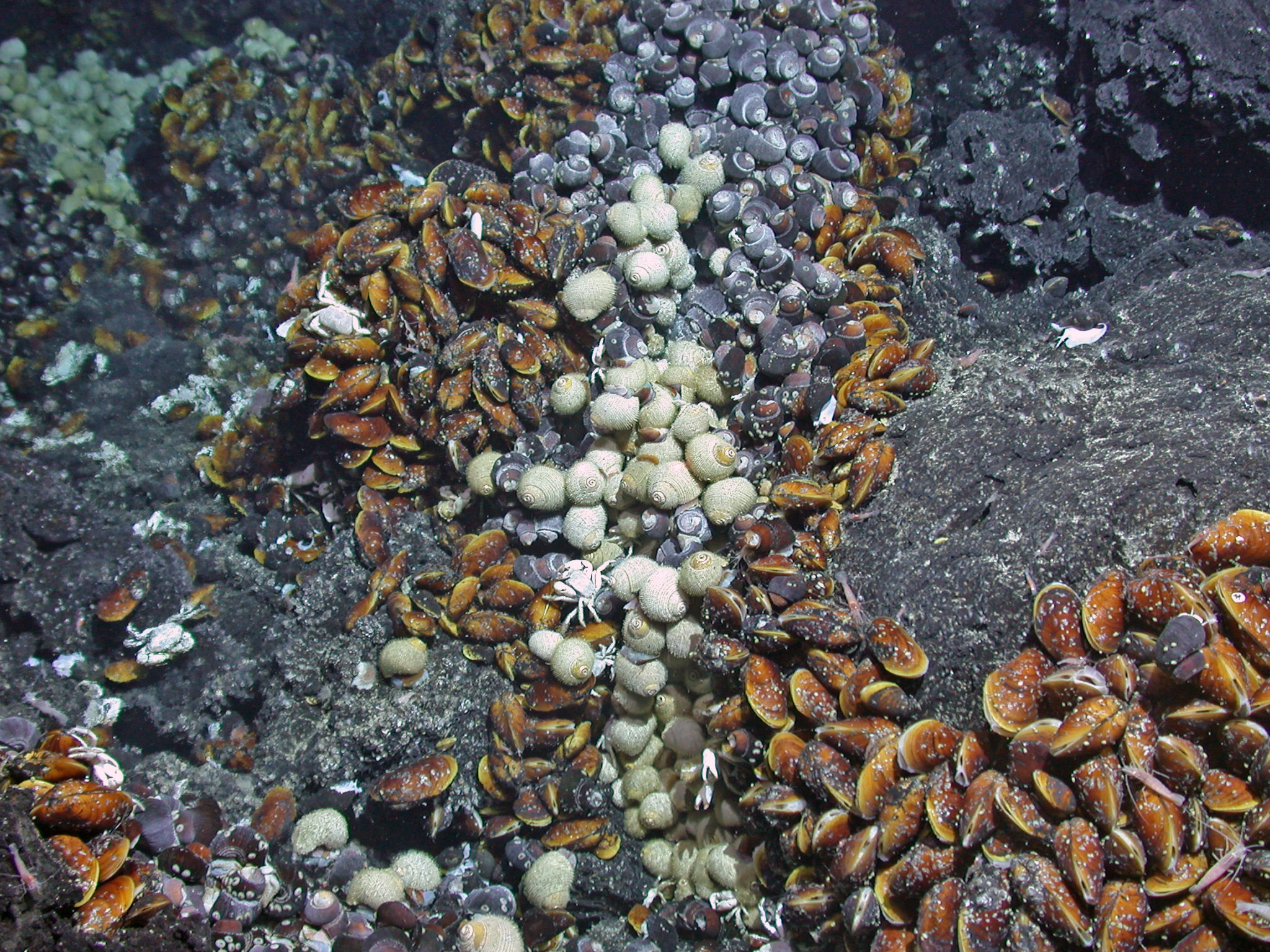
To address these questions, we used high-pressure, flow through incubations to study three symbiotic molluscs from the ELSC - the snails Alviniconcha and Ifremeria nautilei and the mussel Bathymodiolus brevior – at conditions mimicking those in situ. Via the use of isotopically labeled inorganic carbon, shipboard mass spectrometry and voltammetric microelectrodes, we quantified the production and consumption of different sulfur compounds by each of these symbioses. We established that the uptake and oxidation of either sulfide or thiosulfate could -to varying degrees- support carbon fixation in all three species. Notably, we also observed that some symbioses excreted thiosulfate and polysulfides under sulfidic conditions, suggesting that these symbioses are a source of partially oxidized sulfur species in the environment. We further observed spatial disparity in the carbon fixation rates among the individuals in our incubations that have implications for the variability of productivity in situ.Collectively, these data reveal that thiosulfate can support net autotrophy, and may be an ecologically important energy source for vent symbioses. Furthermore, symbioses-mediated sulfur transformations may influence the ecology of the free-living community by governing the production and consumption of reduced sulfur species in this habitat.