Friday, 4 November 2005 - 12:50 PM
606b
Nonthermal Inactivation of Escherichia Coli and Listeria Innocua in Apple Cider Using a Novel Ultraviolet Light Apparatus
David J. Geveke, Food Safety Intervention Technologies Research Unit, USDA Eastern Regional Research Center, 600 E. Mermaid Lane, Wyndmoor, PA 19038
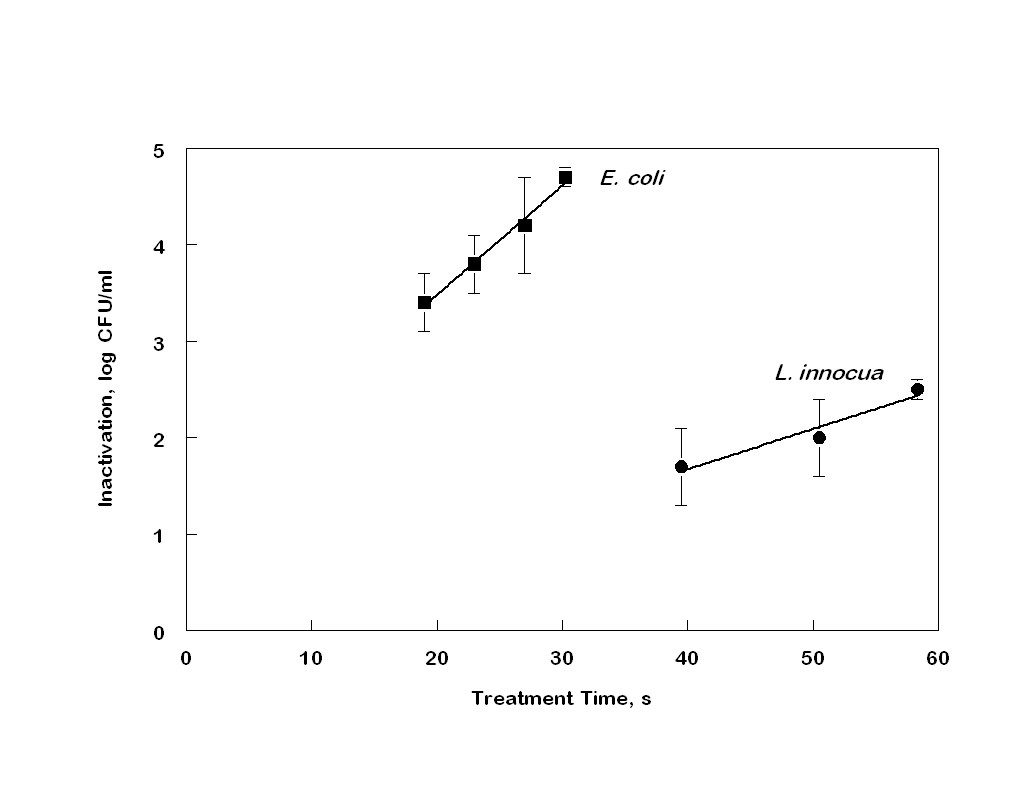
Apple cider, inoculated with bacteria, was processed using an ultraviolet (UV) apparatus that is simple and effective. The apparatus consisted of a low pressure mercury lamp surrounded by a coil of UV transparent tubing. Cider was pumped through the tubing at flow rates of 27 to 83 ml/min. The population of Escherichia coli K12 was reduced by 3.4 log after being exposed for 19 s at a treatment temperature of 25 C. The population of Listeria innocua, which was less sensitive to UV, was reduced by 2.5 log after being exposed for 58 s at 25 C. The electrical energy for the process was 34 J/ml and is similar to that for conventional thermal processing. UV processing has the potential to improve the safety and extend the shelf life of apple cider while maintaining more of the fresh-like qualities of the cider compared to thermal processing.
See more of #606 - Nonthermal Food Processing (T9018)
See more of Topical 9 - Food Engineering
See more of The 2005 Annual Meeting (Cincinnati, OH)