Monday, November 5, 2007
141l
Planning And Scheduling In Manufacturing With Perishable Resources
Decision-making in manufacturing occurs at multiple levels ranging from high level strategic decisions to low level shop-floor decisions. Typically, strategic decisions are meant for longer time horizons (months to years) and scheduling decisions are made for day to day operations of the plant. In the presence of different time scales, the decisions are taken in a hierarchical fashion to overcome the intractability of a combined large problem. Nevertheless, the controls/ decisions at different levels of decision-making affect one another. In most cases, the downward flow of information, from higher to lower level problems is more important than the upward flow. In this work we are studying the nature of information that needs to be transferred between the levels. We also want to understand the degree of abstraction required to represent this information in a compact and meaningful way. For this purpose, we are looking at a case study of the perishable resource problem where the upward flow of information is vital. The term ‘perishable resource' represents a machine or tool group that facilitates production and is amenable to breaking or getting consumed. The time scales of the breaking of resource are comparable with the time scales of production. Such systems are found in building materials industry, semiconductor equipment, printing industry etc. In the presence of breaking rate uncertainty and large replenishment lead times, an optimal safety stock is required. An added challenge arises if the ageing of the resource is dependent on the jobs that are scheduled on the resource. In this case decisions govern the uncertainty. As the basis of our study, we choose the manufacturing of ‘stone veneer' which is an artificial stone used in building facades and housing interiors. Stone veneer is made by pouring concrete into a mould and letting it set/cure for a day. Therefore on a given day the quantity of stones produced is limited by the number of moulds in the facility and there are thousands of moulds in the facility. The mould may facilitate production of different colors of stones but it needs to undergo specific treatment for the same. While a transition from light stone color grade to dark is straight forward, the transition from dark to light causes many lost runs and should be avoided. Mould, in this case, is the perishable resource and needs replenishment according to the production schedule. The new mould availability is limited and a large penalty is incurred if the moulds are idle. The mould ages differently with different colors and a transition from one color grade to another causes it to deteriorate faster. The machine that is used for pouring, has limited capacity. The mould life, though affected by the grade allocation decisions, is uncertain. The firm has the following objectives in the order of importance,
- Keep up with the demand for product (stone veneer) which is prone to seasonality and uncertainty
- Have an optimal resource (mould) re-order policy in the face of uncertain resource life, to satisfy the production schedule
- Minimize the breakage rate of the resource (mould) by optimal allocation of resource
We, thus establish a bi-layer problem (fig. 1), with mould reorder and production scheduling as the high level decisions in monthly buckets. The color grade transition, i.e. how many moulds to allocate to a particular stone color grade, is the lower level scheduling decision considered daily. The relevant downward information contains the number of incoming new moulds and the production targets for the month while the upward information contains the age distribution of the resources at the end of the month to facilitate optimal re-ordering and feasible production schedules. If the entire problem were to be solved as one big problem, the presence of multiple time scales would make it computationally intractable. The complexity can be reduced greatly by making use of the hierarchical structure of the problem.
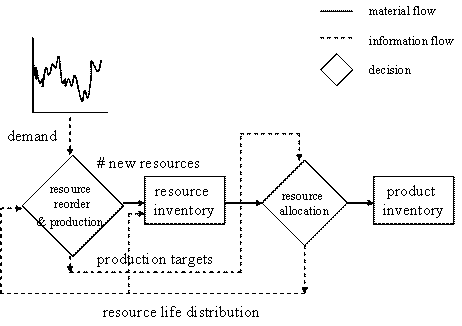
Fig. 1: Schematic representation of the bi-layer decision-making problem
We propose to solve the higher level problem using (ADP) Approximate Dynamic Programming techniques to account for demand uncertainty while the higher complexity and large number of details in the low level problem warrant a simulation treatment. This decomposition is the case when the information from one level to other becomes vital. Although the downward information is straight forward, the resource age distribution would be a big piece of information, especially in the presence of large number of moulds. This would result in a very big state space for the high level ADP problem. Therefore, compact representation of the mould life distribution is the key to solving this problem. We propose to use parameterization like moment equations or combinations of standard distribution functions to achieve the feature extraction in upward information flow. The above problem can be summarized as a ‘Perishable resource procurement and allocation problem' which is applicable to any manufacturing system which involves frequent breaking of the resource. The problem has two unique features. Firstly, the information flow in both the directions is vital which begets the need for judicious information representation. Secondly, the concept of uncertain resource availability makes it a ‘resource inventory control problem' which may apply to several industries. As per our knowledge, this problem has not been reported in the literature yet. To gain some theoretical perspective, we reviewed literature on problems with similar underlying features. The statistical inventory control problems recommend an (s,S) type order up to policy. The mould reorder decision should exhibit similar structure. Perishable inventory problem [1] is widely studied but there are two stark differences from the proposed problem. Firstly, demand for product causes the resource to perish and not the lack of it. Secondly, the way the resource perishes depends on the way it is allocated between jobs. Alternative view on resource allocation problems is provided in the multi-dimensional news-vendor type formulations proposed in [2]. The authors consider an optimal mix of dedicated and flexible resources to fulfill the demand that is uncertain. These studies provide good heuristics for the solution of the low level scheduling problem. In [3], the authors have extended efforts toward understanding the interaction between different levels of decision making.
With the above mentioned insights, we propose a two-fold contribution in this work. We address the key issue of information handling in multi-scale problems, more specifically, the planning and scheduling problems. We also introduce and present formulations for the ‘perishable resource inventory control problem' and lay stepping stones for research in this area. Overall, we address the problem of handling uncertainties at different levels of the supply chain for optimal decision-making. [1] Haijema R., J. van der Wal and N. M. van Dijk, Blood Platelet Production: a multi-type perishable inventory problem, Operations Research Proceedings, 2004 [2] Harrison, J. M. , Van Meighem, Multi-resource investment strategies: operational hedging under demand uncertainty, European Journal of Operational Research, 1999 [3] Chen, W., K.S. Decker, Managing multi-agent coordination, planning, and scheduling, Proceedings of the Third International Joint Conference on Autonomous Agents and Multi-agent Systems, 2004
See more of Computing and Systems Technology Division
See more of The 2007 Annual Meeting