
 Google
 Yelp
 Facebook
 Twitter
 ChEnected
258102 Comparative Analysis of the Structure and Chemical Nature of Carbon Blacks and Diesel Soot
Diesel particulate matter (DPM) in the atmosphere is considered a major cause of environmental problems such as change in the atmospheric heat balance and interference with photosynthesis [1], as well as of many adverse health effects related to the respiratory system [2]. Structural analysis and chemical characterization of the DPM aggregates are important to improve the fundamental understanding about the relationship with their oxidation from diesel particulate filters (DPFs) [3]. This is a highly challenging problem due to the complex structure of the heavy fuel-derived carbonaceous materials [4]. Therefore, studies on detailed structure and chemical analysis of carbonaceous materials, as well as the correlations between various structural properties are lacking.
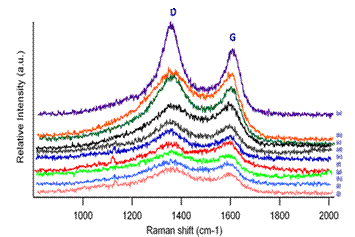
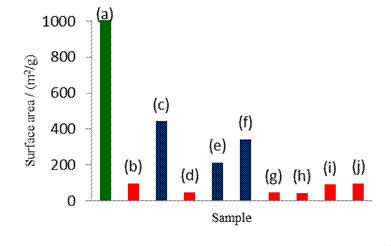
In this work, structure and chemical nature of ten commercially available carbon black materials and diesel engine soot are investigated using X-ray Diffraction (XRD) and In Situ- XRD studies, Nitrogen sorption studies, Scanning Electron Microscopy (SEM), Transmission Electron Microscopy (TEM), Fourier Transform Infrared (FT-IR) spectroscopy, Raman spectroscopy, and Energy Dispersive X-ray (EDX) spectroscopy (see Figure for examples). On the structural side, we have studied the nature of aggregates, morphology and size of the primary particles, orientation and spatial distribution of the crystallites having the graphitic structure, total surface area, pore size distribution and pore volume. On the chemical side, we have studied the elemental composition by EDX spectroscopy and molecular vibrations by FT-IR. Furthermore, the chemical activity of these samples is studied using Thermo Gravimetric Analysis (TGA) under an oxidative environment. Our comprehensive study has revealed some novel and unique correlations between the structure and chemical nature of the carbon blacks and diesel soot.
|
References:
(1) van Setten, B.A. A. L., Makkee, M., and Moulijn, J.A., Catalysis Reviews: Science and Engineering, 2001, 43(4), 489-564.
(2) Dockery, D.W., Cunningham, J., Damokosh, A.L., Neas, L.M., Spengler, J.D., Koutrakis, P., Ware, J.H., Raizenne, M., and Speizer, F.E., Environmental Health Perspectives, 1996, 104, 500-505.
(3) Ishiguro, T., Takatori, Y., and Akihama, K., Combustion and Flame, 1997, 108, 231-234.
(4) Apicella, B., Barbella, R., Ciajolo, A., and Tregrossi, A., Chemosphere, 2003, 51, 1063-9.
(5) Muller, J.O., Su, D.S., Jentoft R.E., Wild U., and Schlogl, R., Environmental Science & Technology, 2006, 40, 1231-1236.
See more of this Group/Topical: Catalysis and Reaction Engineering Division