
 Google
 Yelp
 Facebook
 Twitter
 ChEnected
265102 Hydrogenation of Succinic Acid Using Ruthenium Nanoparticles Embedded Catalysts
Hydrogenation of Succinic Acid Using Ruthenium Nanoparticles Embedded Catalysts
Sang-Ho Chunga, Hee-Jun Eoma, Min-Sung Kima and Kwan-Young Leea,b,*
a Department of Chemical and Biological Engineering, Korea University, 5-1, Anam-dong, Sungbuk-gu, Seoul, 136-701, Republic of Korea
b Green School, Korea University, 5-1, Anam-dong, Sungbuk-gu, Seoul, 136-701, Republic of Korea
There has been much effort on the preparation of noble metal nanoparticles for the effective heterogeneous catalysis because current synthetic technology in nanoparticles is well established. However, the synthesized metal nanoparticles have been not yet fully applied to the variety of special catalysis because its born-nature shortcomings such as aggregation in the reaction conditions, loss of surface facets, and deactivation. Therefore, up to date, the noble metals were loaded on structure-enhancing support materials like SiO2 and Al2O3 using several preparation method such as homogeneous deposition precipitation and dry or wet incipient wetness method. In several chemical reactions, the reaction conditions of hydrogenation in C4 chemicals are very severe condition and the catalysts should have durability for the high temperature and pressure.
Ruthenium is very well known active material in the hydrogenation of several chemicals and several papers discussed its size-dependent surface atomic numbers of its hydrogenation activity. Here, we attempt to convert succinic acid (SA) into g-butyrolactone (GBL), 1,4-butanediol (BDO) and tetrahydrofuran (THF), which is an alternative pathway of petroleum based chemicals because SA can be produced by cellulose-based biomass materials (Scheme 1).
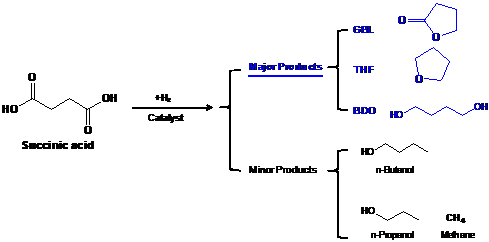
Scheme 1. Conversion pathway of hydrogenation of succinic acid.
The ruthenium nanoparticles (Ru NPs) were synthesized by polyol method and directly embedded in SiO2 support materials by modified sol-gel method. The size of Ru NPs was easily controllable by changing the the synthetic temperature and a bright-field transmission electron microscopy of synthesized ruthenium nanoparticles directly reveals the uniformity of the spherical nanoparticles (Fig. 1). In the modified sol-gel method, the growth kinetics in SiO2 supports were divided into three elements and the structure of synthesized SiO2 cluster just after drying process showed ballistic-vold monomer clusters which mean this growth of silicate systems occurred predominantly by the condensation of monomers with growing clusters and the mean free path of the aggregating species was large compared to the cluster size.
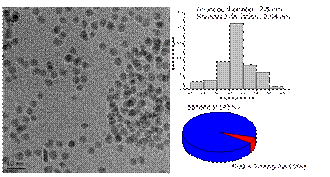
Fig. 1. Bright field transmission electron microscopy (BF-TEM) image of synthesized ruthenium nanoparticles. TEM image was taken using a Philips FEI Technai G2 F30 machine, operated at 300 kV. The average particle size and standard deviation and shape of ruthenium nanoparticles were calculated by counting 100 particles from TEM images.
The prepared Ru NPs/SiO2 catalysts by the combined polyol and modified sol-gel method had another advantages for securing the enough pore size up to 8.9 nm and pore volume to 1.17 cm3/g. This was obtained by volume expansion phenomena of fluorine-catalyzed precipitation and the remained PVP in the SiO2 supports just after drying process and this was confirmed by nitrogen adsorption and desorption analysis (Fig. 2).
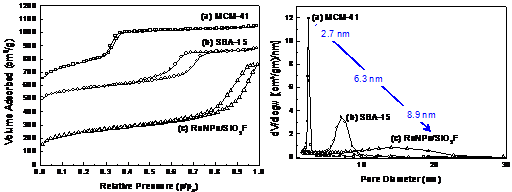
Fig. 2. Nitrogen adsorption-desorption isotherms (left) and pore size distribution (right) of prepared materials; (a) MCM-41, (b) SBA-15 and (c) RuNPs/SiO2 catalysts. The nitrogen adsorption and desorption isotherms were measured at -195� using Micromeritics ASAP 2010 surface area analyzer. BET surface area was calculated from the BET plot and pore size distribution were calculated using the BJH method.
The catalytic activity of the prepared Ru NPs/SiO2 catalysts was tested for conversion of SA into GBL, BDO and THF and the reaction was carried out from 170 to 215� and filled with pure hydrogen at 100 bar. When the reaction temperature was 170�, the conversion of SA was slightly lower but selectivity towards BDO was relatively higher than other reaction conditions. However, the SA conversion significantly increased to 95% at 215� while the selectivity towards THF increased (Fig. 3).
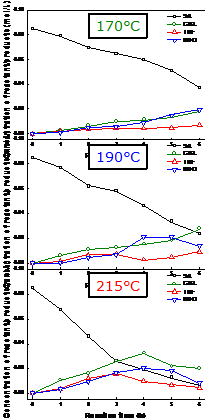
Fig. 3. Nitrogen adsorption-desorption isotherms (left) and pore size distribution (right) of prepared materials; (a) MCM-41, (b) SBA-15 and (c) RuNPs/SiO2 catalysts. The nitrogen adsorption and desorption isotherms were measured at -195� using Micromeritics ASAP 2010 surface area analyzer. BET surface area was calculated from the BET plot and pore size distribution were calculated using the BJH method.
Based on this work, GBL, BDO and THF could be produced by the hydrogenation of succinic acid using the newly synthesized Ru NPs/SiO2 catalysts. Furthermore, the conversion of SA and selectivity to GBL, BDO and THF was controlled by adjusting the reaction temperatures.
See more of this Group/Topical: Catalysis and Reaction Engineering Division