
 Google
 Yelp
 Facebook
 Twitter
 ChEnected
274149 Quantum Yield in a Photo-CREC Reactor for Hydrogen Production
Quantum Yield in a Photo-CREC reactor for Hydrogen Production
Salvador Escobedoa, Benito Serranob, Hugo de Lasaa,*
a Western University, London, N6A 3K7, Canada
b Universidad Autonoma de Zacatecas, Zacatecas, 98000, Mexico
*Corresponding author: hdelasa@eng.uwo.ca
Introduction
Nowadays, photoelectrodes and photocatalysts are being developed for water splitting to produce hydrogen. The goal of this study is to demonstrate the feasibility of water splitting for hydrogen production through a Photo-CREC reactor, using a sacrificial agent and a modified Platinum loaded semiconductor of DP25 (TiO2) [1] It is also the objective of this study determining optimum Pt loadings, as well as quantum yields [2 and 3].
Experimental
Degussa P25 (TiO2) was impregnated with chloroplatinic acid. This step was followed by calcinations and reduction. A 2.7-2.85 eV reduced band gap was observed for the modified semiconductor using UV-Vis NIR spectrophotometer (see Figure 1). The prepared Pt doped photocatalysts were studied in a Photo-CREC-Water II. Macroscopic irradiation balances were performed for establishing absorbed irradiated energy (see Figure 2) and quantum yields.
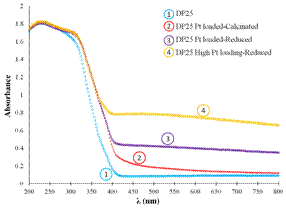
Figure 1. UV-Vis Band Gap
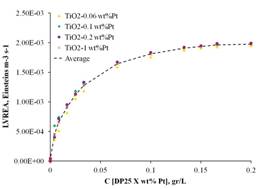
Figure 2. LVREA within the Photo-CREC reactor using a macroscopic balance
Results and Discussion
Impregnation of Pt on TiO2 leads to enhanced particle size distribution with reduction of particle agglomeration (see Figure 3), with better distribution of charges on the semiconductor. On the other hand, it is shown that Pt did not affect the anatase and rutile phases as well as the specific surface area of the DP25. Figure 4 reports hydrogen production as a function of contact time under free oxygen conditions and pH equals to 4. Runs were developed with excess of Ethanol as OH• scavenger reagent. Hydrogen free of oxygen was produced in all cases with 1wt% Pt on Degussa P25 yielding the best hydrogen production rates. Figure 5 reports quantum yields in a 6-liter Photo-CREC reactor with Ethanol at 2% v/v concentration and different Pt loads on Degussa P25 (see Table 1). It is proven that Ethanol helps averting h+ and e- recombination, with the highest 7.86% quantum yields obtained between 1-6 hours of irradiation.
Table 1 Reaction Rate at different Loading of Pt on TiO2 and pH=4
Catalyst | Reaction rate a (mol h-1 gcat-1) | Quantum Yield (%) |
|
H2 Production |
| ||
DP25 0.06wt% Pt | 88.92 | 1.82 | |
DP25 0.1wt% Pt | 142.26 | 2.92 | |
DP25 0.2wt% Pt | 200.06 | 4.12 | |
DP25 1wt% Pt | 382.97 | 7.86 | |
a. Reaction conditions: 298 K, 1 atm.
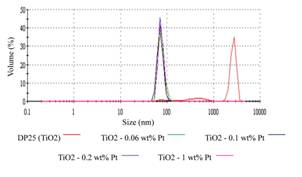
Figure 3. Particle Size Distribution among different Catalyst
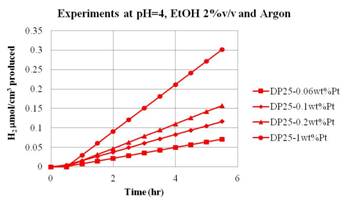
Figure 4. Hydrogen Production under pH=4, Ethanol 2%v/v and Atmosphere of Argon.
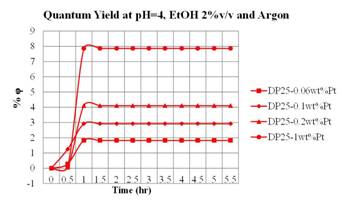
Figure 5. Hydrogen Quantum Yield in different catalyst
References
1. P. Alexia, K. Dimitris I. et al. Cat. today. 124 (2007) 94
2. B. Serrano, A. Ortiz, J. Moreira and H. de Lasa, Ind. Eng. Chem. Res.48 (2009) 9864
See more of this Group/Topical: Environmental Division