
 Google
 Yelp
 Facebook
 Twitter
 ChEnected
291483 Mixed Fuel Combustion Synthesis of Yttrium Aluminum Garnet (YAG)
Introduction: High quality material is required for the proper functioning of devices using YAG:Ce. Combustion synthesis is one potential method to create YAG, but requires more optimization. We have considered optimizing the process by using multiple fuels to produce YAG. The fuels have different strengths: Citric acid (CA) distributes the dopant well within YAG solution, while urea produces high flame temperature, crystallizing YAG upon formation. We hope mixing fuels will produce crystalline YAG:Ce1% with a high fluorescence intensity due to well distributed dopant in the crystal.
Objectives: We hope to determine the effects of combusting YAG:Ce1% using a mixture of citric acid (CA) and urea in six various fuel ratios on YAG:Ce1% properties and determine the effects of post-synthesis heat treatment (HT) on the fluorescent intensity and crystal structure of YAG:Ce1%.
Materials and Methods: Photoluminescent spectroscopy (PL) and x-ray diffraction (XRD) were conducted on the resulting materials to determine the effect of synthesis conditions on the properties of the product. The PL compared the intensity of the fluorescence and XRD compared the crystal structure of the synthesized YAG:Ce1%.
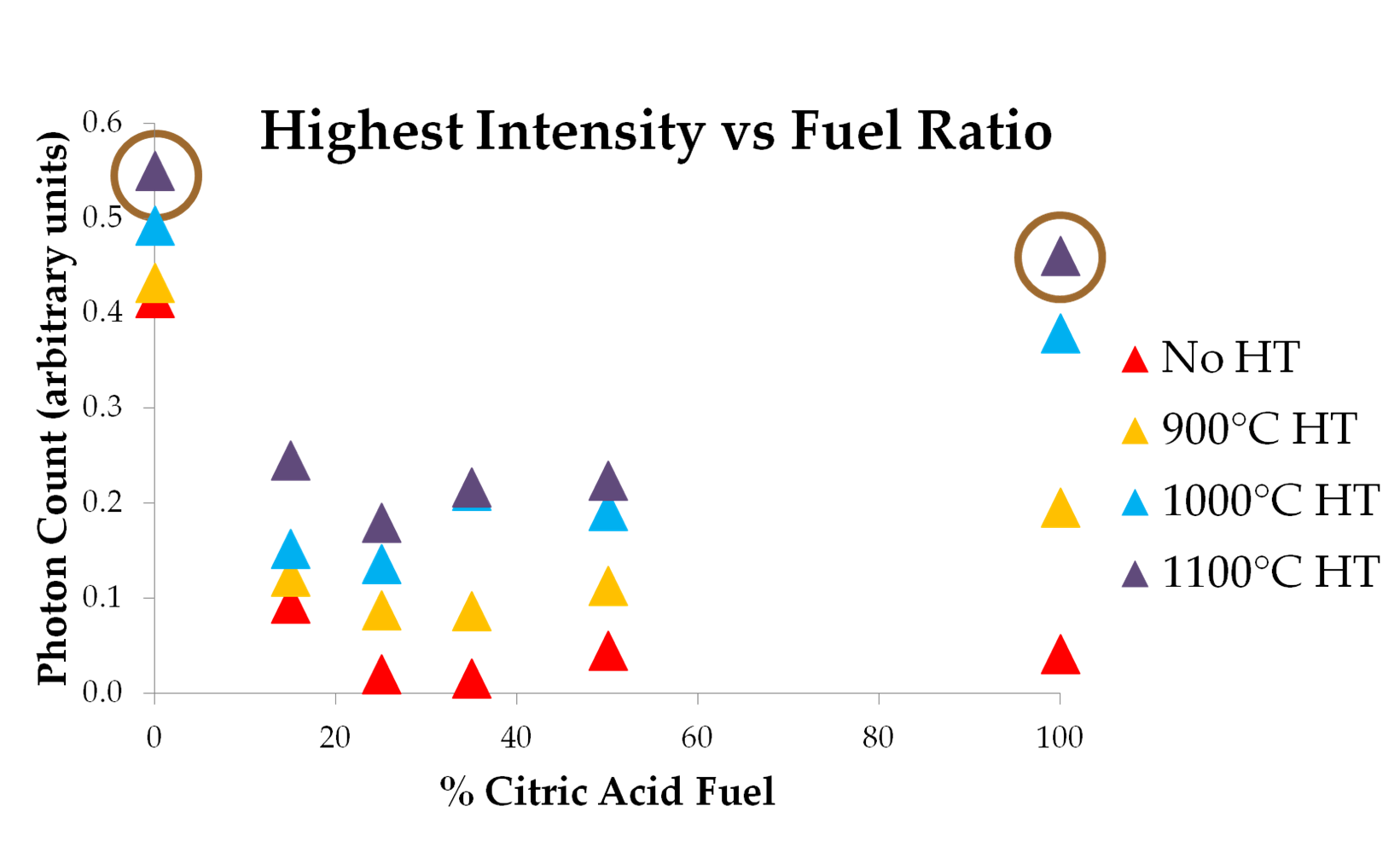
Figure 1. Highest two PL values are circled. Both values appeared in pure fuels (100% urea and 100% CA).
Results and Discussion:
YAG:Ce1% produced with 100% urea has
• the highest PL intensities for all HT studied
• the most crystalline material pre-HT
YAG:Ce1% produced with 100% CA has
• the second highest PL intensity, after 100% urea
• no crystalline material pre-HT
YAG:Ce1% produced with a mixture of fuels has
• a range of PL intensities, with no specific trend
• increasing initial (pre-HT) crystallinity with increasing percentages of urea fuel used
As HT temperature increases
• PL intensity increases
• crystalline structure within material increases
Conclusions: The target properties of YAG:Ce1% are optimized when 100% urea is used during combustion. Also, mixing fuels did not improve the measured results.
Acknowledgements: The authors would like to thank Sarah Gollub, Braxton Brakefield, and Jeremy Beam for assistance with characterization, Vanderbilt University for providing this opportunity, and the National Science Foundation for funding (grant: DMR‐1005023).
See more of this Group/Topical: Student Poster Sessions