
Biomass pyrolysis, slow or fast, catalytic or non-catalytic, will produce 15-30% solid residue (typically, a mixture of coke and char). Coke is the solid carbon produced through the secondary pyrolysis of volatile matters, whereas char is the solid residue obtained by emitting volatile matters [1]. The formation of coke is considered as a reason for catalyst deactivation and results in undesirable product selectivity in biomass pyrolysis [2]. However, few studies have focused on studying catalyst deactivation from the perspective of comparison of char and coke from different biomasses. The objective of this study is to characterize coke and char with respect to overall content, gasification reactivity, C and H contents, catalyst surface area changes, and the effect on catalyst performance.
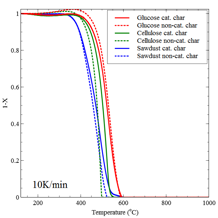
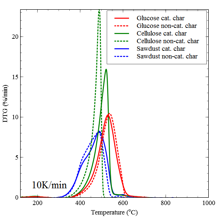
In this study, glucose, cellulose and sawdust from pine bark were chosen as biomass feedstocks and ZSM-5 was used for catalytic pyrolysis experiments. Char samples were prepared in a tube furnace (slow (catalytic) pyrolysis) and in a conical spouted-bed reactor (fast (catalytic) pyrolysis. In order to study the reactivity of char and coke, gasification was carried out through thermogravimetric analyses (TGA) in air and CO2 at different heating rates. Figure 1 shows a gasification result of chars from various biomasses in TGA. Under the same pyrolysis condition, glucose chars are more reactive than sawdust chars, due to the lower carbon content. The catalyst has little effect on chars from catalytic pyrolysis of glucose and sawdust. However, the gasification results of the catalytic and non-catalytic chars from cellulose look very different. Further study will be performed and a detailed discussion about the experiment observation will be presented.
|
|
Figure 1 Gasification of chars from slow (catalytic) pyrolysis of different biomasses (glucose, cellulose and sawdust)
| |
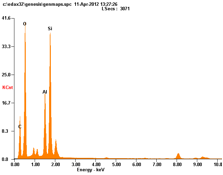
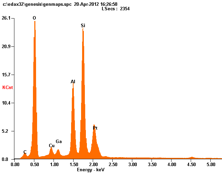
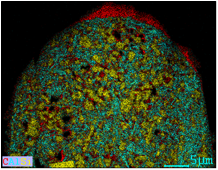
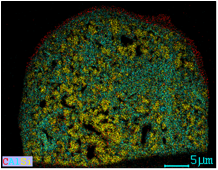
In addition, the content of char and coke are obtained using elemental analysis (Table 1). The change of the catalyst surface area after pyrolysis is analyzed based on physisorption (BET). Images of char/coke and catalyst after pyrolysis are analyzed with scanning electron microscope (SEM) and focused ion beam (FIB) (Figure 2) and show significantly different patterns in carbon deposition on the catalyst surface, depending on the biomass pyrolized.
Table 1 Elemental analysis of different biomass compounds and chars (mol % dry basis)
| |||||
Biomass
| N | C | H | S | C:H |
Carbon
| 0.0562
| 8.1555 | 0.5199 | 0.0082 | 15.6878 |
Glucose
| 0.0063 | 3.1721 | 5.8272 | 0.0124 | 0.5444 |
Sawdust
| 0.0261 | 4.4880 | 6.0236 | 0.0201 | 0.7451 |
Glucose cat char
| 0.0169 | 1.4148 | 0.8596 | 0.0070 | 1.6458 |
Sawdust cat char
| 0.0450 | 1.2726 | 0.6702 | 0.0061 | 1.8989 |
Cellulose cat char
| 0.0052
| 3.4859
| 0.6702
| 0.0208
| 5.2016
|
Glucose non-cat char
| 0.0105
| 7.2392
| 3.7476
| 0.0251
| 1.9317
|
Sawdust non-cat char
| 0.0318 | 7.0368 | 2.9461 | 0.0315 | 2.3885 |
Cellulose non-cat char
| 0.0039 | 7.4541 | 2.4885 | 0.0165 | 2.9954 |
In this presentation, comparison of different chars from slow and fast catalytic/non-catalytic pyrolysis using different characterization tools will be shown. Differences of coke and char deposition in the catalyst surface and their potential effect on catalyst deactivation will be presented and discussed.
|
|
|
|
Figure 2 Comparison of catalyst pellets after catalytic pyrolysis of glucose (left) and sawdust (right) in FIB-EDX
| |
1. Miura, K.; Nakagawa, H.; Nakai, S.; Kajitani, S. Chemical Engineering Science. 2004, 59, 5261-5268.
2. Aho, A; Kumar, N. Eranen, K. Salmi, T. Hupa, M.; Murzin, D. Fuel. 2008, 87, 2493-2501.
See more of this Group/Topical: Catalysis and Reaction Engineering Division