
 Google
 Yelp
 Facebook
 Twitter
 ChEnected
325705 Long Chain Branching in Polyethylene By UV Irradiation
Rheological and structural modification of polyethylene (PE) has been an area of great interest. Most of the research done in this area has been focused on modifying the rheology and consequently the structure of the PE either by creating selective crosslinking or chain scission. These modifications are achieved through numerous chemical reactions (mainly peroxides and silanes) and high energy irradiation techniques including electron beams and gamma (γ) rays. Although crosslinks are capable of enhancing many structural properties, they do not improve other industrially important aspects such as processability. Long chain branching (LCB), on the other hand, is highly desirable as it can improve both the melt strength and the processability of the polymer. Long chain branches in PE have been created by using constrained geometry catalyst (CGC) systems. These catalysts produce long chain branched polyethylene (LCBPE) with a relatively narrow molecular weight distribution (MWD). Irradiation methodologies have also been employed to induce LCB in polymers by using ionizing irradiation. In this study, a novel reactive extrusion (REX) process was developed using ultraviolet (UV) photoinitiation to modify the rheological properties of a high density polyethylene (HDPE) copolymer with a relatively narrow molecular weight distribution (MWD) by inducing LCB. The UV radiation was selected due to availability, and relatively safe and inexpensive operating conditions employed. The modifications were performed to accommodate the following specifications: (1) to minimally change the molecular weight (MW) or MWD of the selected PE, and (2) to identify the effect of three important processing factors, namely, photoinitiator concentration, polymer flow rate (throughput), and screw speed, on the final rheological properties of the modified resin. A central composite response surface design was selected for the extrusion experiments. Three levels of photoinitiator (Benzophenone (BP)) concentration, flow rate (throughput), and extruder screw speed were selected. Extruder temperature and the intensity of the UV lamp were kept constant for all the experiments. Oscillatory shear and shear creep experiments were conducted to identify the linear viscoelastic (LVE) properties. Gel Permeation Chromatography (GPC) was further performed to investigate the molecular architecture of the resins and to verify the findings from the rheological studies.
Structural and Rheological Properties
A linear HDPE with a negligibly low amount of short chain branches was selected for this study. The Soxhlet extraction experiments showed an insignificant amount of gel in the structure of the modified resins. Oscillatory shear experiments were conducted to identify the changes in the LVE behaviour of the modified resins due to LCB. The Cross model was fit to the data obtained from oscillatory shear experiments to identify: (1) zero shear viscosity (ηo), (2) characteristic relaxation time (λ), and (3) power law index (n) of the modified and linear resins [1]. Estimates of ηo indicated an increase in zero shear viscosity of the resins. Zero shear viscosities increased to a maximum of 11,600 Pa.s from a starting value of 1,900 Pa.s (the increase was related to a higher extent of entanglement due to LCB, resulting in more physical obstacles for deformation, hence, higher viscosity). A quadratic model based on BP, throughput and BP2 was obtained for zero shear viscosity (see Figure 1). ηo scaled with both BP and BP2, but decreased with throughput (a thicker PE melt profile in the extruder lowered the effect/extent of irradiation). Characteristic relaxation time was used to identify the width of the Newtonian plateau and shear thinning region. “λ” increased from a starting value of 0.05 s to 4 s indicating a broader transition region (this was again related to a higher extent of entanglement due to LCB, and consequently a longer relaxation time). A model linear in BP (positive) and throughput (negative) was obtained for lambda (see Figure 2). At lower throughput, the residence time of the resins in the extruder is relatively higher, which leads to a higher free radical concentration, and consequently a higher degree of branching. A similar analysis was further applied to the power law index. An enhancement in the shear thinning behaviour was observed as “n” decreased from a starting value of 0.64 to 0.55 (related to a decrease in the hydrodynamic volume of the molecule with LCB). A model linear in BP content (positive), throughput (negative) and screw speed (positive) was obtained for the power law index (see Figure 3). Cole-Cole plots and van Gurp- Palmen plots [2] were constructed to further validate the earlier observations. The formation of LCB was clear in the Cole-Cole plots from a separation of the curves from those of virgin PE at lower frequencies (related to the increase in storage modulus with the extent of LCB, for PE with similar MWD). The van Gurp- Palmen plots showed lower loss angle values for the modified resins compared to the linear PE at the same complex modulus (|G*|). Also a point of inflection appeared in the transition zone, which became more enhanced as the extent of LCB increased (two inflection points for higher LCB content, creating a plateau region in the loss angle). Creep experiments conducted on selected samples further verified the zero shear viscosities obtained earlier. This was facilitated by fitting the Maxwell model to the creep data.
Molecular weight properties
Molecular architecture of the PE resins was evaluated by GPC. It was found that the polydispersity index values of the modified resins were similar to their linear parent PE. Both MWD and average molecular weights slightly shifted to higher values as a result of LCB. The differences in the molecular structure of the resins were apparent from intrinsic viscosity determinations. The branched samples showed a lower intrinsic viscosity as a result of a higher chain entanglement density, which was more evident at the higher end of the MW spectrum (chains with MW higher than 250, 000 g.mol-1). Contraction factors (g) (the ratio of the intrinsic viscosity of a branched sample to its linear counterpart at the same molecular weight) were further evaluated [3]. These values were employed to identify the average number of branched points (and, consequently, the average number of branches per monomer unit of PE) for a tetra-functional randomly branched LCB architecture. The data indicated that star-like LCB structures with 0.055 branches per 1000 monomer units can be achieved in the developed reactive extrusion processes (see Figure 4). Further analysis was carried out from a theoretical point of view to find a correlation between zero shear viscosity and the molecular weight of the LCB and the entanglement molecular weight. From these studies it was concluded that modified resins with a higher number of LCB (as a consequence of higher BP content and similarly higher extent of available free radicals for the reaction) exhibited a decrease in the length of branches.
References
[1] Sardashti, P.; Tzoganakis, C.; M.; Polak, M.A.; Penlidis, Macromol React. Eng (2013, under review)
[1] S. Trinkle, C. Friedrich, Rheol. Acta. 2001, 40, 322-328.
[2] M. J. Scorah, C. Tzoganakis, R. Dhib, A. Penlidis, J Appl. Polym. Sci. 2007, 103, 1340-1355.
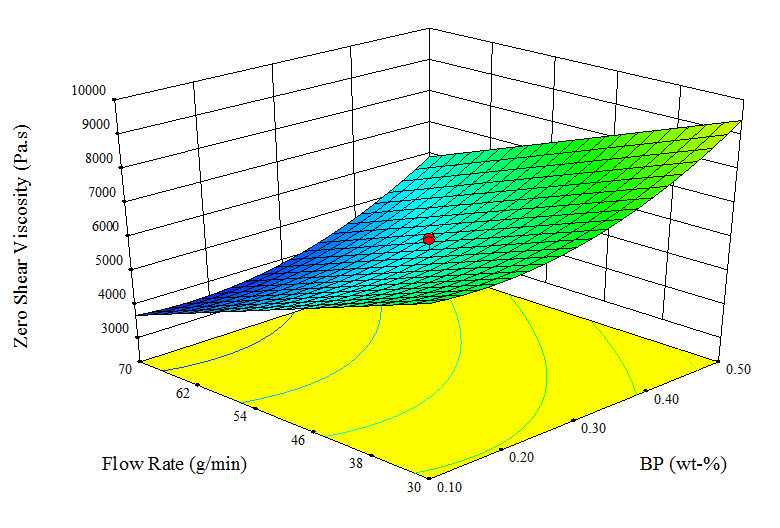
Figure 1: Zero shear viscosity (ηo) response surface
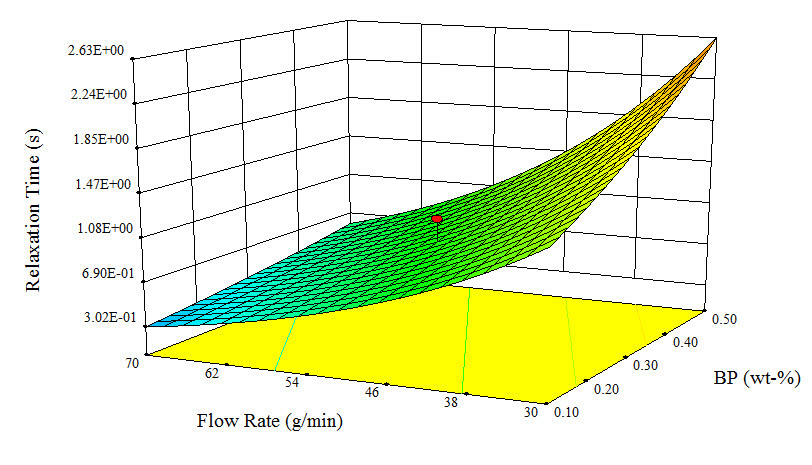
Figure 2: Relaxation time (λ) response surface
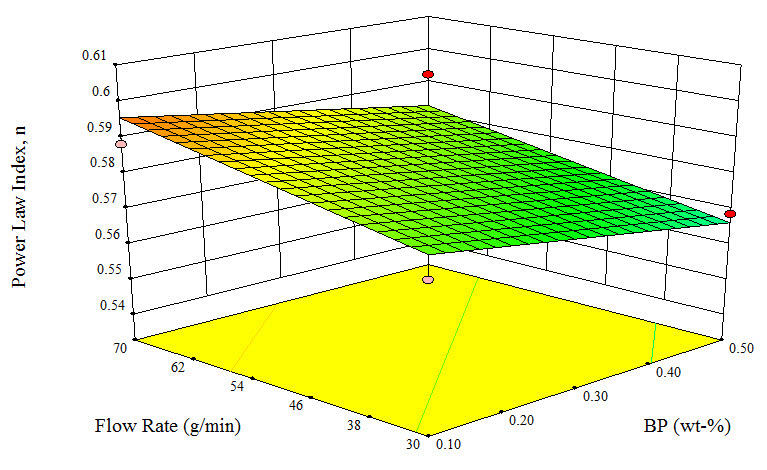
Figure 3: Power law index (n) response surface
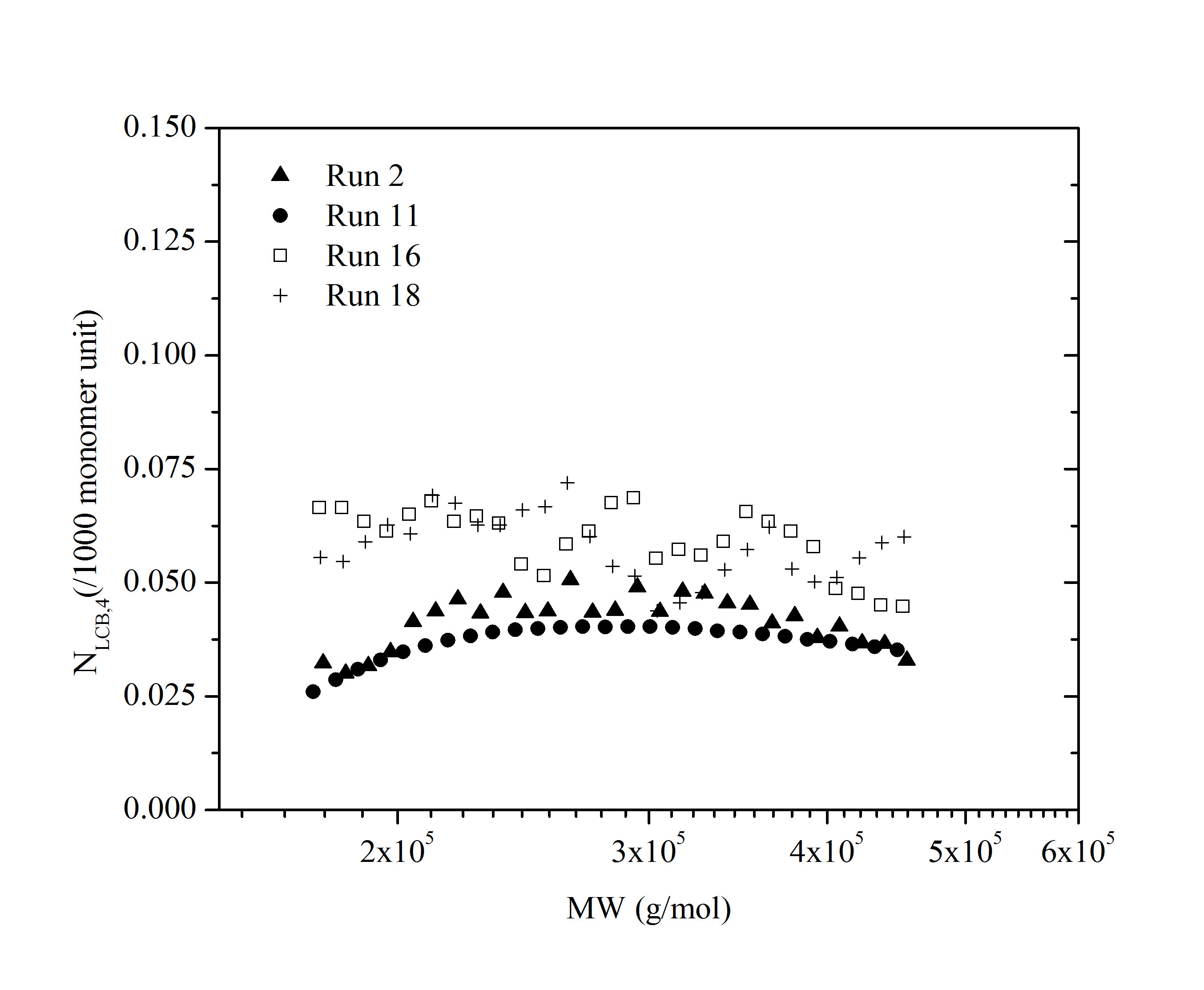
Figure 4: NLCB for a tetra-functional randomly branched structure
See more of this Group/Topical: Materials Engineering and Sciences Division