
 Google
 Yelp
 Facebook
 Twitter
 ChEnected
326844 Characterization and Engineering of a Novel Functional Algal Polysaccharide Degrading Enzymatic Machinery for Biofuels Production
Characterization and Engineering of a Novel Functional Algal Polysaccharide Degrading Enzymatic Machinery for Biofuels Production
 Marine algae exhibit several key features of an
ideal feedstock for bioconversion into
biofuels. It is limited by the availability of tractable microorganisms that
can metabolize alginate polysaccharides.
More efforts are required to harness the enzymatic machinery that
bacteria use to convert marine algal polysaccharides into bioenergy substrate. Here, we present the characterization of three novel
oligoalginate lyases (Oals) and four novel alginate lyases (Alys) from Vibrio splendidus that catalyze
depolymerization of alginate into monomer substrates which were later converted
to biofuels. The OalA protein was purified as an active soluble
form using MBP-tag affinity chromatography. Protein refolding of OalB and OalC
using the flash dilution method resulted in refolding of the protein into its
native structure and regaining full biological activity.
The PL-15 exotype OalA
shows broad substrate specificity towards poly-M
block, poly-G block, polyMG-block and sodium
alginate. The turnover number was inversely proportional to degree of polymerization
of substrates. The OalA showed highest activity towards PolyG substrate than
previously reported recombinant exotype oligoalginates. The OalA utilized all alginate
oligomers produced by Alys, while the OalB and OalC were specific to dimers and
tetramers which were finally converted into monomer. The Alys belonging to family
PL-5 and PL-7 endolytic AlyA,
AlyB specifically depolymerize heteropolymer
poly MG in alginate molecules into oligomers. AlyC, AlyD belongs to
family PL-14, specific for poly α-L-guluronate
(polyM) and poly β-D-mannuronate (poly G) respectively. The detection, quantification, and structure determination of
the alginate products were carried out using TLC, HPLC, ESIMS or NMR. The Oals and Alys can be used as biocatalysts for
saccharification of alginate since they can efficiently degrade alginate and
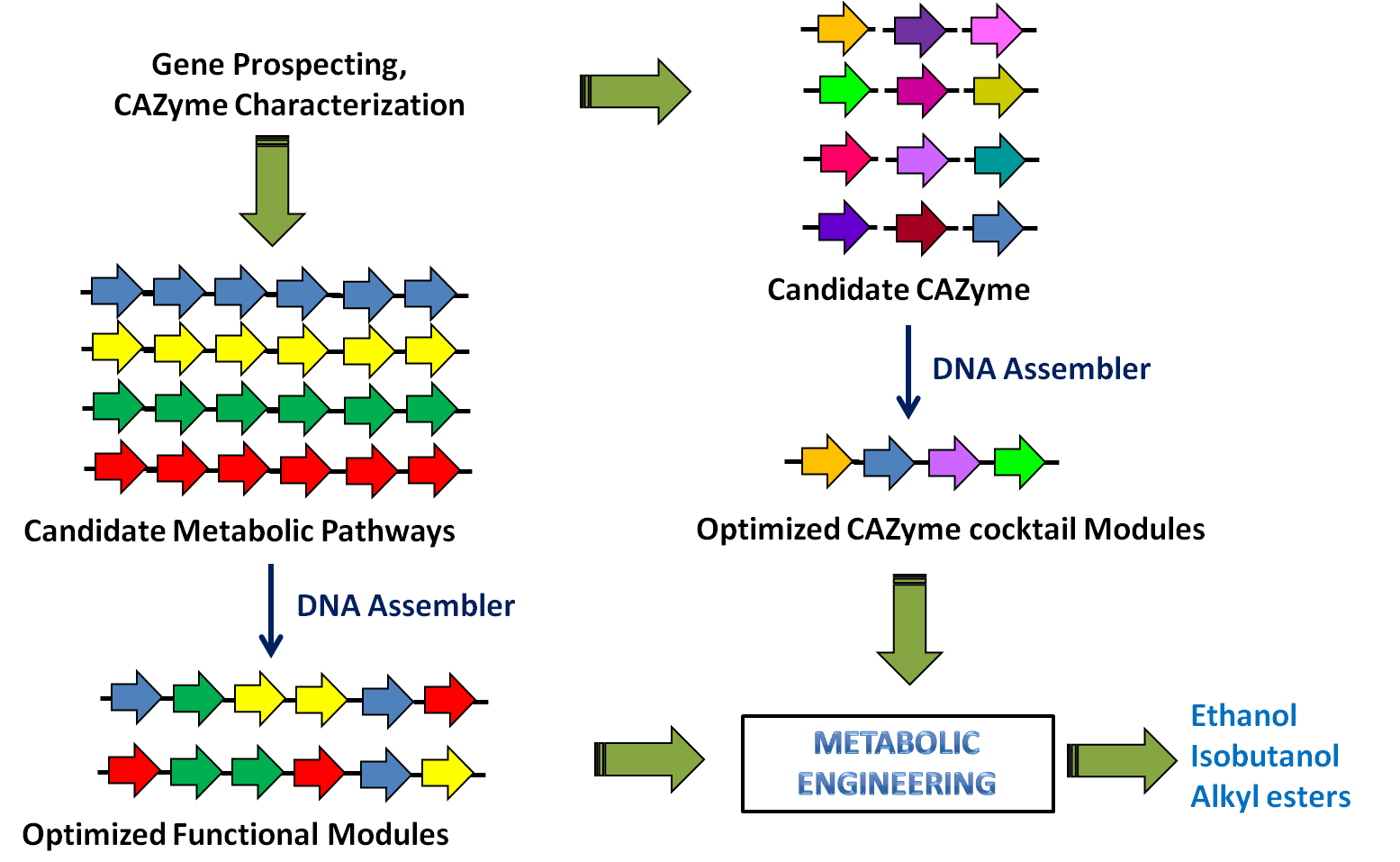
alginate oligomers into alginate monosaccharides. The characterized algal polysaccharide degradation enzymatic machinery is being repackaged using the DNA assembler method to create recombinant
yeast strains capable of producing biofuels and chemicals.
See more of this Group/Topical: Sustainable Engineering Forum