
 Google
 Yelp
 Facebook
 Twitter
 ChEnected
328484 Study Of Spray Dried Yoghurt Production In A Pilot Scale Equipment
The search for new solutions in both products and processes guide the development of the food industry. When compared to their hydrated forms dehydrated products have advantages for ease of handling, transportation and storage costs, and usually an extended shelf life. Yogurt is very well accepted by Brazilian society and is consumed in its natural state in various formulations. If dehydrated it may be used as an ingredient in many processed foods, stimulating the development of new products. This paper attempts to establish suitable conditions for the production of yogurt powder using the technique of spray drying in a pilot scale equipment, studying the influence of the rotation speed of the atomizer disk (25,000, 27,500 and 30,000 rpm), the temperature of the air entering the drying chamber (160, 170 and 180 °C) and the feeding flow of the product (30, 40 and 50% of the rated capacity of the feed pump, respectively, 5.2, 6.9 and 8.7 kg/h) by a randomized complete 23 factorial design with central point. The results showed that there are significant interactions between the three studied parameters. The effect of the feed flow rate of yogurt in the dryer is very important to control the particle size distribution of the dried product, affecting powder homogeneity.
The design of experiments technique proved to be a suitable choice for the study of the process, since there are interactions between the parameters in system responses, a fact that is hardly observed by using a strategy of changing one condition at a time.
Plain yoghurt from Fazenda Bela Vista (Brazil) was used in the experiments (88.2% water, 5.8% carbohydrates, 3.7% proteins, 2.0% fats). Equipment was a spray dryer from Tecnape (Brazil) with nominal evaporation capacity of 5 L of water per hour (Figure 1). Hot fumes from a LGP burner with temperature control is feed co-currently in the drying chamber (0.63 m3). Powdered product is collected from the bottom of the chamber and also from a cyclone separator. The process conditions are suitable to be scaled-up to equipment of larger size.
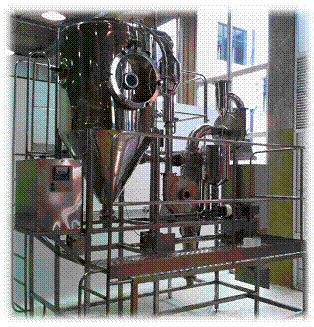
Figure 1. Spray dryer SD-05 from Tecnape (Brazil)
There was considerable deposit (20 to 30%) of product in the wall of the drying chamber, indicating that the optimum conditions for drying have not been determined yet. This is due to the low value of the glass transition temperature of yoghurt with respect to drying conditions of the process. It was possible to know the relative importance of each parameter in the drying process, however, the sticking of material on the wall of the drying chamber is probably the major challenge to be addressed for deemed satisfactory drying process as a whole. Results suggest that a reduction of inlet air temperature in the drying chamber should contribute to the reduction of the deposit. Nevertheless, equipment operating limits do not allow temperatures lower than 160 °C for stable steady state operation.
The feed flow rate of yoghurt proved to be the most important parameter since any excess compromise the performance of the whole process. The best conditions to produce a powder having greater homogeneity and less amount of material deposited on the wall occurred at 30% of the capacity of the pump (5.2 kg/h), the lowest feed flow value studied, and at the upper value of the atomizer disk speed, rpm 30,000. With the inlet air temperature of 160 or 180 °C results were satisfactory. However, because of the material that adheres to the drying chamber wall one cannot consider that the drying process has been successfully carried out.
The particle diameter analysis was done by laser diffraction using a Mastersizer 2000 (Malvern, UK) and the difference [d(0.9) – d(0.1)] can be used as an index of homogeneity of the distribution of particle diameters. It is understood that the more homogeneous the sample with respect to particle size, the better the performance of the process.
In an ideal dryer, the drying is an isenthalpic process, so that the energy required for the evaporation of water from the wet material is achieved by reducing the air temperature entering the device. If satisfactory moisture level in the final product is achieved, the lower the temperature of the outlet air, the smaller the heat effects such as color change and microorganisms destruction.
The sticking on the wall of the drying chamber is a very undesirable effect and suggests that the chosen material to dry or process conditions chosen are not the right ones. The sticked material on the wall was evaluated by weight percentage of brushed powder from the drying chamber with respect to the total mass of product recovered in the process. It is understood that the smaller the amount of material sticked on the wall, the better the process of spray drying.
The color difference analysis was established against Molico skimmed milk powder (Nestlι) by means of CIELAB color values under D65 illuminant and 10° angle using a ColorQuest XE (Hunter Lab, EUA). The smaller the difference ΔE*, the better drying process performance. All variables studied were related to process parameters to identify key trends and effects and the main results of the experiments are presented in Table 1.
Table 1. Process performance indexes for plain shaken yoghurt spray drying for tests in coded variables
Condition | Rotation speed | T inlet air | Feed rate | [d(0,9)-d(0,1)] (μm) | T outlet air (ΊC) | Sticked material | ΔE* |
1 | – | – | – | 49.8 | 102.3 | 41.1 | 14.11 |
2 | + | – | – | 35.2 | 108.0 | 22.1 | 6.14 |
3 | – | + | – | 50.9 | 125.6 | 34.2 | 3.79 |
4 | + | + | – | 33.8 | 121.1 | 29.3 | 9.36 |
5 | – | – | + | 151.8 | 73.8 | 54.4 | 17.16 |
6 | + | – | + | 177.1 | 80.6 | 39.6 | 33.11 |
7 | – | + | + | 98.0 | 94.8 | 40.5 | 27.34 |
8 | + | + | + | 119.7 | 99.3 | 43.9 | 3.92 |
9 | 0 | 0 | 0 | 77.4 | 94.5 | 27.7 | 7.37 |
10 | 0 | 0 | 0 | 62.0 | 101.2 | 27.4 | 6.15 |
11 | 0 | 0 | 0 | 59.9 | 102.0 | 26.8 | 5.10 |
By inspection of Table 1 it is possible to verify that the desirable minimum values of process performance indexes appear in four different study conditions (2, 3, 4 and 5). Thus, for the study conditions there was a not a condition that would accommodate the various desired goals. Thus, to define which conditions proved the best, with the goal of guidance for further study will be necessary to find a compromise solution, which should be verified in practice later. With this aim other values besides the minimum ones were also considered to settle the best possible process conditions. So, the conditions of test number 2 showed a minimum percentage of material sticked on the wall and were reasonably satisfactory in two other parameters: sample homogeneity and color difference. Therefore, one can conclude that, in this project, the best working conditions were: speed of rotation of the atomizer: 30,000 rpm; inlet temperature of the air in the drying chamber: 160 °C and feed flow rate of pump: 30% of the rated capacity, or 5.2 kg/h. These conditions will be used as basis for further study.
The sticking on the wall phenomenon is occurring, probably, but maybe not exclusively, on account of having exceeded the glass transition temperature of the yogurt. This problem can be solved partly or wholly with the addition of maltodextrins in the shaken plain yogurt. Maltodextrins with DE = 5 or 10 have high glass transition temperatures and thus can help on decreasing the gumminess condition of yoghurt, hindering its grip on the wall and on other particles also. Based on literature review it is evident the importance of obtaining a product with viable microorganisms and, accordingly, both the addition of skimmed milk powder and gum acacia suggest the need for research.
See more of this Group/Topical: Food, Pharmaceutical & Bioengineering Division