
 Google
 Yelp
 Facebook
 Twitter
 ChEnected
332383 Facile Method to Synthesize Graphene-ZnS Nanocomposites and Their Application in Bioelectrochemistry of Hemoglobin
Electrochemical technology is a useful way to probe the protein conformation and protein electron transfer. Thus, the direct electron transfer (DET) between biomolecule and electrode has aroused growing interest due to its significance in both theoretical and practical applications[1,2]. In recent years, many researches have focused on the application of nanomaterials to modify electrode. For example, graphene (GR), a two-dimensional sheet of carbon atoms bonded through sp2 hybridization with the properties of high electrical conductivity, exceptional thermal and mechanical stability, is showing promising applications in electrode modification[3]. Due to the excellent optical and electronic properties, semiconductor quantum dots (QDs) has also been used in the fields of electrochemical as well as photoelectrochemical biosensors[4]. Among the QDs materials, CdS nanostructures were most generally used. However, considering that CdS might be harmful and carcinogenic to the human beings[5], ZnS nanomaterial, a semiconductor with large band-gap energy and good conductivity, has been a good substitute of CdS owing to its low cost and nontoxicity[6].
In this work, we explored a new method to fabricate graphene-ZnS (GR-ZnS) nanocomposites for electrochemical applications based on noncovalent functionalization of graphene (Figure 1). Compared with the harshly oxidative approaches, herein, the surface of pristine graphene was firstly modified with 1-aminopyrene via a strong ¦Ð-¦Ð stacking mechanism between the pyrenyl groups and the carbon rings of the graphene. The introduction of active amine group on the graphene could not only improve the dispersibility of graphene but also provide nucleation centers on the surface of graphene for the uniform growth of ZnS nanoparticles. The as-prepared GR-ZnS nanocomposites were characterized and identified by means of TEM and EDS analysis, indicating the uniform formation of ZnS nanoparticles on the surface of graphene. FT-IR spectroscopic results confirmed that hemoglobin (Hb) remained its native structure in the nanocomposite material. The GR-ZnS nanocomposites could efficiently promote the direct electron transfer between Hb and electrode with the electron transfer rate constant of 3.42 s-1. The modified electrode was then used for the determination of H2O2 based on the electrocatalytic activity of Hb towards H2O2, which exhibited a linear range from 10 to 250 µM with a detection limit of 1.12 µM. The proposed method to fabricate graphene-based hybrid nanomaterials would have a great potential for a wide range of applications.
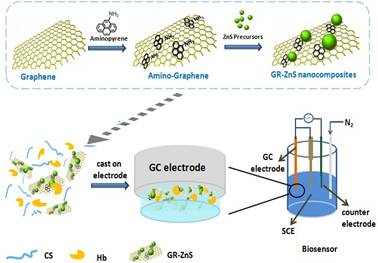
Figure 1. Fabrication of a H2O2 biosensor.
This work was supported by the NSF of China (51173128, 31071509), the Ministry of Science and Technology of China (Nos. 2012YQ090194, 2013AA102204, 2012BAD29B05), the Program for New Century Excellent Talents in Chinese University (NCET-08-0386), and Beiyang Young Scholar Program (2012).
References
[1] Baby TT, Aravind S, Arockiadoss T, Rakhi R, Ramaprabhu S. Metal decorated graphene nanosheets as immobilization matrix for amperometric glucose biosensor. Sensors and Actuators B: Chemical, 2010, 145: 71-77.
[2] Yılmaz Ö, Demirkol DO, G¨¹lcemal S, Kılınç A, Timur S, Çetinkaya B. Chitosan-Ferrocene Film as a Platform for Flow Injection Analysis Applications of glucose oxidase and gluconobacter oxydans. Biosensors. Colloids and Surfaces B: Biointerfaces, 2012, 100: 62-68
[3] Rao CNR, Sood AK, Subrahmanyam KS, Govindaraj A. Graphene: The New Two-Dimensional Nanomaterial. Angewandte Chemie International Edition, 2009, 48: 7752-7777.
[4] Sun W, Wang D, Li G, Zhai Z, Zhao R, Jiao K. Direct electron transfer of hemoglobin in a CdS nanorods and Nafion composite film on carbon ionic liquid electrode. Electrochimica Acta, 2008, 53: 8217-8221.
[5] Miyawaki T, Ichimura M. Fabrication of ZnS thin films by an improved photochemical deposition method and application to ZnS/SnS heterojunction cells. Materials Letters, 2007, 61: 4683-4686.
[6] Nakaoka Y, Nosaka Y. Electron spin resonance study of radicals produced by photoirradiation on quantized and bulk ZnS particles. Langmuir, 1997, 13: 708-713.
See more of this Group/Topical: Nanoscale Science and Engineering Forum