
 Google
 Yelp
 Facebook
 Twitter
 ChEnected
333911 Synthesis and Crystallization Behavior of Well-Defined Poly(L-lactide)-b-Polystyrene Copolymers
Synthesis and Crystallization Behavior of Well-Defined Poly(L-lactide)-b-Polystyrene Copolymers
Tao Liu, Dongdong Hu, Zhiqi Gu and Ling Zhao*
State Key Laboratory of Chemical Engineering, East China University of Science and Technology, Shanghai 200237, People's Republic of China
*To whom correspondence should be addressed. E-mail: zhaoling@ecust.edu.cn.
Keywords: ring-opening polymerization, atom transfer radical polymerization, block copolymers, crystallization
Well-defined poly(L-lactide)-b-polystyrene (PLLA-b-PSt) was synthesized by using ring-opening polymerization (ROP) and atom transfer radical polymerization (ATRP) with 4-hydroxybutyl-α-bromoisobutyrate as a dual initiator in a sequential two-step procedure. The results of 1H NMR spectroscopy and gel permeation chromatography (GPC) showed that either the ring-opening polymerization of lactide or the radical polymerization of St was controlled so that PLLA-b-PSt with well-defined structure and controlled molecular weight could be obtained.
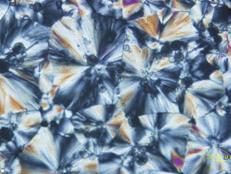
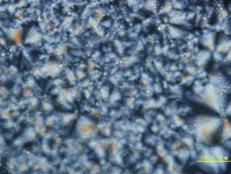
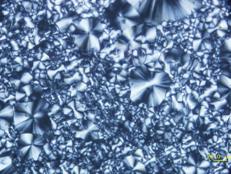
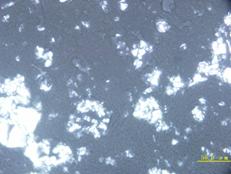
The crystallization behavior of PLLA in the PLLA-b-PSt was significantly affected by the PSt fraction, which was confirmed from the differential scanning calorimetry (DSC) and polarized optical microscopy (POM) results of the PLLA-b-PSt. As shown in Figure 1, the PLLA crystals may become more irregular, smaller and less with increasing the PSt fraction. Figure 2 showed that the melting temperature (Tm), cold crystallization temperature (Tcc) and crytallization temperature (Tc) decreased with increasing PSt fraction. The cold crystallization peak disappeared when the PSt fraction was over 60%. Tc firstly increased and then decreased with increasing PSt fraction. It was supposed that a small fraction of PSt acted as a nucleating agent promoting the crystallization of PLLA while large amount of PSt inhibiting that of PLLA. The crystallinity of PLLA-b-PSt was lower than that of pure PLLA and decreased with increasing PSt fraction.
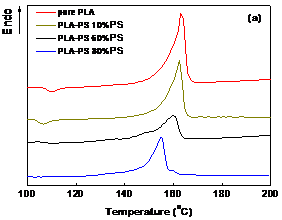
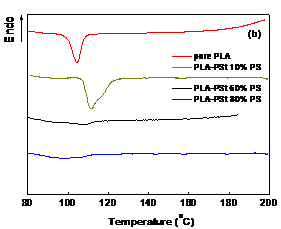
Figure 1. DSC results of PLLA and PLLA-b-PSt (a) heating, 10 K/min; (b) cooling, 2 K/min
(a) (b)
(c) (d)
Figure 2. POM images of PLLA-b-PSt after non-isothermal crystallization at cooling rate of 5 K/min£�
(a) pure PLA; (b) 10% PS; (c) 60% PS; (d) 80% PS
See more of this Group/Topical: Materials Engineering and Sciences Division