
 Google
 Yelp
 Facebook
 Twitter
 ChEnected
335671 Identification of Activities of CuO Species in CuO-CeO2/Y Catalysts for HCl Oxidation
Identification of activities of CuO Species in CuO-CeO2/Y Catalysts for HCl Oxidation
Zhaoyang Fei1,2, Rui Cao2, Xian Chen2, Jihai Tang2, Mifen Cui 2, Xu Qiao1,2*
(1. State Key Laboratory of Materials-Oriented Chemical Engineering, Nanjing University of Technology, Nanjing, Jiangsu 210009, China 2. College of Chemistry and Chemical Engineering, Nanjing University of Technology, Nanjing, Jiangsu 210009, China;)
Key words£ºHCl oxidation; CuO-CeO2/Y catalysts; CuO species; catalytic activity
Catalytic oxidation of HCl to Cl2 is an energy-efficient and environmentally friendly way to recycle chlorine from by-product HCl in chlorine-related chemical industry. The transition metal catalysts, especially copper-based compounds, display high catalytic activity in this process [1]. Previous research found that CuO-CeO2 composite catalysts showed novel catalytic activity and the copper species were the mainly activity component [2]. In the present work, a series of Y-zeolite supported (¦Öwt%)CuO-(13%)CeO2 catalysts were prepared by impregnation method. The states of copper species were investigated. The results show that different copper species showed obvious activity diversity.
The XRD results (Fig.1) show that peaks attributed to the CuO were not detected in the catalysts with low CuO content(below 6wt%), indicating all copper species were highly dispersed on the support. With the increase of CuO content, the crystalline CuO has formed. This result is also testified by the TPR results (Fig.2): ¦Á2 peak interpreted as the reduction of small CuO crystallites appears in CuO(12)-CeO2(13)/Y catalyst.
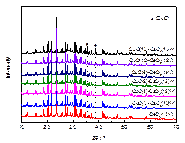
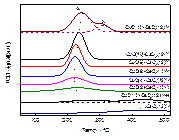
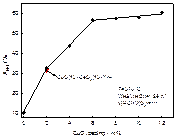
Fig. 1 The XRD patterns of the catalysts Fig. 2 The TPR profiles of the catalysts Fig. 3 The catalytic performances of the catalysts
The reduction behavior of CuO(2)-CeO2(13)/Y catalyst is similar to that of CuO(12)-CeO2(13)/Y after acid treatment, indicating both catalysts possess the same type of copper species. Only copper ions in CeO2 lattice exist in the catalyst after acid treatment, so it can be assumed that copper ions existed in CeO2 lattice when copper content below 2wt%, which contribute remarkably to the catalytic activity. With the increasing of CuO content, the conversion of HCl increases greatly which can be ascribed to the dispersed copper species. When CuO content is above 6wt%, the small CuO crystallites are formed,which make little contribution to the activity of the catalysts.
Finally, comparing the conversion of HCl over catalysts with different CuO content, it can be concluded that the activities of different copper species are in this order: copper ions existed in CeO2 lattice (17.3 gHCl∙h-1∙gCuO)>dispersed CuO (9.4 gHCl∙h-1∙gCuO)> bulk CuO (1.0 gHCl∙h-1∙gCuO).
REFERENCES
[1] C. Mondelli, A. P. Amrute, T. Schmidt, J. P¨¦rez-Ram¨ªrez. A delafossite-based copper catalyst for sustainable Cl2 production by HCl oxidation. Chem. Commun., 2011, 47, 7173-7176.
[2] Zhaoyang Fei, Rui Cao, Xian Chen, Jihai Tang, Mifen Cui, Xu Qiao. Synergetic effects of CuO-CeO2 catalysts in HCl oxidation. The 3rd International Conference on Sustainable Chemical Product and Process Engineering (SCPPE 2013).
See more of this Group/Topical: Catalysis and Reaction Engineering Division