
 Google
 Yelp
 Facebook
 Twitter
 ChEnected
336079 Validation of Micro-Reaction Technology for Polymerization Processes
The structure of macromolecules produced in polymerization processes is strongly dependent on the predefined boundary conditions in the system. In these processes any disturbances in operating conditions of the reactor either due to insufficient heat removal or poor mixing, even locally, will not only affect the reaction kinetics but also the final product quality. These challenges arise especially during the scale-up step from lab scale apparatuses to industrial production units due to the changes imposed on the reactor geometries. It is therefore of great interest to gather sufficient information on the state of ongoing polymer reactions in order to conceptualize scalable systems, optimal for precise regulation of final product characteristics.
Though suffering from thermal and mass transfer limitations, (semi) batch reactors have been the conventional choice for viscous medium of polymers for decades. The inhomogeneities in these reactors increase with monomer conversion and can never be fully overcome even by implementing energy intensive mixing methods. Consequently occurrence of local hotspots and gel effect is often observed in this reactor type leading to low level of control over molecular weight distributions. As a common approach, the polymers are usually synthesized at lower reagent concentrations and hence lower yields or alternatively the advantages offered by tubular reactors in general and milli-reactor as an example of it, are considered to design a continuous-working apparatus for carrying out highly exothermic often diffusion limited polymer reactions.
Higher surface to volume ratios as well as shorter diffusion paths in milli-reactors minimize the mass and thermal gradients while increasing the heat removal capacity as the limiting factor especially in case of free radical polymerization. Greater throughputs needed for industrial production is achieved by numbering-up strategies keeping the size of each reactor intact. These features combined with a suitable mixing element can ensure a minimum dead zone generation in reactor and make continuous milli-scaled apparatuses a considerable alternative for the conventional batch ones.
In the scope of this work solution radical polymerization of acrylate monomers with AIBN as initiator has been chosen as the test reaction to investigate the main design parameters for an optimal milli-reactor layout suitable for production of acrylate polymers.
The thermal investigation of the system has been made possible through the measurement of the axial temperature profile along the reactor length. For this purpose an integrated Fiber Bragg Grating Sensor (FBGS) inside the reactor has been utilized (Fig 1). The sensor, having the diameter of less than 3 mm induces minimal disturbances on the flow regime but still enables the detection of possible hotspots inside the reactor. The gathered data has been used to optimize the employed cooling strategies needed to achieve certain product quality (Fig 2).
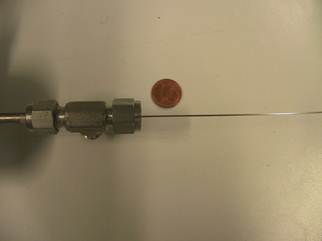
Fig 1: Fiber Bragg Grating Temperature Sensor
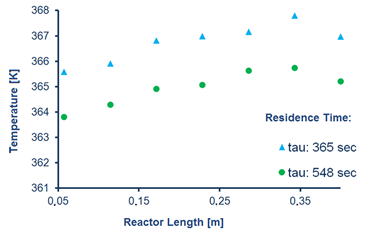
Fig 2: Measured Temperature Profiles
The fundamental impact of mixing on free radical polymerization to avoid local dead zones as well as intensifying heat and mass transfer has been demonstrated in publications. In this work experiments have been conducted implementing different micro-mixers with respectively different mixing efficiencies (Fig 3). As a result the influence of mixing mechanism on the reactor operating condition as well as molecular weight distribution of the final product has been determined.
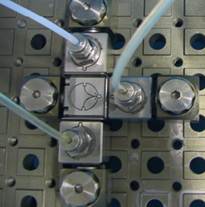
Fig 3: An Example for implemented Micro Mixers,
LH2, Ehrfeld Mikrotechnik BTS GmbH
See more of this Group/Topical: Materials Engineering and Sciences Division