
 Google
 Yelp
 Facebook
 Twitter
 ChEnected
336522 Optimal Design of Reactive Distillation Coupled With Side Reactor for Tert-Butyl Acetate Production
Optimal design of reactive distillation coupled with side reactor for tert-butyl acetate production
Ming CHEN, Chong LI, Jihai TANG, Xian CHEN, Zhaoyang FEI, Mifen CUI, Xu QIAO
State Key Laboratory of Materials-Oriented Chemical Engineering, College of Chemistry and Chemical Engineering, Nanjing University of Technology, Nanjing, 210009, PR China
Key words£ºreactive distillation coupled with side reactors; tert-butyl acetate; optimal design
Reactive distillation (RD), combining reaction and separation in a single unit, is not effective in many chemical systems because of the conflicting requirements of reaction and separation [1-3], such as the optimum conditions of temperature and pressure for distillation may be far from optimal for reaction, and the requirements of high liquid or catalyst holdup are not in consistance with the requirement of good in situ separation. Recently, a new reactive distillation integrating concept, that is a distillation column coupled with side reactors (SRC), has been proposed [4]. Since the reaction and separation are taken in different space, it maintains the benefits of in situ separation with reaction and overcomes these problems of RD column.[1, 5]
(a) (b)
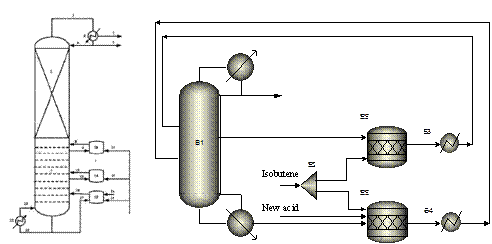
Fig. 1 Schematics of a distillation column coupled with side reactors (SRC)
In this work, the SRC process for the synthesis of producing tert-butyl acetate (TBA) from acetic acid and isobutene, which is a parallel reversible reaction, was investigated. The configuration of a distillation column coupled with side reactors for tert-butyl acetate production is displayed in Fig.1. Fig1 (b) is the simulation flowsheet in Aspen Plus, in which B1 (Radfrac) represents the distillation column. B5 and B6 (RStoic) represent the side reactors. B3 and B4 (Heat) are heat exchangers. B2 (Split) is used as a splitter to distribute the feedstock isobutene in different side reactors. The entire liquid stream leaving the trap-out trays is completely rerouted through a reactor before it is fed back to the column. The make-up acetic acid is fed to the nethermost reactor, and the isobutene is distributed by splitter to side reactors.
The effects of the various operation parameters and configuration parameters on the performance of expenditure-to-revenue ratio (ERR) are well studied, to preliminarily explore the interaction between reaction and distillation. As the feed rate of acetic acid increases, the total cost decreases first and then increases, while the revenue is monotonically increasing (Fig.2). Thus an optimal feed rate is recommended leading to the minimum ERR. Fig.3 shows the effect of boil-up rate and bottom rate on optimum ERR. The optimum ERR decreases with the raising of boil-up rate and bottom rate. As can be seen from Fig. 4, the optimum feed rate, namely the reaction capacity, becomes lager as the number of the side reactors increases. It can also be observed that the optimum feed rate raise slower while RN is lager than 2, indicating that the number of side reactor 2 is proposed.
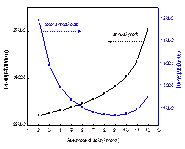
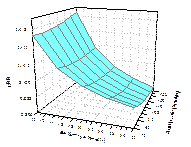
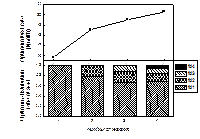
Fig. 2 The effect of feed rate Fig. 3 The effect of boil-up rate and bottom rate Fig. 4 The effect of RN on optimum feed rate and
(Number of total trays=17, NR=15, RN=1) (N=17, NR=15, RN=1) distribution (NR=17, NRS=1)
References:
See more of this Group/Topical: Process Development Division