
 Google
 Yelp
 Facebook
 Twitter
 ChEnected
344131 Modeling and Experimental Validation of Free Fatty Acids (FFAs) Removal From Crude Vegetable Oils Using Fiber Reactor Technology
Modeling and experimental validation of Free Fatty Acids (FFAs) removal from crude vegetable oils using fiber reactor technology
A combination of experimental measurements, reactor modeling, and model validation is used to develop a highly efficient approach for removal of free fatty acids (FFA) from vegetable oils. The process revolves around a new reactor concept called the Fiber Reactor™, which is a novel contactor for conducting reactions involving two partially miscible liquid phases that offers from one to two orders-of-magnitude improvement in liquid-liquid mass transfer rates when compared to conventional reactors, such as stirred tanks. The primary objective of this presentation is to describe recent research results that provide further understanding of Fiber Reactor™ performance by investigating intricacies of the engineering technology for application to FFA extraction. Emphasis is placed on comparing the effectiveness of reactive and non-reactive extraction technologies for removal of FFA's from crude vegetable oil by comparing observed mass transfer coefficients, acid removal efficiency and overall cost of operation. Fiber Reactor™ parameters of interest include: fluid pressure drop, fluid flow patterns, fluid flow regimes, liquid-fiber interfacial areas, mass transfer coefficients, heat transfer coefficients, and fiber particulars (material of construction, layout, size, geometry, and surface/wetting properties). Validation of the model-predicted results is also provided using experimental data generated using fiber reactor having diameters of ¼-in and ½-in, respectively.
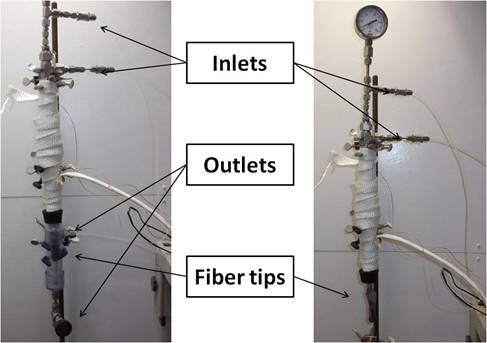
Figure 1. Schematic of the Fiber reactor
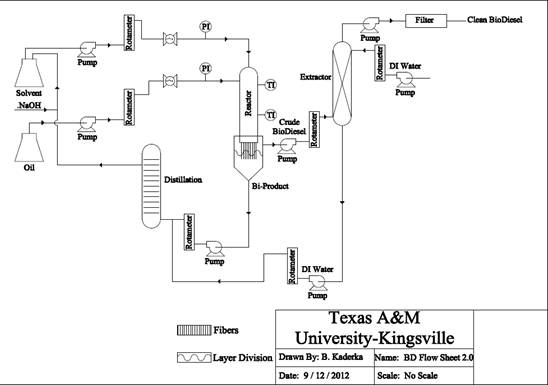
Figure 2. Process flow diagram of a typical experimental setup for transesterification of lipids.