
 Google
 Yelp
 Facebook
 Twitter
 ChEnected
348138 Analyzing ROS Generation From Magnetic Nanoparticles In An Alternating Magnetic Field and Its Role In Intracellular Hyperthermia
Through
Brownian relaxation and Neel relaxation, magnetic nanoparticles are capable of
absorbing energy from an alternating magnetic field (AMF) and converting it to
heat. Thus, via passive targeting, nanoparticles can collect at the tumor site and
by the application of an AMF provide localized heating throughout the
tumor. Furthermore, internalized targeted nanoparticles have been
recently shown to induce cellular death when exposed to an AMF without a
measurable temperature rise, therefore stimulating great interest to develop
targeted nanoparticles for the treatment of metastatic cancer via intracellular
hyperthermia. Focusing on the iron oxide magnetic nanoparticle system, it
is thought that at the molecular level a significant contributing factor to the
iron oxide toxicity in intracellular hyperthermia is the generation of reactive
oxygen species (ROS) through the Fenton and Haber Weiss reactions. This
research, in turn, focuses on the effects of an AMF on the surface mediated
production of ROS based on the hypothesis that these effects are a key
contributor to the toxicity demonstrated as intracellular hyperthermia.
Despite variance in temperature ranging 37-39°C, it was observed via the
methylene blue dye degradation method that samples exposed to an AMF
experienced increased ROS production. Moreover, the Arrhenius equation,
 ,
where
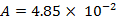 s-1 and
 J, was determined from a
series of kinetic studies. This equation showed that despite variability
in heating profile, experimental values of dye degradation were consistently
lower than the theoretical values indicating improved kinetics due to AMF
exposure. Furthermore, AMF data points did not fit the derived Arrhenius trendline strongly suggesting that AMF mediated heating
possesses a kinetic effect unique to that of bulk heating. Preliminary
cell culture studies conducted by means of the viability-ROS assay suggested
that as uncoated iron oxide magnetic nanoparticle concentration increases, ROS
generation increases and cell viability decreases.
See more of this Group/Topical: Student Poster Sessions