
 Google
 Yelp
 Facebook
 Twitter
 ChEnected
333972 Immobilization of Amylase On Metal Ceramic Powder: Application for Efficient Starch Hydrolysis
Amylase, a kind of hydrolase which can convert starch into reduced-sugars, syrups and dextrin, is an important biocatalyst in food industry. Usually, amylase immobilized on the solid carriers which have suitable hardness, density and porosity, seems to be the most appropriate way for industrial application (Singh et al., 2013); while physical adsorption between carrier and enzyme would just supply weak affinity and covalent cross-linking may lead to the loss of enzyme activity. In recent years, due to the high immobilization efficiency, simple immobilization method and improved stability, enzyme immobilized through metal affinity has attracted increasing attention (Ho et al., 2004). The metal ceramic, with significant mechanical strength, electrical conductivity and abrasive resistance, would be a suitable carrier for enzyme immobilizaton. While the applications of metal ceramic on enzyme immobilization have been little reported.
In this work, the ceramic powder with high metal content (MCP) were prepared as a new kind of carrier for amylase immobilization. Cu-MCP showed the best affinity to alpha-amylase and exhibited maximal activity (Fig.1a). The effects of metal content, chelation time and amylase concentration on the immobilized amylase (Cu-MCP-amylase) activity were investigated. Under the optimal preparation conditions, the activity of Cu-MCP-amylase could reach 31.5 U/g (54.5 % of activity yield). Next, the characterizations confirmed that the Cu-MCP was a superior carrier with significant mechanical strength, considerable surface area, stable environment, homogeneous surface and low cost. Meanwhile, the properties of Cu-MCP-amylase were determined. It had optimal pH 7.0 and optimal temperature 70oC with improved thermal stability. Finally, Cu-MCP-amylase packed in a column reactor (Fig.1b) and showed significant catalytic capacity and stability, which could retain 80% of initial catalytic capacity after 40 recycle times. Thus, MCP as a novel immobilization carrier, would enhance mass transfer and supply stable environment, which could provide an efficient and practical method for enzyme immobilization in industrial application.
This research was supported by the NSF of China (20976125, 31071509, 51173128, 21206113) and Tianjin (10JCYBJC05100), the Ministry of Science and Technology of China (Nos. 2012YQ090194, 2013AA102204, 2012BAD29B05), the Program for New Century Excellent Talents in Chinese University (NCET-08-0386), and Beiyang Young Scholar Program (2012).
References
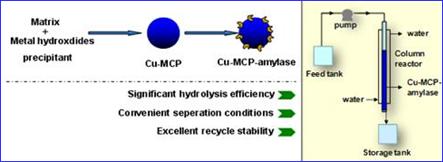
Fig.1 Amylase immobilization and application for starch hydrolysis
a) Preparation of Cu-MCP-amylase. b) Application of Cu-MCP-amylase for starch hydrolysis
See more of this Group/Topical: Food, Pharmaceutical & Bioengineering Division