449380 Destruction of Hazardous Heterocyclic Nitrogen Containing Hydrocarbons By Supercritical Water Oxidation
Thursday, November 17, 2016: 12:55 PM
Union Square 1 & 2 (Hilton San Francisco Union Square)
Bushra Duri, SCHOOL OF CHEMICAL ENGINEERING, UNIVERSITY OF BIRMINGHAM, Birmingham, United Kingdom
SCWO of Nitrogen Containing Heterocyclic Hydrocarbons Found in Hazardous Aqueous Waste Streams: Process Enhancement by
Addition of Isopropyl Alcohol
B. Al-Duri1 and F. Alsoqyiani1
1School of
Chemical Engineering, University of Birmingham, Edgbaston, Birmingham B15 2TT,
United Kingdom. Email: B.Al-Duri@Bham.ac.uk
Abstract
This work investigates
the destruction nitrogen-containing heterocyclic hydrocarbons frequently
encountered in hazardous wastes, by supercritical water oxidation (SCWO),
considering the process enhancement by adding isopropyl alcohol (IPA) as
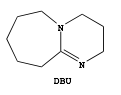
co-fuel. DBU is selected for SCWO in a continuous plug flow reactor, under a temperature
range of 400 to 575¡C, oxidant ratio of 0.8 to 2
times stoichiometric value, initial DBU concentration of 5mM (reactor
conditions) and 25 MPa reactor pressure. IPA was premixed with DBU at various
IPA/DBU ratios (0.5 to 3.5). Experimental results were presented in terms of
total organic carbon (TOC) removal %, and nitrogenous products yield %. Based on GC-MS analysis exit streams, a
reaction pathway from DBU to benign small compounds was proposed.
Results indicated that the destruction of N-containing
hydrocarbons occurs by virtue of the vigorous free radical mechanism where HO¥
and HO2¥ were responsible for the scission of the C-N bonds,
followed by a series of C-C and C-N scissions. Temperature was found to be the main factor to influence overall
destruction of DBU, while oxidant ratio predominantly affected the N speciation
in the exit stream. Alcohol addition enhanced the destruction
of DBU in terms of TOC removal %. Specifically, it enhanced the conversion of
recalcitrant ammonia (NH4+) to gaseous nitrogen, which is
highly advantageous in SCWO applications to nitrogenous waste destruction.
Extended Abstract: File Not Uploaded
 Google
 Yelp
 Facebook
 Twitter
 ChEnected
