
Chi Zhaia,b, Wei Suna, Ahmet Palazoglub*
a Beijing Key Lab of Membrane Science and Technology, College of Chemical Engineering, Beijing University of Chemical Technology, 100029 Beijing, China
b Department of Chemical Engineering, University of California, Davis,
CA 95616, USA
Abstract
One of the most important models for the development of Prigogine¡¯s dissipative structure theory is the ¡°Bursselator¡±, 1 whose prototype is the Belousov–Zhabotinsky2 (BZ) reaction. Since the BZ reaction is far-from-equilibrium, the dynamics of the system does not obey the Onsager reciprocal relations and symmetry breaking bifurcation may cause the system to generate self-organized patterns. Figure 1 depicts the generation of the self-oscillatory waveform observed in experiments.

Figure 1. The snapshot (and amplification) of the diffusive BZ reaction, which can generate waveform of color change from blue to red periodically.3
By the dissipative structure theory, the BZ reaction is viewed as an open system with constant negative entropy consumption, and a portion of the overall reaction entropy-change is consumed for the maintenance of the periodic color-change structure. Figure 2 is the schematic of the reaction kinetics, indicating a periodically dissipative system. From the viewpoint of a dynamic system, the nonlinearity of the intermediate terms (X, Y, Z) bring about a Hopf bifurcation where increasing one of the parameters beyond the critical point may cause a periodical color-change waveform to emerge.
It is clear that the period of the self-oscillatory pattern is relevant to the input parameter, i.e., the input entropy flux. Knowing how the period is related to the parameter change would be critically beneficial in identifying the characteristics of the self-oscillatory structure. Our goal in this study is to develop mathematical methods to compute the period of the limit cycles as a function of parametric changes.
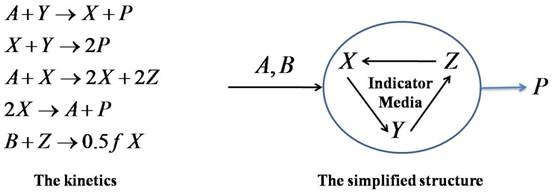
Figure 2. The Oregonator4 model kinetics and the abstracted structure. Species identification with respect to the FKN mechanism5 of the BZ reaction are X=HBrO2, Y=Br-, Z=Ce(IV), A=BrO3, B=Organic species, P=HOBr. The reactant and product species A, B and P are normally present in much higher concentrations than the dynamic intermediate species X, Y and Z and are assumed to be constant on the time scale of a few oscillations. The oscillatory exchange of the intermediates causes Z to vary between Ce(IV) and Ce(III) back and forth, and with the presence of the ferroin indicator, the media would change color between blue to red repeatedly.
Often one can use a numerical continuation method6 or a shooting method7 to obtain the period of the limit cycles as a function of changes in the parameters, but it would be much more effective to find analytical relationships as they would reveal the specific characteristics of the self-oscillatory system, i.e., the maintenance entropy flux of the self-oscillatory structure.
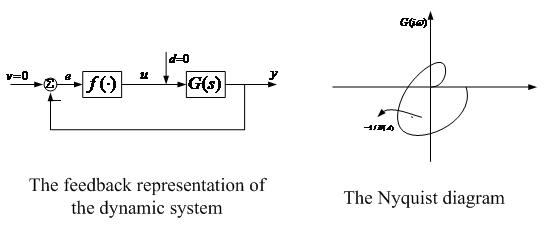
Figure 3. The closed-loop equivalence of the dynamic system and the criterion of self-oscillation on the Nyquist diagram.
Mees and Chua8 have proposed a method to solve the period of the limit cycle analytically based on the frequency domain Hopf bifurcation theory. A self-oscillatory dynamic system can be reformulated as a feedback system as shown in Figure 3. Here, G(s) in Figure 3 is the Laplace transform of the linear part and f is the memoryless nonlinear part. The generalized Nyquist criterion provides the necessary condition for the closed-loop system with v = d = 0 to generate oscillatory outputs, which is clear in the right hand side of Figure 3. The intersection point satisfies the following condition: y = G(i¦Ø)u ¡Ö G(i¦Ø)N(A)y, which leads to G(i¦Ø) = -1/N(A). Here, N(A) is the amplitude correlated approximation of the nonlinear term f, and N(A) is identified by the harmonic balance method. For example, if the system is approximated by the 2nd-order harmonics, N(A) could be written as 1+A2¦Î(¦Ø). 9
However, the BZ reaction is a multivariable system, and, when the method above is applied, tensor operations8 will render the calculations tedious and impractical. Since the BZ reaction is a highly nonlinear system, higher order harmonics10 may also be needed to approximate the oscillatory behavior accurately, which would complicate the calculation process further.
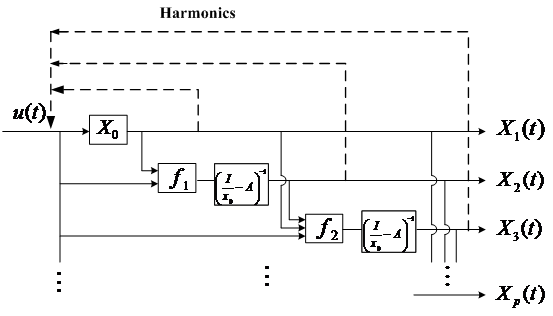
Figure 4. Block diagram for the numerical computation of functional expansions.
In the current study, we propose to use the Laplace-Borel (LB) transfer function representation to express the feedback system. The LB transform is an extension of the Laplace transform to the nonlinear polynomial terms by an infinite series of iterated integrals, and the transformed system obeys the shuffle algebraic operation. 11, 12 The functional expansion (FEx) method approximates the analytical solution of the system which can be presented graphically as in Figure 4. However, for a specific order of expansion Xp(t), the approximated solution by the FEx method does not promise the solution to be a closed cycle as time approaches infinity.
Similar to Figure 3, we propose to close the system by adding dash lines to Figure 4, and set u(t) = 0. By utilizing the shuffle algebra, each variable of the nonlinear part fi (i¡¯s expansion) could be decoupled if the order of the harmonics is specified, which is especially attractive for multivariable systems. The approximation procedure is progressive and the residuals of each expansion are used to identify the parameters of the harmonics. Because (1). the nonlinear blocks in Figure 4 may introduce higher order harmonics than the input ones; (2). the output orders of the harmonics is predictable if the structure of the system is given, then, the formula of N(A) is known and the parameter of N(A) can be identified by setting higher order residuals as zero. This method makes N(A) being flexible for different systems and expendable to higher order approximations.
Keywords: dissipative structure; self-organization; Laplace-Borel transform; harmonic balance method; frequency domain Hopf bifurcation.
References:
1. Prigogine, I., 1978. Time, structure, and fluctuations. Science, 201(4358), 777-785.
2. Winfree, A. T., 1984. The prehistory of the Belousov-Zhabotinsky oscillator. J. Chem. Educ., 61(8), 661.
3. http://hopf.chem.brandeis.edu/anatol.htm
4. Field, R. J., Noyes, R. M., 1974. Oscillations in chemical systems. IV. Limit cycle behavior in a model of a real chemical reaction. The Journal of Chemical Physics, 60(5), 1877-1884.
5. Field, R. J., Koros, E., Noyes, R. M., 1972. Oscillations in chemical systems. II. Thorough analysis of temporal oscillation in the bromate-cerium-malonic acid system. Journal of the American Chemical Society, 94(25), 8649-8664.
6. Zhai, C., Palazoglu, A., Wang, S., et al. 2017. Strategies for the Analysis of Continuous Bio-ethanol Fermentation under Periodical Forcing. I&ECR, in press.
7. Doedel, E. J., 1981. AUTO: A program for the automatic bifurcation analysis of autonomous systems. Congr. Numer, 30, 265-284.
8. Mees, A., Chua, L., 1979. The Hopf bifurcation theorem and its applications to nonlinear oscillations in circuits and systems. IEEE Transactions on Circuits and Systems, 26(4), 235-254.
9. Allwright, D. J., 1977. Harmonic balance and the Hopf bifurcation. Mathematical Proceedings of the Cambridge Philosophical Society. Cambridge University Press, 82(03), 453-467.
10. Moiola, J., Chen, G., 1993. Computations of limit cycles via higher-order harmonic balance approximation. IEEE Transactions on Automatic Control, 38(5), 782-790.
11. Harris, K. R., Palazoglu, A., 1997. Studies on the analysis of nonlinear processes via functional expansions-II. Forced dynamic responses. Chem. Eng. Sci. 52, 3197-3207.
12. Batigun, A, Harris, K. R., Palazoglu, A., 1997. Studies on the analysis of nonlinear processes via functional expansions-I. Solution of nonlinear ODEs. Chem. Eng. Sci. 1997, 52(18): 3183-3195.
See more of this Group/Topical: Computing and Systems Technology Division