
Wax precipitation from crude oils caused by temperature reduction greatly increases the apparent viscosity of oils and thereby poses challenges to the safety and efficiency of their transportation. In the present work, we demonstrate that the apparent viscosity of waxy crude oil at temperatures near the pour point could be significantly reduced by applying a direct electric field parallel with the direction of the oil flow for only one to two minutes. A novel apparatus (Figure 1) was assembled that can electrically treat waxy crude oil and simultaneously measure the rheological property of the treated oil, and a method was developed to calculate the viscosity variation by using non-Newtonian fluid mechanics and rheological principles. Lower treatment temperatures (Figure 2) and higher electric field strengths (Figure 3) provided greater viscosity reduction. We also observed that the performance of electrical treatment depends upon the shear rates, with a lower shear rate generally resulting in a greater viscosity reduction. Notably, a viscosity reduction of 70% was obtained after the crude oil, that has a pour point of 17 oC, was electrically treated at 18 oC and 0.8 kV/mm for 90 s. Besides, the energy consumption of the electrical treatment was estimated to be less than 1% of that of the conventional heating method to achieve the same viscosity reduction performance. Thus, we herein demonstrate a technology for improving the flowability of waxy crude oils at low temperatures in an energy-efficient manner.
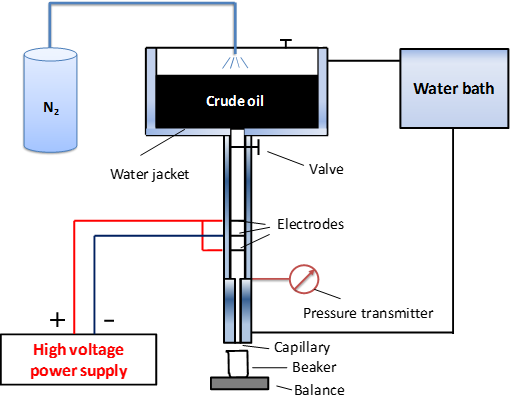
Figure 1: Schematic diagram of the electrical treatment apparatus
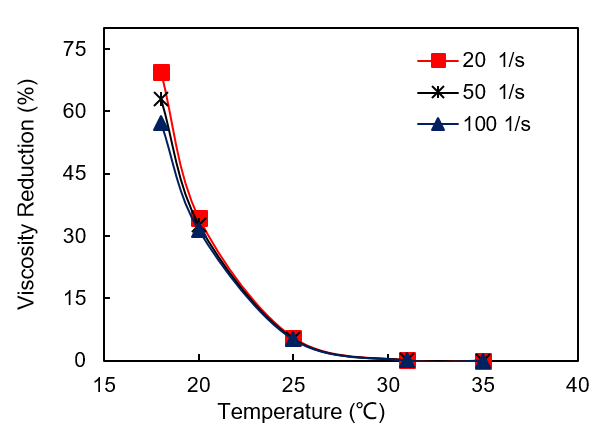
Figure 2: Effect of treatment temperature on viscosity reduction at different shear rates
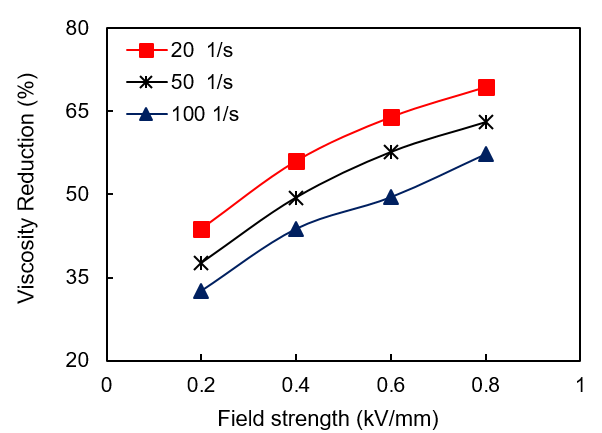
Figure 3: Effect of electric field strength on viscosity reduction at different shear rates
See more of this Group/Topical: Upstream Engineering and Flow Assurance Forum