
The separation of solid particles from liquids via filtration is a key unit operation in the pharmaceutical sector. This processing step commonly occurs after the isolation of an Active Pharmaceutical Ingredient (API) via crystallization and may involve a number of wash cycles in order to deliqour the cake and remove any residual solvents below specified limits. For the purposes of filtration, pressure or vacuum filters and centrifuges are most commonly employed.
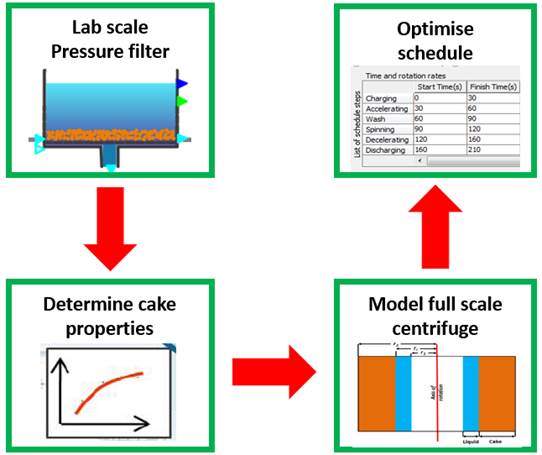
Figure 1: Filtration scale-up workflow - pressure filter to centrifuge
In this work we detail a model based workflow for the scale-up of filtration unit operations, as summarized in Figure 1 above. This workflow begins with the estimation of the following cake properties from small scale pressure filter experiments:
· Specific cake resistance
· Medium resistance
· Compressibility index of the cake
· Reference pressure drop for compressible cakes
The above parameters are then regressed from experimental data from the lab scale, namely the change in filtrate volume as a function of time for a range of conditions, as follows:
· Pressure drop
· Particle size distribution of particles in cake
These cake properties were subsequently employed within a centrifuge model to predict the filtration behavior of the system at plant scale. Additionally, the schedule of operation of the centrifuge was optimized with an objective of achieving the maximum product throughput through the centrifuge. The various trade-offs observed in the optimization objective will also be outlined. This filtration workflow for scale-up outlined above was applied in this work for a number of industrial cases, involving compressible cakes. This model-based approach allows the filtration unit step to be scaled-up and optimized in a fast and efficient manner, with minimal experimental effort and consumption of valuable materials.
See more of this Group/Topical: Separations Division