
Hydrogen sulphide absorption performance in various amines solution for combined desulphurization and dehydration
Usman Shoukat, Diego D. D. Pinto, Hanna K. Knuutila*
*Corresponding author e-mail: hanna.knuutila@ntnu.no
Department of Chemical Engineering, Norwegian University of Science and Technology (NTNU), Trondheim, Norway. INtroduction
Almost quantitative removal of hydrogen sulphide (H2S) from natural gas is necessary prior to use or pipeline transport. The most commonly used method for H2S removal is scavengers. However, these are usually non-regenerative substances and because of cost and handling they cannot be used for high H2S concentrations in the gas stream. Alkanolamines are commonly used for regenerative H2S removal processes (Kohl and Nielsen 1997). Natural gas is commonly saturated with water. The presence of water in the gas accelerates corrosion, and potentialize the formation of solid gas hydrates, which cause problems in gas flow in pipelines. One common way to avoid hydrate formation and to achieve problem free continuous gas transportation operations is to add inhibitors in gas pipelines (Kohl and Nielsen 1997). A system which can removed H2S and control hydrate simultaneously could reduce equipment size and help to reduce the installation and operational costs for both subsea and platform operations.
The objective of this study is to identify regenerative solvents suitable for combined selective H2S removal in high H2S content feed gas and hydrate formation control. Several amine-based solvents will be screened in this study and the effect of solution composition, inlet H2S concentration and temperature on H2S loading in the solutions will be discussed. The amines chosen for this work were systematically chosen so that insight into the influence of amine alkanol groups, alkyl chain length, hydroxyl group and hindrance of the tertiary amines at H2S absorption are given based on their molecular structure. MEthodology
In this study, various amines solutions (20 wt.%) with water, ethylene glycol (MEG) and triethylene glycol (TEG) are studied for H2S absorption in a custom built experimental setup at temperatures relevant to subsea conditions (e.g., 5 °C). The apparatus design is based on the CO2 screening apparatus used by (Ma’mun et al. 2007) as shown in Figure 1. As for the CO2 screening apparatus, the H2S screening is operated at atmospheric conditions. The H2S inlet partial pressure was chosen to be 0.03 kPa and 1 kPa and the experiments were run for 120 minutes for all solutions at 5 and 40 °C. The tests were performed in amine-water and amine-glycol (MEG or TEG) solutions. ICP-MS was used for the measurement of total sulfur in the liquid phase to obtain accurate absorbed H2S in amine solution.
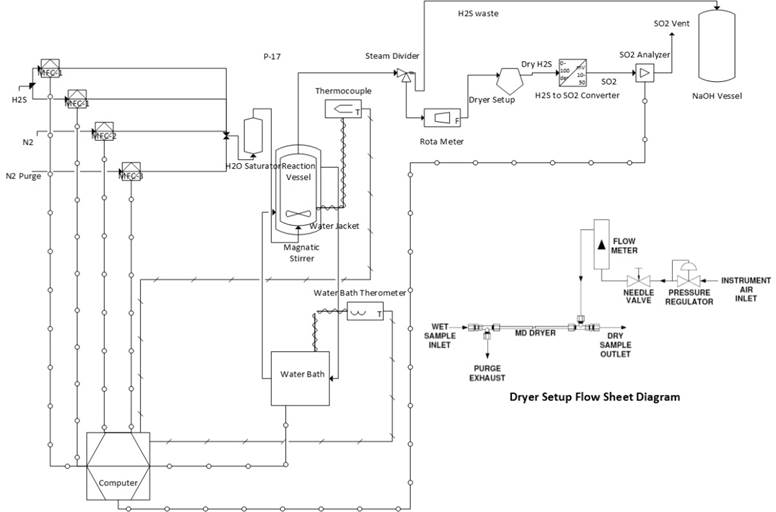
Figure 1: Schematic flow diagram of screening apparatus.
H2S absorption in various tertiary amines in presence of water, MEG and TEG was performed. The preliminary results show that the effect of MEG and TEG on the absorption of H2S into the amine solutions is significant. For example, comparing the H2S absorption at 5ºC and 0.03 kPa pH2S into 20wt% aqueous N-Methyl diethanolamine (MDEA) solution with glycols (MEG/TEG)-MDEA solutions shows that replacing of glycols with water in amine solutions restricts the H2S absorption significantly as shown in Figure 2. MDEA-MEG solution restricts the H2S absorption by 30% as compared to MDEA-H2O solution while in case of MDEA-TEG restriction is 50% as compared to MDEA-H2O and 27% as compared to MDEA-MEG solution.
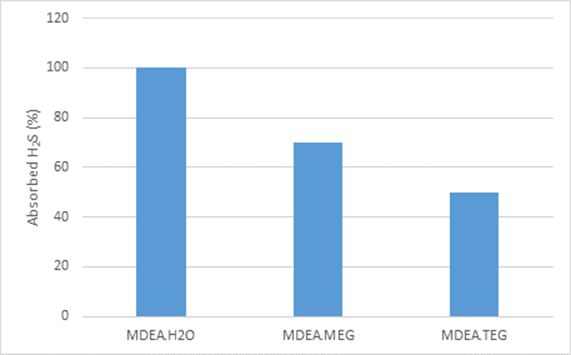
Figure 2: Restriction in H2S absorption in amine solutions caused by addition of glycols (MEG / TEG)
Key words: H2S absorption, alkanol amines References
Kohl, A. L. and R. B. Nielsen (1997). Gas Purification (Fifth Edition). Houston, Gulf Professional Publishing: 40-186.
Ma’mun, S., H. F. Svendsen, K. A. Hoff and O. Juliussen (2007). "Selection of new absorbents for carbon dioxide capture." Energy Conversion and Management 48(1): 251-258.
See more of this Group/Topical: Separations Division