
Interaction between Supercritial CO2+Cosolvent and Poly(vinyl acetate)
Dong-dong Hu, Lei Bao, Ling Zhao, Tao Liu*
(Shanghai Key Laboratory of Multiphase Materials Chemical Engineering, East China University of Science and Technology, Shanghai 200237, China)
hudd@ecust.edu.cn; liutao@ecust.edu.cn;
Phone: (+86) 21 64253470; Fax: (+86) 21 64253528
Supercritical carbon dioxide (scCO2) is of interest as a potential alternative to conventional organic solvents. Unfortunately, the low solvating power of scCO2 restricts its compatibility with polymers. Poly(vinyl acetate) (PVAc) was reported as one of the most CO2-philic hydrocarbon homopolymers, which was a significant step forward. But even so, the solubility of PVAc is very low, making them unsuitable to apply on a large scale.
The cosolvents (ethanol, acetone, n-heptane, denoted by ET, AC and C7) were introduced to form CO2+cosolvent systems for improving the solvent-solvent and solvent-solute interactions and enhancing the the compatibility with PVAc. Comparing the interaction of CO2 with acetone, and n-heptane, it could be seen that ethanol and CO2 provided stronger interaction energy from the ab initio calculation due to the shortest distance between the C atom of CO2 and the O atom of ethanol (Fig. 1). The molecular dynamic modeling showed that the interaction between ethanol and CO2 was strongest due to the bigger solubility parameter of ethanol (Fig. 2) and the obvious hydrogen bond bewteen ethanol and CO2 (Fig. 3), which increased significantly the solubility parameter of solvent and improved the dissolution of polymers in CO2. The dissolution behavior measurement (Fig. 4) confirmed that the addition of cosolvent could enhance the compatibility between CO2 and PVAc to a certain extent, and the solubility of PVAc in scCO2+cosolvent increased with the mole fraction of cosolvent, which has a good agreement with the simulated results of the solvent-solvent, solvent-solute interactions and the solubility parameter analysis.
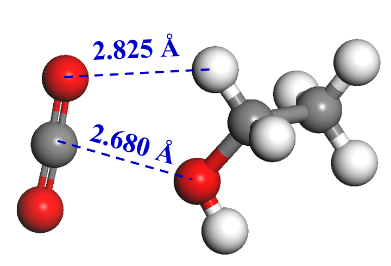
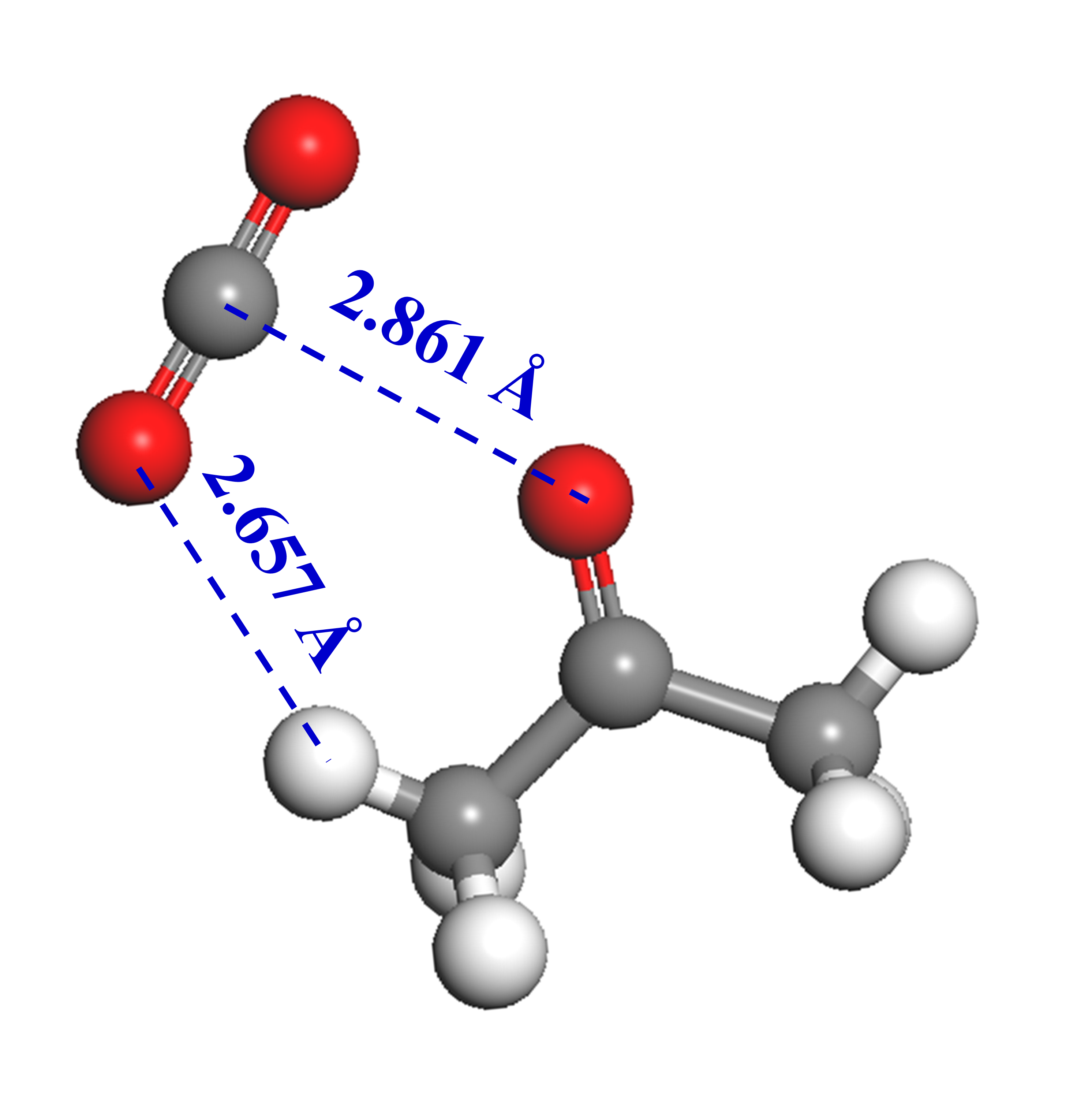
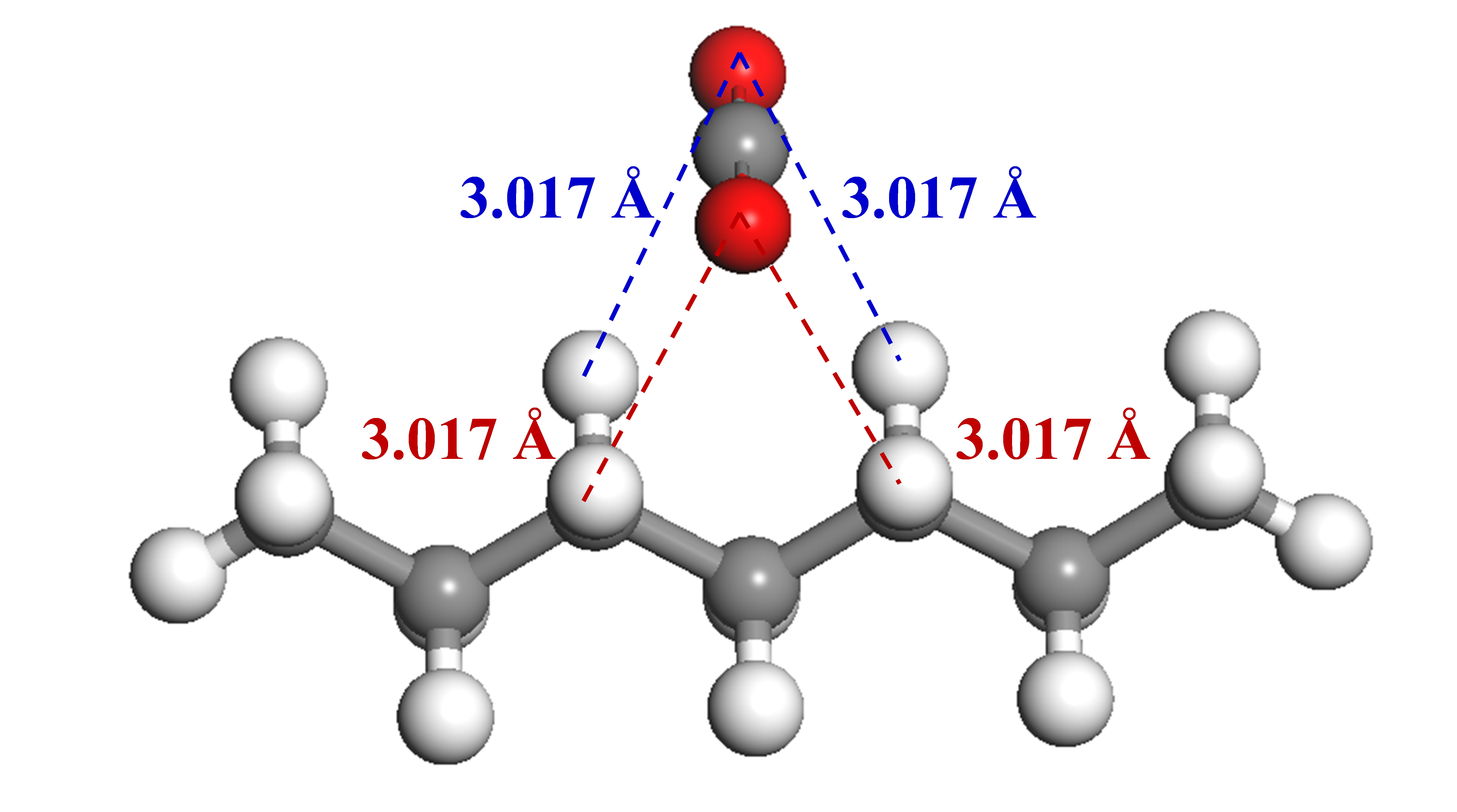
Fig. 1 Most stable mode in ET/CO2, AC/CO2 and C7/CO2systems.
(a) ET/CO2/CO2; (b) AC/CO2; (c) C7/CO2
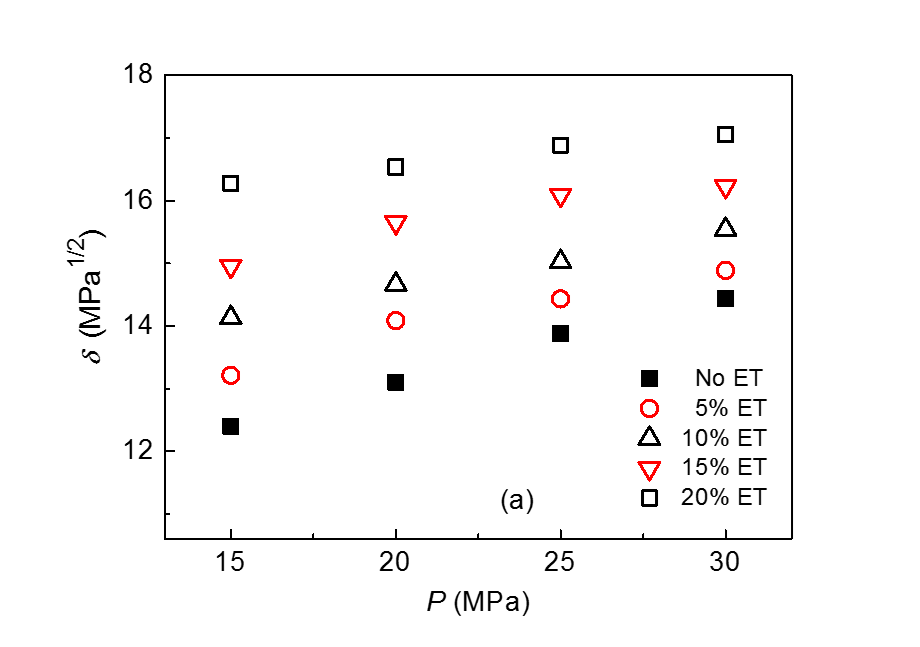
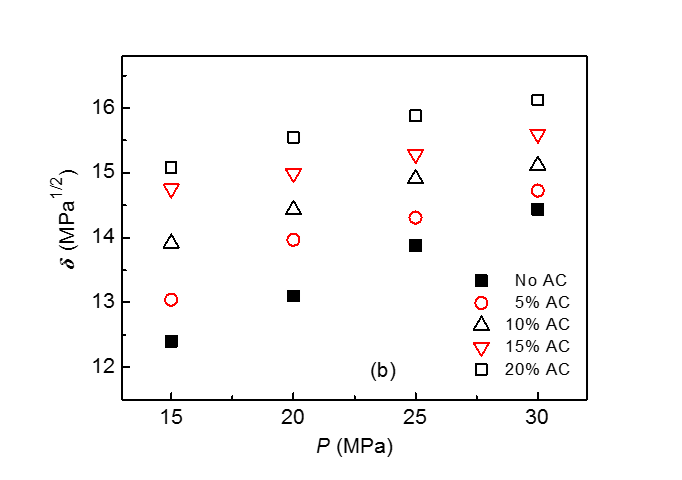
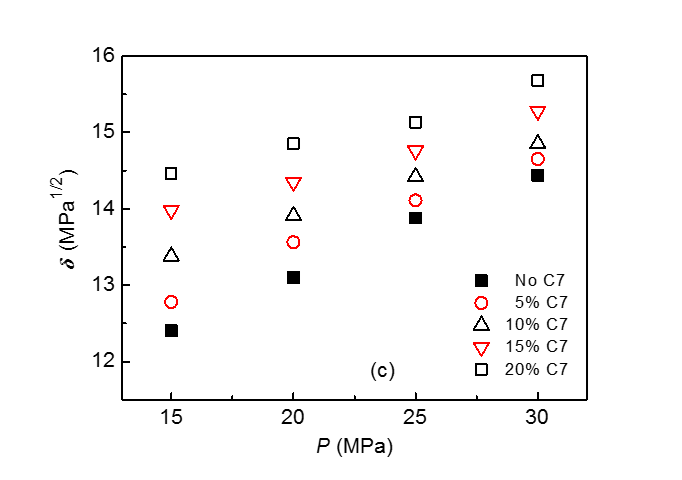
Fig. 2 Solubility parameter of CO2-ethanol binary systems with different compositions
(a) ET/CO2/CO2; (b) AC/CO2; (c) C7/CO2
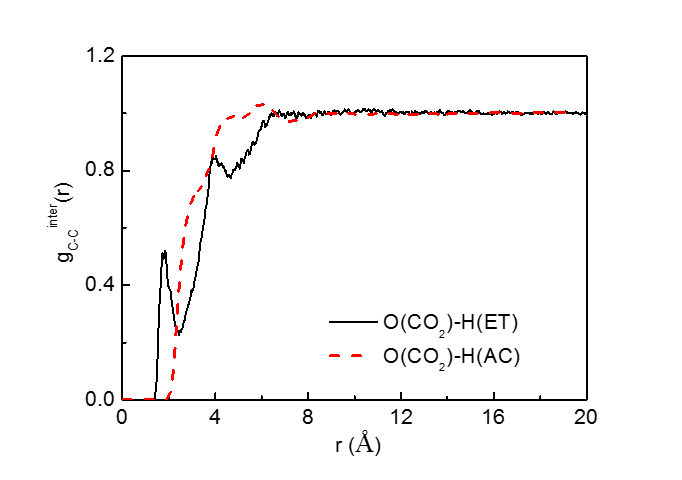
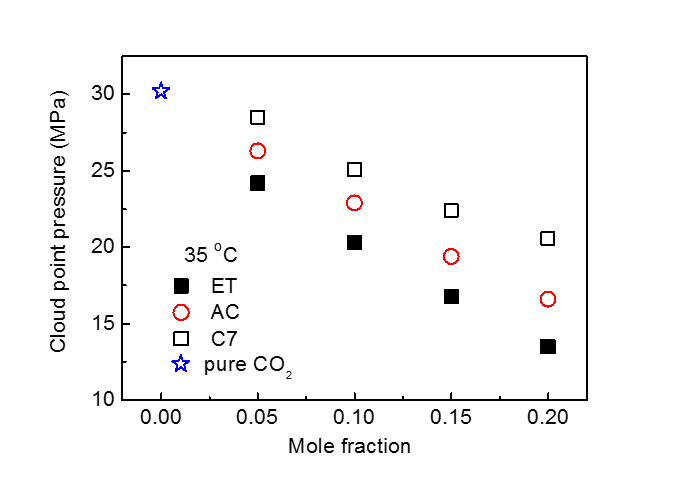
Fig. 3 Comparison of rational correlation functions Fig.4 Cloud point pressures of PVAc in
between CO2-ethanol and CO2-acetone systems. CO2+solvent at different temperatures
Acknowledgement:
The authors are grateful to the National Key Research and Development Program of China(2016YFB0302201) and the National Science Foundation of China (21376087) and Plan for Shanghai excellent technical leaders (14xd425500) for support.
References:
(1) DeSimone, J. M. Science 2002, 297, 799-803.
(2) Beckman, E. J. Chem. Commun. 2004, 1885-1888.
(3) Lee, H.; Terry, E.; Zong, M.; Arrowsmith, N.; Perrier, S.; Thurecht, K. J.; Howdle, S. M. J. Am. Chem. Soc. 2008, 130, 12242-12243.
(4) Cummings, S.; Xing, D.; Enick, R.; Rogers, S.; Heenan, R.; Grillo, I.; Eastoe, J. Soft Matter 2012, 8, 7044.
(5) Girard, E.; Tassaing, T.; Camy, S.; Condoret, J. S.; Marty, J. D.; Destarac, M. J. Am. Chem. Soc. 2012, 134, 11920-11923.
See more of this Group/Topical: Materials Engineering and Sciences Division