
An experimental study of a liquid drop impinging on a liquid pool
Manas Ranjan Behera a, Anirvan Dasgupta b, Sudipto Chakraborty a
aDepartment of Chemical Engineering, Indian Institute of Technology Kharagpur, India.
bDepartment of Mechanical Engineering, Indian Institute of Technology Kharagpur, India.
E-mail: manaswebmail@gmail.com, anir@mech.iitkgp.ernet.in, sc@che.iitkgp.ernet.in
The coalescence of a drop into a liquid pool has been studied in the context of a vortex ring1, foam2, emulsion2, and microfluidic device3. The research on the drop coalescence is motivated due to their relevance to various industrial applications; viz. transport of oxygen across air-water interface4, and spray cooling5, as well as its fundamental importance in fluid mechanics. Generally, when a drop impinges on the surface of the liquid pool having similar properties at a low velocity, a vortex ring is formed. A vortex ring is a locale where the fluid mostly turns around an imaginary axis line that forms a closed loop. The formation of the ring is a commonly occurring phenomenon which is seen in both natural occurring processes (e.g. volcano6) as well as artificial processes (e.g. blast of atomic bomb7, generated at wings of the aeroplane).
The current work attempts to study the formation of vortex ring for the miscible liquid system by impinging a liquid drop on a liquid pool. It is the simplest and relatively inexpensive method to generate vortex ring. A schematic diagram of the experimental setup for the generation of vortex ring has been shown in Figure 1. A rectangle tank [Plexiglas, Volume: 25x25x45 cm3] was used for all these experiments. Distilled water was filled up to 35 cm of total tank volume to create the liquid pool. The microsyringe assembly was attached to a stepper motor system for dispensing drops in a controlled manner. A fine vertical adjustment system was used for impingement of liquid at different heights. The impingement height was varied from 10-40 mm. The size of the drop was maintained 2.96 mm. A high-speed digital camera (manufacturer: Phantom, Vision Research Inc. (USA), model: V 7.3) was used to capture the post impact drop dynamics. The video was recorded in 800x600 resolutions at 1500 frames per second with an exposure time of 150 µs.
The formation and growth of the ring are described and presented in a sequence of images at the different time interval in Figure 2. When a particle laden drop impinges on a liquid pool, it creates a crater which is marked as the onset point for vortex ring generation. The dynamics of crater influences the characteristics of the ring. The impact of crater dynamics on vortex ring formation is investigated by measuring the variation of depth and velocity of the crater with time. The effect of drop impact height on the formation and characterization of vortex ring is also studied. How the impingement height affects the eccentricity of the drop, crater dynamics, translational velocity, and diameter of the vortex ring is investigated. From the observation, it is concluded that good vortex rings are formed over 10-30 mm height. The effect of drop eccentricity on the characterization of the ring is also investigated. It is concluded that the maximum penetrating vortex rings are achieved when the drop shape is prolate at the time of impact whereas minimum penetrations are obtained for the oblate shaped drop. From our observation, it can be concluded that the eccentricity of the drop also affects the crater dynamics. The shape and motion of the ring are measured and the variations are depicted with respect to time. The effects of various forces on penetration and formation of the ring were characterized by different dimensionless numbers such as Reynolds number, Weber number, Ohnesorge number, and Froude number.
Keywords: Interfacial Transport Phenomena, Droplet Dynamics, Crater Dynamics, Vortex Ring, High-speed imaging.
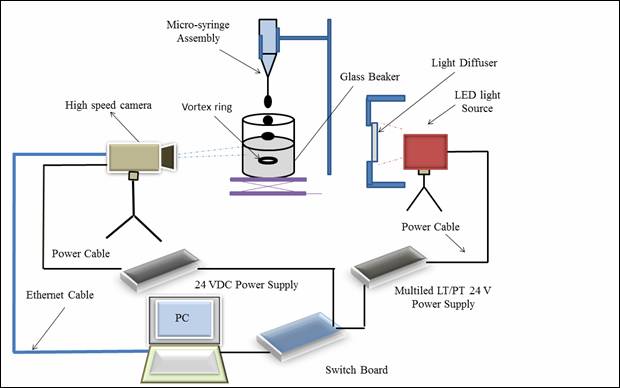
Figure 1. Experimental setup for generation of vortex ring.
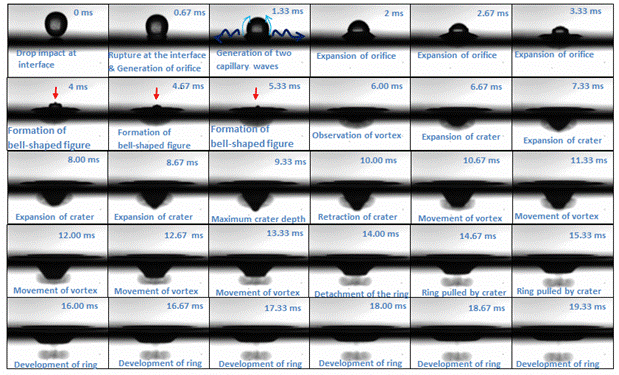
Figure 2. Formation and growth of vortex ring.
References:
1. Lee, J. S., Park, S. J., Lee, J. H., Weon, B. M., Fezzaa, K. and Je, J. H. (2015), “Origin and dynamics of vortex rings in drop splashing”, Nature Communications, Vol. 6, pp. 8187-8195.
2. Behera, M. R., Varade, S. R., Ghosh, P., Paul, P. & Negi, A. S. (2014), “Foaming in Micellar Solutions : Effects of Surfactant, Salt, and Oil Concentrations”, Industrial & Engineering Chemistry Research, Vol. 53, pp. 18497-18507.
3. Velev, O. D., Prevo, B. G. and Bhatt, K. H. (2003), “On-chip manipulation of free droplets”, Nature, Vol. 426, pp. 515–516.
4. Ho, D. T., Asher, W. E., Liven, L. F. B., Schlosser, P. and Gordan, E. L. (2000), “On mechanisms of rain-induced air-water gas exchange”, JOURNAL OF GEOPHYSICAL RESEARCH, Vol. 15, pp. 24,045–24,057.
5. Manzello, S. L. and Yang, J. C. (2002), “An experimental study of a water droplet impinging on a liquid surface”, Experiments in Fluids, Vol. 32, pp. 580–589.
6. Fuentes, O. V. (2014), “Early observations and experiments on ring vortices”, European Journal of Mechanics, B/Fluids, Vol. 43, pp. 166–171.
7. Sigurdson, L. (1991), “Atom Bomb/Water Drop”, Physics of Fluids A: Fluid Dynamics, Vol. 3, pp. 2034–2034.
See more of this Group/Topical: Engineering Sciences and Fundamentals