
Abstract
Third-largest demonstrated crude oil reserve in the world, next to Saudi Arabia and Venezuela occurs in the oil sands of western province of Canada. Oil sands production in Canada is expected to upsurge from 4.1 million barrels per day in 2015 to 5 million barrels per day in 2024. About three to five barrels of fresh water per barrel of crude produced is used by mining operations and 0.5 barrels for in situ operations. Due to high concentrations of organic acids leached from the bitumen during extraction, the oil sand process affected water (OSPW) is brackish, alkaline in nature and contains dissolved organic and inorganic pollutants. The existence of these substances in processed water makes it highly toxic to aquatic life [1]. To address this critical issue, Environment and Climate Change Canada (ECCC) introduced zero discharge policy. As per the mandate of this policy, oil sand industries are required to store all OSPW and to recycle it after treatment. The treatment of OSPW has become a serious issue for Canada’s oil sand industry, because the fine particles in tailing pond wastewater take decades to consolidate and dry out, which can delay reclamation. In currently available technologies, such as composite tailings (CT), whereby gypsum is added to mature fine tailings, further increases the salinity and hardness of process water [2]. In conventional pre-treatment techniques, chemical coagulants are used, namely, aluminum sulphate (Al2(SO4)3), ferric chloride (FeCl3) etc. Though the effectiveness of these chemicals as coagulants is well-recognized, still there are disadvantages associated with their usage, such as reduced efficiency in low-temperature water, relatively high procurement costs, detrimental effects on human health and production of large sludge volumes. Moreover, they significantly affect pH of the treated water. There is also strong evidence linking aluminium-based coagulants to the development of Alzheimer's disease and detrimental impact on the environment and health [3].
Maintaining good recyclable water quality and ensuring more efficient and limited use of fresh water are the most important challenges that must be met in the oil sands production sector. Therefore, it is critical to develop an effective and appropriate strategy to treat OSPW to sustain production. The combinations of the concerns with chemical coagulants and limited available technologies have led the researchers to focus on development of plant based natural coagulants. Due to their inherently renewable characteristics, abundance, low toxicity, and biodegradability, these naturally occurring and environmentally benign agents are rapidly gaining interest in water treatment. The mucilage extracted from Opuntia ficus-indica (OFI), a species of cactus, was evaluated for turbidity removal from synthetic turbid water and oil sand process affected water (OSPW), and an effort was made towards elucidating the underlying coagulation mechanism. For the first time, a natural coagulant derived from OFI was used to treat OSPW. Fourier transform infrared spectroscopy (FTIR) analysis was performed to understand chemical properties of the extracted mucilage. The functional groups observed in FTIR analysis signify the presence of l-arabinose, D-galactose, l-rhamnose, and D-xylose, as well as galacturonic acid. Preliminary jar test of synthetic turbid water achieved maximum turbidity removal of 98% under alkaline condition with coagulant dosing of 60 mg/l. The highest turbidity removal from OSPW was obtained up to 76% for 1200 mg/l coagulant dosage at neutral and alkaline pH (as shown in Figure 1 below). The effect of different ions commonly present in OSPW, on the process performance was also studied. The comparison of zeta potential measurements and microscopic images of thread like large flocs reveals the possibility that mechanism of coagulation by OFI is inter-particle bridging (as shown in Figure 2 below). Measurement of total organic carbon (TOC) was done and slight increment in TOC was observed after treatment of OSPW. A comparative study between natural coagulant and alum was also done and it was found that less quantity of compact sludge was produced by natural coagulant compared to alum. Once optimized, application of this readily available plant may offer a practical, inexpensive, and appropriate solution for pre-treatment of OSPW.
Keywords: OSPW; Natural coagulant; Cactus.
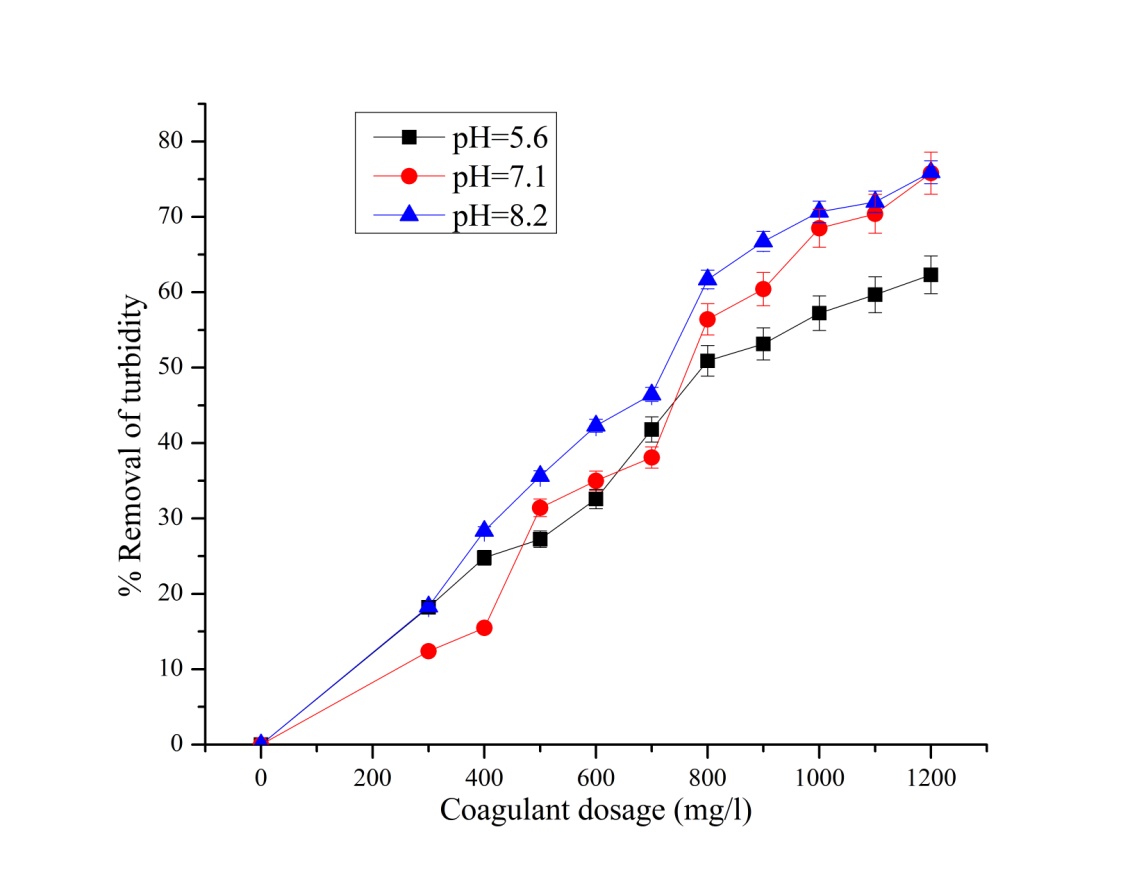
Figure 1. Effect of natural coagulant dosages and pH on turbidity removal from OSPW.
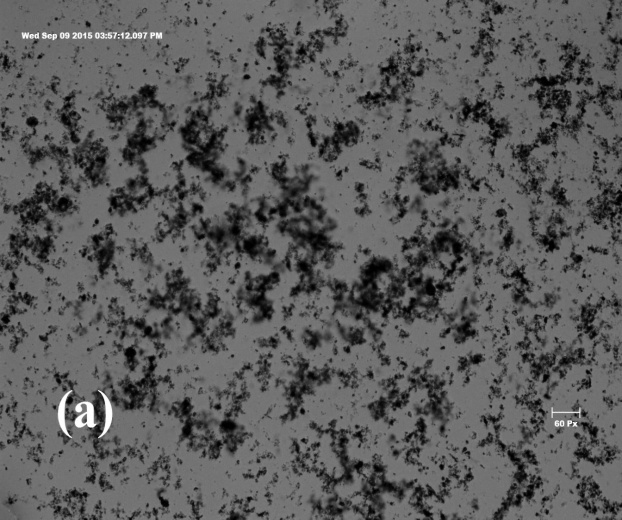
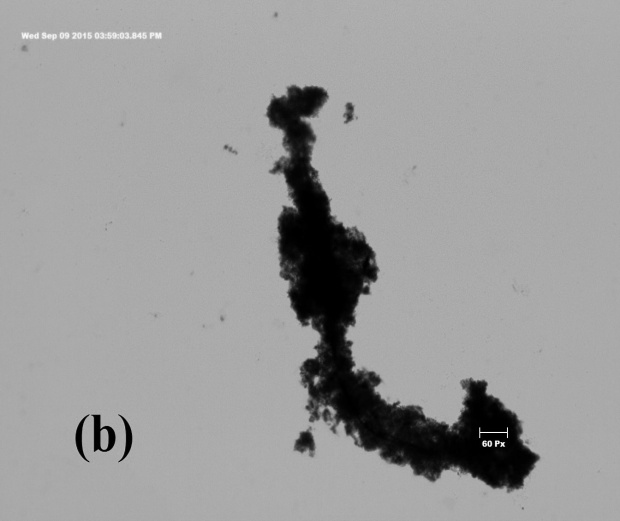
Figure 2. (a) Flocs produced while using alum (b) Flocs produced while using bio coagulant
References
[1] Lari, E., et al. "Determining the effect of oil sands process-affected water on grazing behaviour of Daphnia magna, long-term consequences, and mechanism." Chemosphere 146 (2016): 362-370.
[2] Renault, S., et al. "Effect of high salinity tailings waters produced from gypsum treatment of oil sands tailings on plants of the boreal forest." Environmental Pollution 102.2 (1998): 177-184.
[3] Martyn, C. N., et al. "Geographical relation between Alzheimer's disease and aluminium in drinking water." The Lancet 333.8629 (1989): 61-62.
See more of this Group/Topical: Separations Division