
Abstract
The scarcity for potable water over a wide region of Rajasthan, Gujarat and Andhra Pradesh in India and some other countries like China, United States and Mexico is quite prominent owing to excessive fluoride contamination in the ground water and surface water of those regions [1]. Fluoride is a necessary element of human body helping to construct healthy teeth and calcification of the dental enamel among infants, inhibiting dental caries when present within a concentration range of 0.5-1 mg/L. But long exposure and intake of water with high fluoride concentration leads to physiological, chronic and toxic effects. The permissible limit of fluoride in drinking water ranges from 0.5–1.5 mg/L as per the norms of World Health Organization (WHO) [2]. The well known water defluorination techniques include precipitation, membrane separations, and adsorption processes. Precipitation is the most frequently used technique for fluoride decontamination, but it has several drawbacks such as formation of fluoride precipitates as well as waste disposal issues. Comparatively, membrane separation is a smarter and cleaner way of fluoride decontamination by the use of ion exchange, reverse osmosis or electrodialysis. On the other hand, adsorption is a method that has been under the limelight for several decades as one of the most popular and economically sound technologies having dynamic applications in pollution prevention and water decontaminations. In this regard, research attention has been given to both utilizing bioresources as the raw materials for synthesizing novel adsorbents very inexpensively. Furthermore research effort is underway to improve the efficiency of the commercially available adsorbents by physical or chemical functionalization. Present study reports the feasibility of fluoride (F-) adsorption by use of zirconium (Zr(VI)) impregnated powdered activated carbon (PAC) nanocomposite synthesized through the assistance of ultrasound. Because of high electronegativity, fluoride has a strong affinity for rare earth metals such as zirconium, lanthanum and impregnating the zirconium metal ions on the activated carbon multiplies the fluoride adsorption efficiency of activated carbon by 3 to 5 times [3]. During synthesis, ultrasound was found to have significant impact on reducing the particle size with high specific surface area as well as substantial reduction in energy consumption. The nanocomposite was characterized by using scanning electron microscopy (SEM), energy dispersive X-ray (EDX), X-ray diffraction (XRD), N2 adsorption analysis (BET) and Fourier Transform Infrared Spectroscopy (FTIR) to study the physical and chemical properties. The pHpzc (Point of zero charge) of the adsorbent was found to be 5.03; hence all experiments were carried out at an optimum pH of 4 for adsorption of strong electronegative fluoride ions with an optimum adsorbent dosage of 2 g/L. The initial fluoride concentration was varied from 2.5 to 20 mg/L and the adsorption capacity was obtained upto 5 mg/g with equilibrium reaching within 3 hours. The adsorption kinetics was found to follow pseudo-second order kinetics and the isotherm to follow Langmuir isotherm model. The thermodynamic study showed the endothermic and spontaneous nature of the process within the studied temperature range. The effects of various co-existing ions (HCO3-, NO3-, SO42-, Cl-) on the process performance were also studied and found to have no significant effects on fluoride adsorption capacity. The adsorbent maintained high adsorption efficiency after the regeneration studies carried out for five adsorption-desorption cycles which signifies its potential to be a good defluorinating agent.
Keywords: Ultrasonication; Fluoride; Nanocomposite
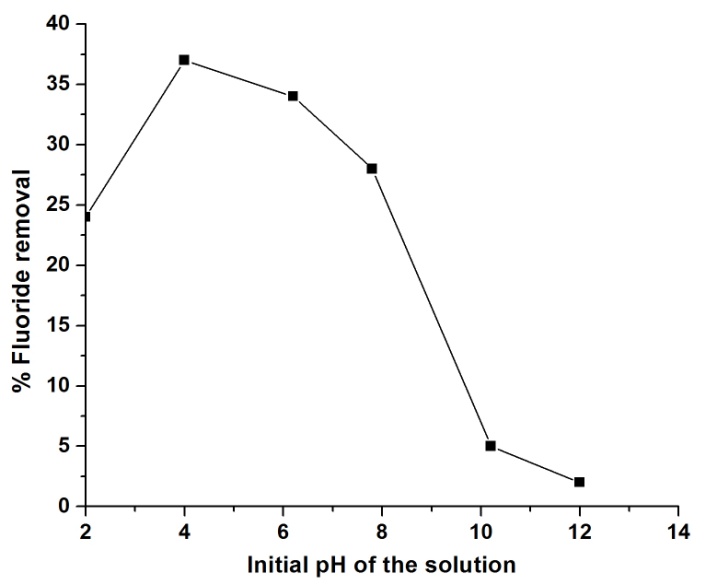
Figure 1: Effect of solution pH on fluoride removal (F−: 10 mg/L)
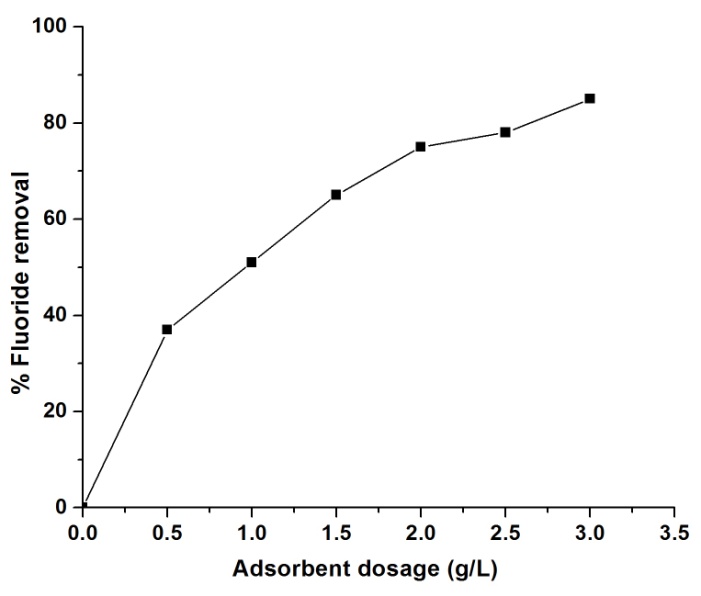
Figure 2: Effect of adsorbent dosage on fluoride adsorption (F−: 10 mg/L)
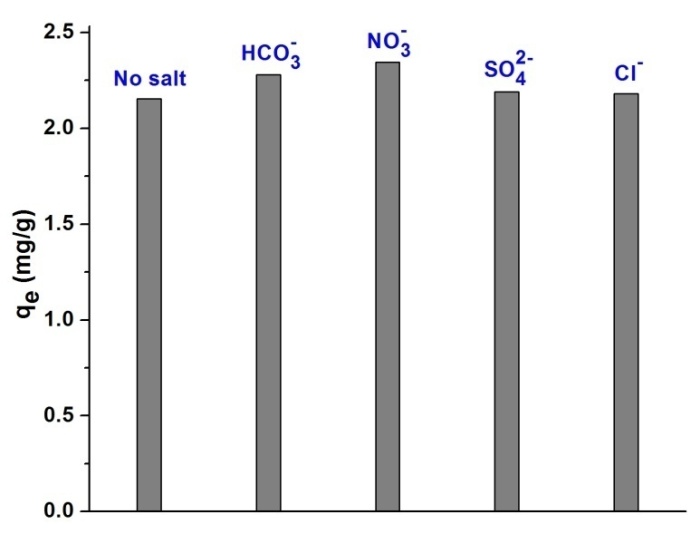
Figure 3: Effect of coexisting ions on fluoride adsorption
(F−: 5 mg/L, HCO3-, NO3−, SO42−, Cl- :10 mg/L; pH 4)
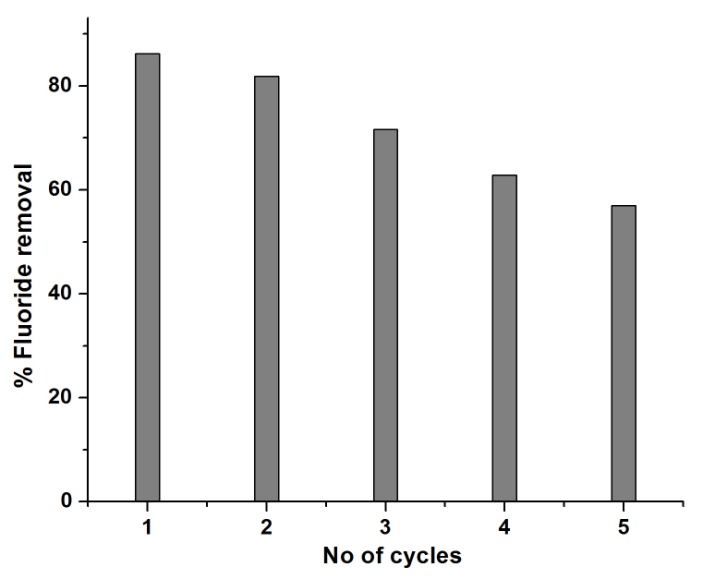
Figure 4: Fluoride removal after regeneration of the adsorbent (F−: 10 mg/L)
Reference:
[1] P. Miretzky, A.F. Cirelli, Fluoride removal from water by chitosan derivatives and composites: a review, Journal of Fluorine Chemistry, 132(4) (2011) 231–240.
[2] X. Yu, S. Tong, M. Ge, J. Zuo, Removal of fluoride from drinking water by cellulose@ hydroxyapatite nanocomposites, Carbohydrate polymers, 92(1) (2013) 269-275.
[3] R.S. Sathish, N.S.R. Raju, G.S. Raju, G. Nageswara Rao, K.A. Kumar, C. Janardhana, Equilibrium and kinetic studies for fluoride adsorption from water on zirconium impregnated coconut shell carbon, Separation Science and Technology, 42(4) (2007) 769-788.
See more of this Group/Topical: Separations Division