
Rapid economic development in China arouses the intense interest to produce increasing amounts of light olefins (e.g., ethylene, propylene) in both academia and industry. Traditionally, steam cracking of naphtha with dwindling and non-renewable crude oil is the main route for olefin synthesis [1,2]. Most recently, direct synthesis of light olefins from coal-/biomass-based syngas is regarded as the most promising non-petroleum route due to low-energy consumption, low-cost, high-efficiency, etc [1,3,4]. Generally, the catalyst design strategy for direct syngas route is mainly from the aspect of support modification, promoter doping, metal precursor synthesis and construction of multifunctional active sites [1,3,4]. Regardless of multifunctional catalyst, Fe is considered as the most promising active metal for FTO with _-Fe5C2 commonly recognized as active phase [1,5,6]. The key to high olefin selectivity is to modulate the Fe catalyst with appropriate capability for CO dissociation and hydrogenation.
Carbon materials possess high surface area, chemical inertness, mechanical strength, fruitful surface chemistry and electronic properties via covalent modifications. The type and quantities of surface chemical groups determined the interactions between carbon support and metal species [7,8]. Previous work demonstrated that iron-carbon interactions played an important role in Fischer-Tropsch process. Comparing with other conventional supports, the iron species on carbon materials are generally more reducible and can be transformed to iron carbides more facilely in the FTS reaction. In this work, the interaction between Fe and CNT is regulated by different surface modifications on CNT. The effect of the chemical and physical properties of the different CNT supports on the FTO performance of the Fe/CNTs was discussed.
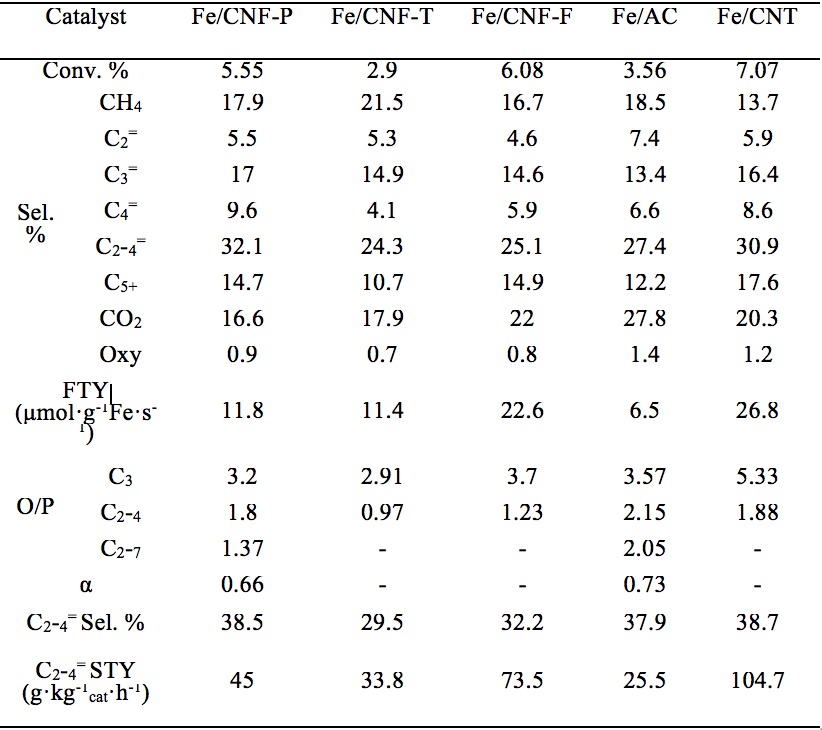
Table 1 FTO performance of various carbon materials supported Fe catalysts
The CNTs were prepared by surface modification under different conditions. Fe supported catalysts were prepared by incipient wetness impregnation of the modified CNTs after drying and calcination. Structural and electronic properties of Fe/CNTs were characterized by BET, FTIR, Raman, XPS, XRD, TEM, TPR, TPD, XAFS, etc.
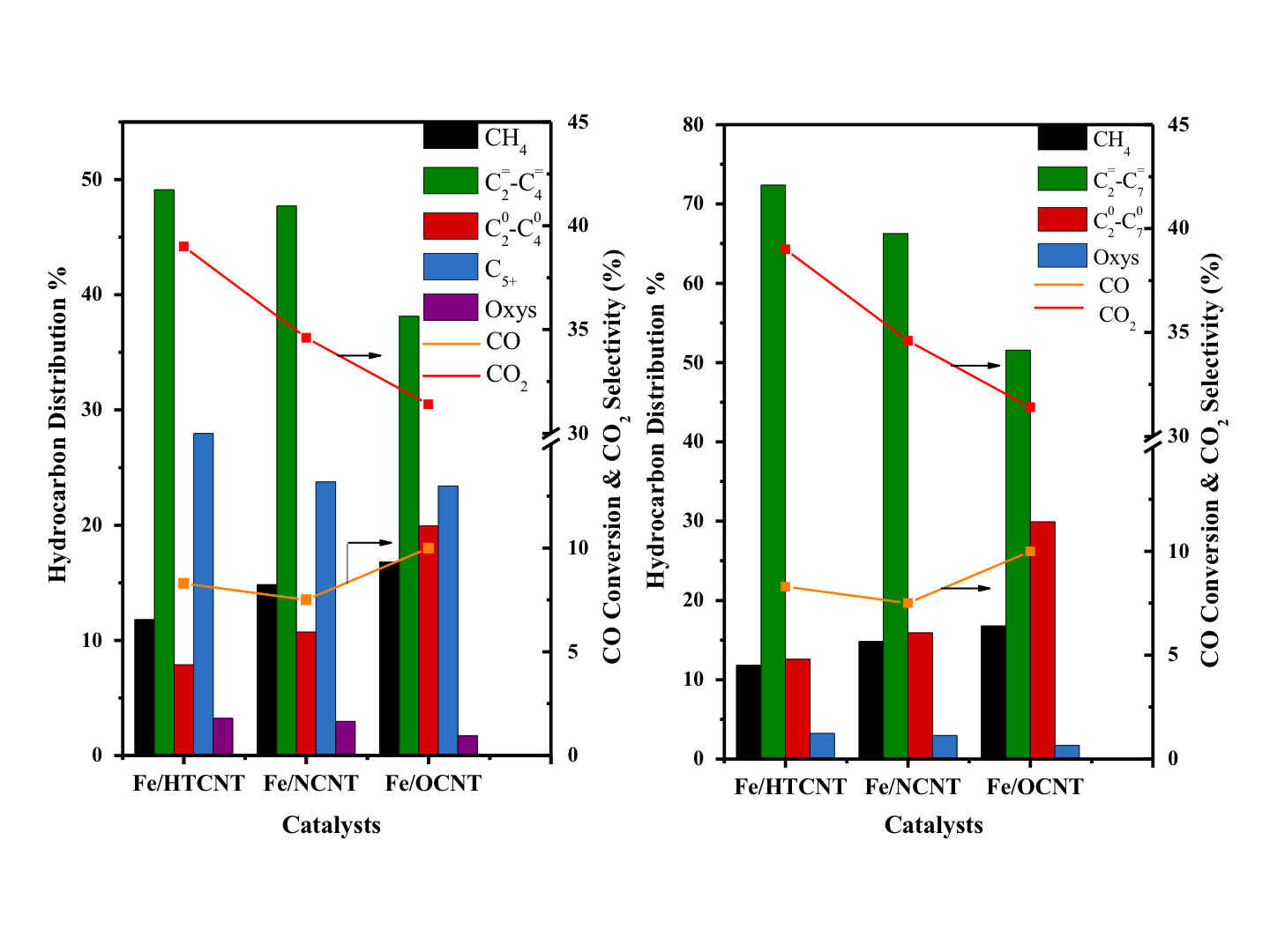
Figure 1 Catalytic performance of Fe catalysts supported on CNTs with different modifications
We evaluated first the FTO performance on multiple carbon materials supported Fe catalysts and found that CNT is the most favorable carbon support for olefin synthesis (Table 1). Moreover, we found that there existed large difference in performance of Fe catalysts supported on CNT with different modification methods (Figure 1). In similar conversion level, defect-rich HTCNT supported Fe showed highest initial conversion and olefin selectivity. Besides, OCNT with large amounts of O-functional groups supported Fe catalyst exhibited the lowest olefin selectivity but most stable activity. Based on the performance results, we tried to carry on various characterizations to elucidate the intrinsic effect of CNT modification on Fe-CNT interaction. BET, zeta potential and point of zero charge suggested that defect-rich HTCNT possessed highest surface area and less negative charge, while OCNT is the opposite. Raman and FTIR spectra evidenced the large amounts of O-contained groups (-C=O, -COOH) and rich defect on OCNT and HTCNT, respectively. In addition, there existed obvious electron transfer between Fe and modified CNTs, which is also demonstrated by XPS, in situ XRD, TPR, XAFS, etc.
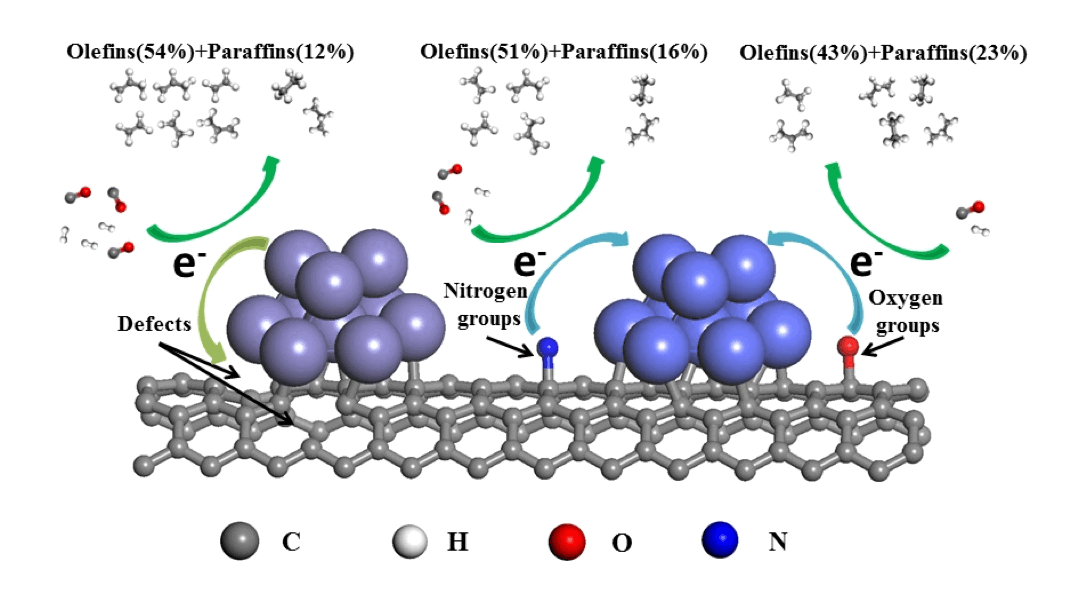
Figure 2 Possible structure-performance relationship for FTO over different kinds of Fe NPs immobilized on CNT
The presence/absence of surface functionalities can directly affect the catalytic behavior of the active phases. The defects on CNT benefits to the initial activity and selectivity to light olefins. High concentration of O groups enhanced the stability of Fe during FTO. Moreover, the performance strongly depends on the degree of intimacy between CNT and Fe NPs. The surface modification caused the difference in Fe-CNT interface property, which significantly affected the electronic environment of Fe, ultimately altering the FTO performance. An optimal surface chemistry also facilitates catalyst conversion into its catalytically active state.
References
[1] H.M. Torres Galvis, J.H. Bitter, C.B. Khare, M. Ruitenbeek, A. I. Dugulan, K. P. de Jong, Science, 335 (2012) 835-838.
[2] L. Zhong, F. Yu, Y. An, Y. Zhao, Y. Sun, Z. Li, T. Lin, Y. Lin, X. Qi, Y. Dai, L. Gu, J. Hu, S. Jin, Q. Shen, H. Wang, Nature, 538 (2016) 84-87
[3] F. Jiao, J. Li, X. Pan, J. Xiao, H. Li, H. Ma, M. Wei, Y. Pan, Z. Zhou, M. Li, S. Miao, J. Li, Y. Zhu, D. Xiao, T. He, J. Yang, F. Qi, Q. Fu, X. Bao, Science, 351 (2016) 1065-1068
[4] K. Cheng, B. Gu, X. Liu, J. Kang, Q. Zhang, Y. Wang, Angew. Chem. Intern. Ed., 128 (2016) 4803-4806
[5] Y. Cheng, J. Lin, K. Xu, H. Wang, X. Yao, Y. Pei, S. Yan, M. Qiao, B. Zong, ACS Catal., 6 (2016) 389-399
[6] D. Fu, W. Dai, X. Xu, W. Mao, J. Su, Z. Zhang, B. Shi, J. Smith, P. Li, J. Xu, Y.-F. Han ChemCatChem, 7 (2015) 752-756
[7] T.O. Eschemann, W.S. Lamme, R.L. Manchester, T. E. Parmentier, A. Cognigni, M. R¿nning, K. P. de Jong, J Catal., 328 (2015) 130-138
[8] M. Oschatz, J.P. Hofmann, T. W. van Deelen, W. S. Lamme, N. A. Krans, E. J. M. Hensen, K. P. de Jong, ChemCatChem, 9 (2017) 620-628
See more of this Group/Topical: Catalysis and Reaction Engineering Division