
VALUE ADDED PRODUCTS FROM AGRO-INDUSTRIAL WASTES. COLOMBIAN ANDES BERRY (Rubus glaucus benth) RESIDUES
Javier D‡vila, Department of Engineering, Universidad Jorge Tadeo Lozano, Bogot‡ Colombia, Gonzalo Taborda, Chemistry Department, Universidad de Caldas, Manizales Colombia, Moshe Rosenberg, University of California, Davis, USA, Carlos Cardona, Department of Chemical Engineering, Universidad Nacional de Colombia sede Manizales.
Email of presenting author: javiera.davilar@utadeo.edu.co
Colombia has one of the most diverse varieties of fruits in the world, due to its thermal floors and its variety of soils that allow cultivating a broad spectrum of fruit species. Colombia leads in biodiversity per square kilometer and enjoys 433 species of native fruits and has the second larger number of plant species with 51,220, some of which are exotic fruits containing important compounds. In this sense, the productive chain of Andes Berry (Rubus glaucus benth) in Colombia is well established however, it lacking of research to find additional benefits of the residues after their processing. Thus, this research investigated Andes berry residues from its chemical characterization for suggesting potential uses and possible value added products derived from this residue. Moisture, extractives, cellulose, hemicellulose, lignin and ash contents were determined as well as other important characteristics such as total phenolic compounds, total antioxidant activity, anthocyanins and volatiles constituents. Results revealed that blackberry residues (BR) had 61.54% of holocellulose (cellulose and hemicellulose); a total phenolic compounds content of 2,700 mg of GA/100 g BR and an anthocyanins content of 126.41 mg/kg of BR. The total antioxidant activity was 174.8 μmol TE/g of BR that was due in 93.58% to the contribution of total phenolic compounds present in BR. Volatiles profile revealed that 2-heptanone, 2-heptanol and benzoic acid were, after ethanol (3,226.09 μg/kg of BR), the most significant compounds present in BR with 1,064, 707 and 542 μg/kg of BR respectively. Finally, a biorefinery approach is suggested (See figure 1) to take advantage of all valuable compounds present in this residue.
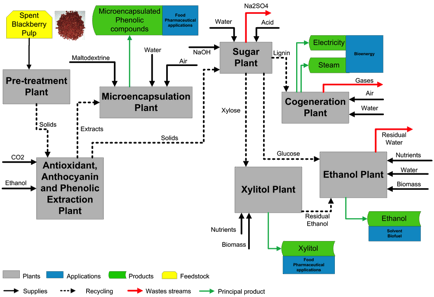
Figure 1. Biorefinery based on Andes berry residues
See more of this Group/Topical: Food, Pharmaceutical & Bioengineering Division