
Performance of the Novel Ultra-thin Proton Exchange Membrane Based on Poly(arylene ether sulfone)s for PEMFCs
Yang ZHAO, Xue LI, Xiaofeng XIE*
Institute of Nuclear and New Energy Technology, Tsinghua University, Beijing, 100084, China
Several perceived problems of Nafion membranes including high cost, high fuel permeability and restricted properties under the more stringent operating conditions (at temperatures above 80ºC and relative humidity (RH) conditions below 50%), have been gradually emerging in the developing process. In order to solve these problems, the novel ultra-thin proton exchange membrane based on poly(arylene ether sulfone)s is designed, prepared, and investigated. We use the atom transfer radical polymerization (ATRP) to prepare the membrane based on sulfonated poly(arylene ether sulfone) (SPAES), and the chemical structure of the membrane is shown in Scheme 1. This graft copolymer, of which architecture is comprised of a hydrophobic backbone that contain considerable flexible ionic side chains, has the potential to provide well-interconnected proton transporting pathways due to enhanced phase-separated morphology. The cells based on same hydration degree and different membranes were shown in Scheme 2. The diffusion coefficient of hydronium ions was used to forecast the proton conductivity of SPAES membranes, while the diffusion coefficient of water molecules was used to investigate the diffusion of water from cathode to anode.
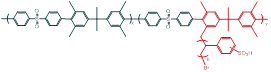
Scheme 1. The chemical structure of the membrane.
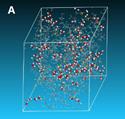
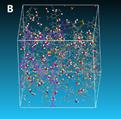
Scheme 2. The cells based on same hydration degree and different membranes:
A) Nafion 211; B) SPAES.
This method could induce phase-separated morphology between hydrophilic ion-conducting channels and the hydrophobic matrix into the novel ultra-thin membranes. The morphology of SPAES membrane by TEM and SAXS showed that a wormlike and interconnected hydrophilic network of small ionic clusters were observed, higher than that of Nafion, which had a cluster-network morphology by narrow ionic nanochannels. Measurement of physical properties showed that these novel ultra-thin membranes were available for PEMFCs applications. The water uptake, swelling ratio and fuel permeability were each improved by lengths of the side chain. Future studies will focus on improving the oxidative stability of these materials, further enhancing conductivity by improving IEC, and evaluating PEM performance in a single cell PEMFC test.
Keywords£ºProton Exchange Membrane£» Ultra-thin membrane£» Atom Transfer Radical Polymerization£» Phase Separated Morphology.
Acknowledgements: This work was supported by the National Natural Science Foundation of China (51573083) and Intergovernmental International Scientific and Technological Innovation Cooperation Key Projects (2016YFE0102700).
See more of this Group/Topical: Materials Engineering and Sciences Division