
Catalyst nanoparticles were synthesized using a novel “Cellulose Assisted Combustion Synthesis (CACS)” technique. In this technique, an aqueous solution of metal nitrate and a reducing agent is impregnated on a thin cellulose paper as depicted in figure below1. The paper is dried and locally ignited at one end to start combustion reaction that is self-sustained under optimum loading of reactive solution, continuously producing nanoparticles. The thin film helps in generating a quenching effect and limits nanoparticles sintering in post-combustion stages. This paper describes the synthesis of Cu, Ni and Co based nanomaterials that are found to be active for ethanol hydrogen production2. A detailed mechanistic study of nanoparticle evolution during synthesis process was conducted along with the reaction pathway analysis for hydrogen production from ethanol. In-situ DRIFTS studies on the metal surfaces reveal the differences in their catalytic performance and helps in explaining the observed product distribution2.
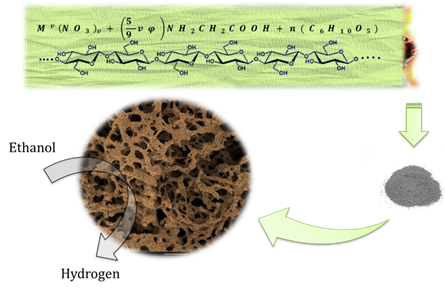
Figure 1: Cellulose assisted combustion synthesis, modified from Ref 1
References
1 A. Ashok, A. Kumar, R. R. Bhosale, M. A. H. Saleh and L. J. P. van den Broeke, RSC Advances, 2015, 5, 28703-28712.
2 A. Kumar, A. Ashok, R. R. Bhosale, M. A. H. Saleh, F. A. Almomani, M. Al-Marri, M. M. Khader and F. Tarlochan, Catal. Lett., 2016, 146, 778-787.
See more of this Group/Topical: Nanoscale Science and Engineering Forum