
Mixed matrix membranes for butanol recovery based on zeolites as macro-crosslinkers
Song Hu1, Peiyong Qin1,*
1National energy R&D center for biorefinery, Beijing University of Chemical Technology, Beijing, China
Biobutanol produced by biomass fermentation is critical for the development of sustainable and renewable biofuel. Mixed matrix membrane (MMM) is considered to be a promising choice for butanol recovery from fermentation via pervaporation.
In previous work, methods for fabrication of MMM only focus on improving fillers¡¯ physical compatibility and ignore the potential of chemical bridging between polymer and fillers, thus it is still hard to obtain a sufficiently thin selective membrane layer with high particles loading.
Herein, we report a method for the fabrication of an efficient membrane for butanol recovery using micron-sized particles of surface modified silicalite-1 as macro-crosslinkers within a polydimethylsiloxane (PDMS) matrix (as shown in Fig. 1). In this method, silicalite-1 of nano- and micron-sized particles were synthesized and surface modified with a range of alkyloxysilanes in the fabrication of mixed matrix membranes (MMMs) in order to minimize the undesirable voids. Moreover, silicalite-1 particles in MMMs have a double function which not only provided transport channels of high selectivity, but also reacted with the hydroxyl groups of PDMS during membrane formation. The highest separation performance was obtained by incorporating micron-sized n-propyltrimethoxysilane (PTMS)-modified silicalite-1 into the PDMS membrane at a loading of 63 wt. %. A high separation factor of 72.9 and a normalized total flux of 1156 g/m2h were obtained in separating n-butanol from a 1.5 wt. % aqueous solution at 55 oC. Compared to the pure PDMS membrane, the separation factor and normalized butanol flux were increased by 83.6 % and 19.7 %, respectively.
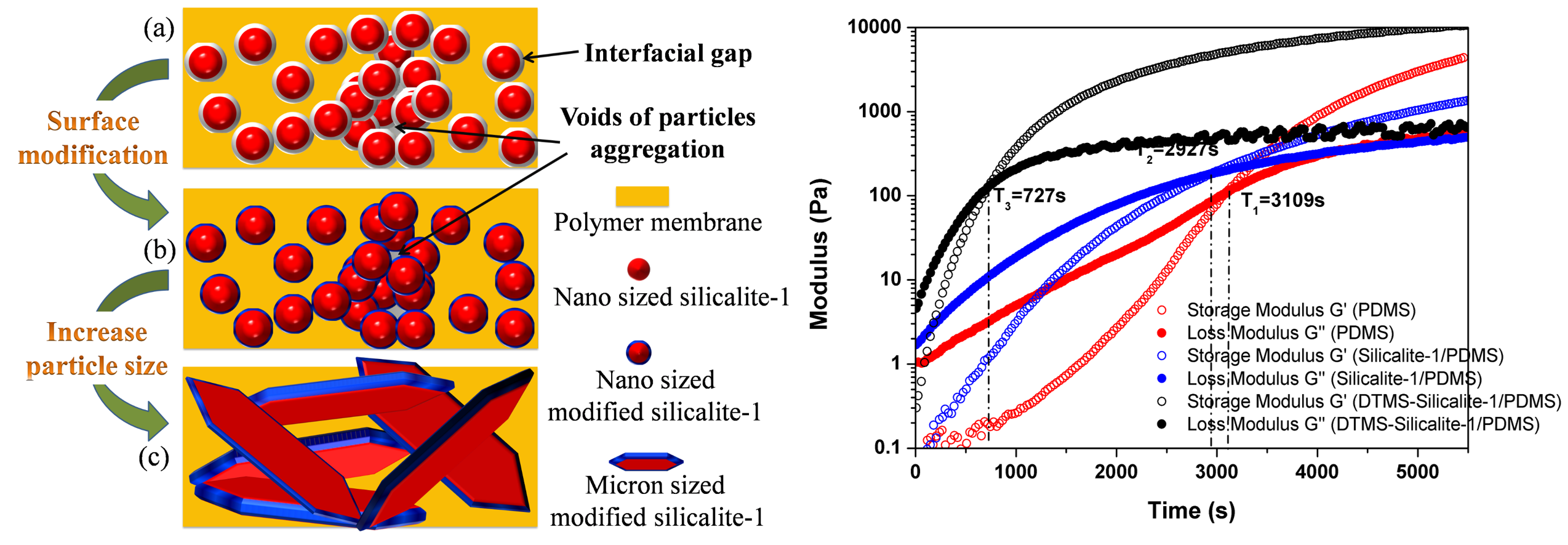
Fig. 1 Schematic diagram of the strategies for improving the interactions and eliminating the undesirable voids, and rheology of membranes in curing process.
Additionally, MCM-41 (mesoporous) was also used as fillers in fabricating of mixed matrix membrane via the same method. Compared to the pure PDMS membrane, the total flux increased by 40 % when using PTMS-modifiled MCM-41 as macro-crosslinker.
See more of this Group/Topical: Food, Pharmaceutical & Bioengineering Division