
Ethanol dehydrogenation mechanism was investigated over cobalt catalyst prepared by novel cellulose assisted combustion synthesis techniques [1-4]. Nanoparticles synthesis mechanism was studied using TGA/DTA analysis. The effect of synthesis precursor ratio was also studied and correlated with microstructural properties of the product. The amount of fuel content in the combustion solution was found to greatly affect the phase and microstructure of the synthesized catalysts. Along with the microstructure, changes in surface cobalt oxidation states as a function of fuel ratio was also studied for various fuel to oxidizer ratios using XPS. The cobalt catalyst was found to be highly active for ethanol dehydrogenation reaction over a temperature of 50ºC– 400ºC. In situ DRIFTS studies were conducted to understand the ethanol-metal interaction and deduce a reaction pathway by monitoring the gas phase and surface adsorbed species. The reaction mechanism was found to proceed via ethoxy formation and subsequent generation of aldehyde species at 50ºC – 200ºC and formation of carbon dioxide at 400ºC. Carbon formation was also observed as shown in the TEM image (Fig. 1) of the spent catalyst, which supposedly comes from sequential removal of H from adsorbed *CH3 to produce hydrogen and carbon.
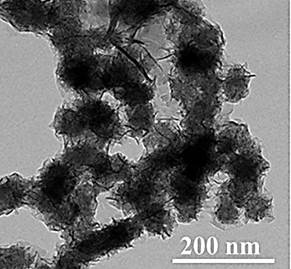
Figure 1: TEM image of spent Co catalyst after ethanol dehydrogenation reaction
References
[1] A. S. Mukasyan, P. Dinka, Advanced engineering materials 9 (2007) 653-657.
[2] A. Kumar, A.S. Mukasyan and E.E. Wolf, Applied catalysis.A, General 372 (2010) 175-183.
[3] A. Kumar A.S. Mukasyan, E.E. Wolf, Industrial engineering chemistry research 49 (2010) 11001-11008.
[4] A. Ashok, A. Kumar, R.R. Bhosale, M.A.H. Saleh and Leo J.P. van den Broeke, RSC Advances 5 (2015) 28703-28712.
See more of this Group/Topical: Catalysis and Reaction Engineering Division