
Analysis of Post-Combustion Inertial CO2 Extraction System
Adam H. Berger1 Yuqi Wang1* Abhoyjit S. Bhown1
Robert Kielb,2 Anthony Castrogiovanni2 Vladimir Balepin3
1Electric Power Research Institute (EPRI), Palo Alto, CA, USA
2ACENT Laboratories, Bohemia, NY, USA
3Orbital ATK, Ronkonkoma, NY, USA
Abstract
One method for removing CO2 from flue gas that has been proposed for post-combustion CO2 capture is cryogenic separation. To cool the flue gas to the necessary temperature to remove CO2 as a solid, Orbital ATK and ACENT Labs have proposed the Inertial CO2 Extraction System (ICES) as shown in Figure 1. ICES uses the cooling effect from accelerating flue gas to supersonic speeds in order to promote the formation of solid CO2 particles. The solids can then agglomerate to form larger particles that grow sufficiently to be inertially separated from the remaining gas flow by an appropriately-curved gas flow duct. At the duct curve, CO2 solids can be removed using a simple knife edge separator, sent to a cyclone, and pressurized in dense-phase, minimizing the energy of compression. The remaining CO2-free gas stream that is still at high speed in the duct but at low temperature and pressure can recover its pressure in a diffusor for emission to the atmosphere. This work provides a thermodynamic analysis of this process and the effects of condensing material in supersonic, two phase flow in the duct.
When gas is isentropically accelerated to supersonic speeds through a nozzle, the temperature and pressure of the gas are significantly lowered to a point where CO2 forms a solid as described by isentropic supersonic flow equations. However, these simple relations are complicated by the introduction of multi-phase flow, heat of sublimation released during phase change, friction losses, and other non-idealities. In addition, to ensure that the solid particles that are formed can grow to the appropriate mass to inertially migrate towards the solid-capture duct, nucleation sites can be introduced in the form of recycled solid CO2 particles. In order to analyze the performance of the ICES capture system for post-combustion CO2 capture, the accelerating flow through a converging-diverging nozzle, solid CO2 capture, and subsequent pressure recovery in a decelerating diffusor were computationally simulated at a range of initial conditions and with different levels of solid CO2 recycle.
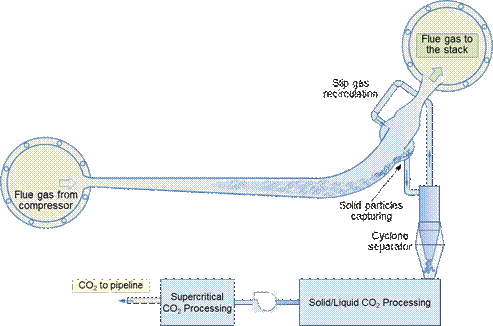
Figure 1. Inertial CO2 Extraction System.
To simulate the ICES process, an equation of state for CO2 valid in the solid-gas region was implemented. This was combined with real-gas property data to calculate the phase behaviour and thermodynamic state of the system at the temperatures and pressures required for solid CO2 formation. The equation of state with phase equilibrium calculations was used to calculate the thermodynamic state of the process at each velocity during acceleration and deceleration. The solids separation and gas deceleration in the diffusor were subsequently calculated as well using similar techniques. The simulation results were verified through forwards and backwards comparison to isentropic flow, single-phase supersonic flow, and Rayleigh flow. This integrated simulation provides an understanding of the ideal flow case and allows analysis of the ICES process.
This paper will present the results of these calculations, including the effect of inlet temperature, inlet pressure, and the presence of a recycled medium to increase nucleation. Several lessons learned from the simulations and parametric tests of the process will be described. Thermodynamic limits to supersonic cryogenic CO2 capture processes will also be discussed, for post combustion CO2 capture from coal-derived flue gas as well as for other gas streams of interest.
*Present Address: Department of Mechanical Engineering, University of California, Los Angeles
See more of this Group/Topical: Topical Conference: Advances in Fossil Energy R&D