
Acetalated Dextran Nanoparticles for Rapid and Glucose Responsive Insulin Delivery
Lisa R Volpatti, Robert S. Langer, Daniel G. Anderson.
Koch Institute of Integrative Cancer Research & Department of Chemical Engineering, MIT, Cambridge, MA 02139.
Statement of Purpose: Diabetes mellitus is a class of diseases in which the body either does not produce or is insensitive to insulin. This results in poorly controlled blood glucose levels, often leading to severe complications including heart disease, stroke, and kidney failure. An attractive diabetes therapy is self-regulated delivery of insulin to recapitulate deficient insulin production or signaling.1 In order for a self-regulated system to be therapeutically relevant, it must rapidly respond to changes in glucose concentration. To achieve this goal, acetal-functionalized dextran (Ac-dex) was synthesized (Fig. 1a) with various degrees of modification and formulated into nanoparticles encapsulating insulin, glucose oxidase (GOx), and catalase. GOx converts glucose to gluconic acid and reduces the pH in the microenvironment of the nanoparticles. The acetal groups are subsequently cleaved from the polymer in an acid catalyzed reaction, solubilizing the native dextran and releasing the insulin (Fig. 1b). We demonstrate that nanoparticles synthesized from Ac-dex with 55% of residues containing a cyclic acetal modification release 100% of encapsulated insulin within the first 2 hours of exposure to hyperglycemic conditions. We further preconcentrate these nanoparticles by encapsulating them in alginate microgels to form an injectable subcutaneous depot for the modulation of glucose levels in vivo.
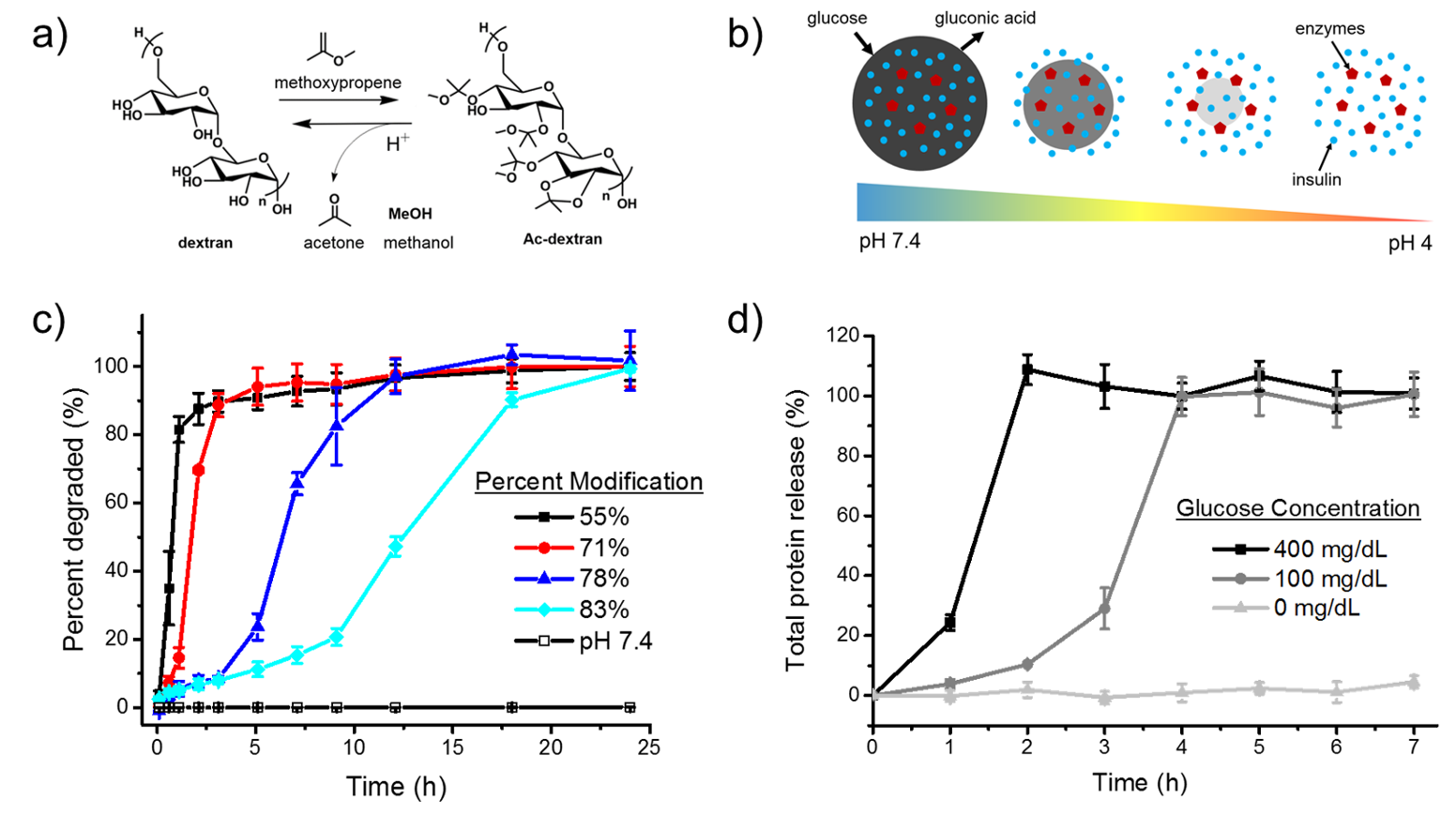 Fig. 1. Glucose responsive insulin release. a) Schematic
diagram of the synthesis of acetalated dextran. b) Schematic
of nanoparticle system containing enzymes and insulin. c) Percent dextran
degraded over time for polymers with varying degrees of acetal
modifications. d) Protein release from 55% modified acetalated
dextran nanoparticles containing glucose oxidase and catalase, showing enhanced
kinetics with increasing glucose concentrations.
Methods: Ac-dex was synthesized as previously described2 with reaction times ranging from 10 min to 60 min, and a sonication/evaporation method was used to produce protein-encapsulated nanoparticles with an optimized weight ratio of approximately 6:1.5:92.5 insulin:enzymes:Ac-dex. In vitro release studies for Ac-dex degradation were performed in either pH 7.4 or pH 4.7 buffer to represent normoglycemic and hyperglycemic conditions, respectively. Phosphate buffered saline with varying concentration of glucose was used to show glucose-responsive insulin release. Samples were incubated at 37 °C with shaking, and aliquots were taken and analyzed at designated time points.
Results: Ac-dex was synthesized (Fig. 1a) with varying reaction times to yield polymers containing between 55% and 83% of glucose residues modified with a cyclic acetal group, as confirmed by NMR analysis. Single emulsion Ac-dex nanoparticles were prepared, and the percent of soluble dextran in the supernatant was measured over the course of 24 hours to determine the degradation kinetics of the polymers (Fig. 1c). Over 80% of the 55% modified Ac-dex was degraded within the first half hour, while 80% of the 83% modified Ac-dex was degraded only after 18 hours of incubation. The polymers with the fastest response time were used to synthesize nanoparticles encapsulated with insulin, and their release correlated strongly to the degradation kinetics. Notably, there was no significant release or leakage of insulin under physiological pH over the course of 24 hours. GOx and catalase were then encapsulated into nanoparticles from the 55% modified polymer, and insulin release was monitored in response to glucose (Fig. 1d). Within 2 hours, upon reduction of the pH in solution to around 4.5, 100% of encapsulated insulin was released in response to physiologically relevant hyperglycemic conditions (400 mg glucose/dL). We next preconcentrate nanoparticles into alginate microgels with an average diameter of 400 µm and concentration of 20 mg nanoparticles/mL without altering the insulin release kinetics. We further show that by encapsulating a blend of nanoparticles of varying stabilities (55%, 71%, and 78% modification) into alginate microgels, we can form a rapidly responding self-regulated system that could be used as a once daily injectable therapy for diabetic patients.
Conclusions: Alginate microgels encapsulating nanoparticles synthesized from a range of modified dextran polymers show promise in creating a fast-acting glucose-responsive insulin delivery system that has the potential to modulate glucose levels on a therapeutically relevant timescale.
Ref: 1Bawa P et. al. Biomed. Mater. 2009; (4:022001). 2Bachelder EM et al. J. Am. Chem. Soc. 2008; (130:10494–10495.)
See more of this Group/Topical: Food, Pharmaceutical & Bioengineering Division