
The solar-driven hybrid sulfur-ammonia (S-NH3) water splitting cycle is a novel approach to produce hydrogen through a large-scale design. Originally proposed by T-Raissi et al. (2006), this cycle involves the photochemical oxidation of ammonium sulfite as a solar-photocatalytic hydrogen production step. Later, the resulting ammonium sulfate is decomposed into ammonia, sulfur dioxide and oxygen through a high-temperature solar thermochemical oxygen evolution step. Finally, ammonium sulfite is regenerated by means of chemical absorption of ammonia and sulfur dioxide in aqueous phase. Thereby, only water is needed to release hydrogen and oxygen in this cycle. This process has many advantages like high-purity hydrogen production at ambient temperature; generation of value-added by-products such as ammonium sulfate; exploitation of the entire solar spectrum and consumption of greenhouse gases (i.e. sulfur dioxide). However, even though the hydrogen production step has been studied, there is a lack of information on aspects which have strong impact on hydrogen production rates like pH, kinetic parameters, and/or efficient reactor design. Moreover, new approaches have been proposed to enhance the large-scale viability of the S-NH3 cycle, including an electrochemical hydrogen production step established by Taylor et al. (2014). This electrochemical approach still makes use of solar energy resources, but via thermodynamic cycles which take advantage of the high temperature gases during the oxygen evolution step to produce electricity. Thereby, the electrooxidation of ammonium sulfite is carried out with the same advantages as described above. Nevertheless, a more detailed analysis is needed in order to consolidate a high-performance hydrogen production step.
In this work, we propose a novel electrochemical reactor for the hydrogen production step for the S-NH3 cycle, which uses an ionic exchange membrane to achieve pH control. The reactor is designed in such a way that allows a suitable and dynamic analysis of hydrogen production at laboratory-scale.
In order to support this proposal, a preliminary pH-control analysis was carried out. Figure 1 illustrates the chronoamperograms resulting from the electrooxidation of ammonium sulfite at room temperature applying 700 mV (vs Ag/AgCl). The best two conditions of reaction rates were using a buffer and an Anion Exchange Membrane (AEM), as shown. Thus, the latter was selected as the most practical pH-control method for this reaction. Note that such experimental conditions enforced hydrogen production via electrooxidation, while prevented water electrolysis in contrast to those experimental conditions earlier reported, 125°C and 1,00 V by Taylor et al. (2014). Whereas hydrogen production was verified by Gas Chromatography with Thermal Conductivity Detector (GC-TCD), production of ammonium sulfate was proven by Raman spectroscopy, as shown in the inset in Figure 1. Based on these results, a two-chamber electrochemical membrane reactor separated with an AEM was developed to allow the hydrogen production analysis, as shown in Figure 2.
The reactor performance was later analyzed using a Design of Experiments (DOE) approach through a Central Composite Design (CCD), to establish optimal operating conditions. Ammonium sulfite concentration (mM) and applied voltage (mV) were selected as the studied factors. The response variable was the normalized half-life time, a parameter linked directly to the reaction rate and calculated through chronoamperometric data of each ammonium sulfite electrooxidation. Extensive experimental tests were carried out for each condition and a second order (quadratic) model for the response variable was obtained. Through this model, suggested optimal operating conditions are 350 mV (vs Ag/AgCl) and a concentration of ammonium sulfite at 55 mM. Finally, hydrogen production rate at optimal operating conditions was verified. Hydrogen gas produced during reaction was stored inside a collection chamber over the cathode. Continuous samples were taken and measured by GC-TCD. A calibration curve was used to obtain the amount of hydrogen produced. To compare hydrogen production levels, tests at 800 mV / 50 mM were conducted as well. Currently, kinetic and mass transport studies are being carried out to discuss a better reaction design for this electrochemical approach.
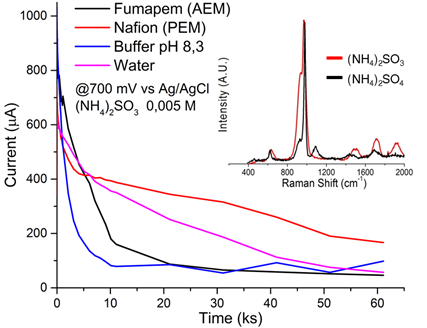
Figure 1. Electrooxidation kinetics of (NH4)2SO3.
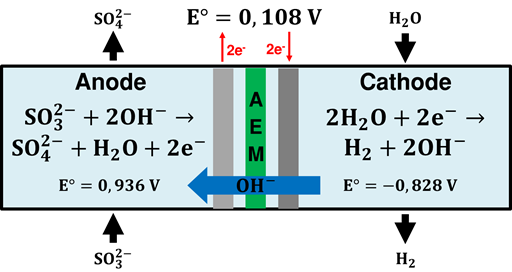
Figure 2. Conceptual principle of operation of the proposed electrochemical membrane reactor.
See more of this Group/Topical: Engineering Sciences and Fundamentals