
Zeolite and molecular sieve membranes with uniform and molecular-sized pores have excellent thermal, mechanical and chemical stabilities, and they have acquired potential applications as separation membranes and membrane catalysts. Besides, new application areas such as low-dielectric constant materials as well as anti-corrosion and anti-microbial coatings have been developed. The microstructure of zeolite and molecular sieve membranes including continuity, crystal orientation and thickness is of great significance in actual applications. However, it is still a challenging issue to manipulate the microstructure of zeolite membranes today.
The availability of continuous and well-defined AFI-type molecular sieve membranes (AFI membranes) would trigger their applications in innovative materials, microreactors and even microelectronic devices. Currently, the synthesis of AFI membranes has been focused on controlling the crystal orientation to achieve c-oriented channels perpendicular to the substrate surface, leading to the uniform residence time of involved molecules across diffusion channels. Up to present, there have been several routes for fabricating AFI arrays, films and membranes with a preferred orientation, including electric-field-driven assembly, geometry-confined growth, epitaxial growth, manipulation of synthesis conditions, microwave-enhanced growth, and induced growth at the substrate surface. It should be noted that the majority of AFI membranes reported to date were prepared on dense substrates such as silicon wafers or glass plates that would not be usable in separation and catalysis processes. Herein, we wish to manipulate the microstructure of AFI membranes in the in-situ crystallization. As such, the continuous and dense AFI membranes of single- and double-layered structure covered with either highly c-oriented hexagonal prisms or spherical agglomerates could be synthesized at will. There are not relevant reports yet.
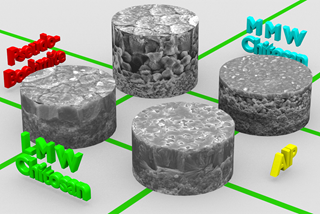
Figure 1. Schematic diagram of manipulating microstructure of AFI membranes using a thin chitosan layer of different molecular weight and different Al sources.
The existence of a thin chitosan layer ensures the formation of the continuous and well-intergrown AFI membrane of either highly c-oriented hexagonal prisms or highly-ordered crystal agglomerates. The coverage, denseness and orientation of all synthesized AFI membranes can be further optimized by adjusting the water content in the precursor solution. It has been demonstrated that the manipulation method established in this study is rather reliable with pretty high reproducibility.
Acknowledgements
This work was supported by the National Natural Science Foundation of China under a Key-Program Grant (21136008).
See more of this Group/Topical: Materials Engineering and Sciences Division