
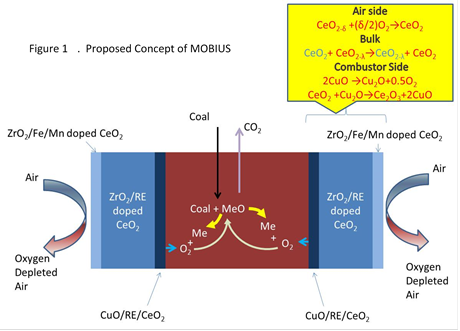
Combustion systems that circumvent or reduce the energy penalty for carbon dioxide separation are being vigorously investigated. The approach we have pioneered aims at synergistically combining the basic objectives of three such technologies, namely oxy-combustion, chemical looping and liquid anode DCFC, and transforming them into a single lean, thoroughly optimized single unit process - Mediated Oxycombustion with Integrated Uncoupled Oxygen Supply (MOBIUS) - through innovations that overcome the bottlenecks of each of these technologies such as a) controlled combustion in a molten oxide to overcome the issues related to high temperatures (oxycombustion); b) obviating the need of solids transport between reactors (CLC); and c) avoiding operational issues such as electrical resistance, ash separation, impurity tolerance etc (DCFC). The system (simplistic concept in Figure 1) synergistically combines the effective aspects of the above mentioned technologies along with innovations to overcome the hurdles faced by these technologies. In MOBIUS, the solid fuel is combusted in the absence of any nitrogen as in oxy-combustion. However, the carbon is not combusted directly by oxygen but by a metal oxide as in a CLC. Unlike conventional CLC, the MeOx and Me in the proposed Chemical Looping with Oxygen Uncoupling (CLOU) systems are in the liquid phase to improve the combustion rates and the mobility of the metal and the oxide. The metal is re-oxidized at the walls of the combustor with oxygen that is uncoupled from the reactor wall material. The individual subsystem studies will be presented and the integration of the various subsystems into a single reactor system will be discussed. Results from the subsystem will include the combustion rates, metal oxidation rates, oxygen uptake, transport and release rates under various conditions and composition of the membrane (during the membrane evaluation). The long terms operation of the integrated system will be demonstrated.
See more of this Group/Topical: Catalysis and Reaction Engineering Division