
Transition Metal Halides for Solid State Ammonia Storage; the CoX2-NH3 System (X=Cl-I)"
J.Alnawmasi, D.H.Gregory,*
* School of Chemistry, University of Glasgow, G12 8QQ, Glasgow. Tel: 0141 330 8128, duncan.gregory@glasgow.ac.uk
Keywords: ammonia, storage, cobalt, halides, reversible, solid state.
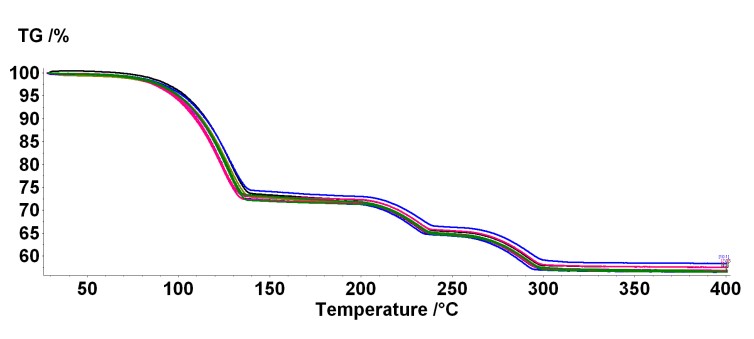
Abstract: Ammonia has attracted interest as a promising alternative fuel for internal combustion engines due to the fact that ammonia does not release carbon dioxide during combustion but equally NH3 could be used directly with fuel cells.[1] Storing ammonia in the form of metal ammines is the most notable way to overcome the challenges that are related to the use of NH3 in liquid form namely the toxicity and corrosive nature of ammonia.[2] Ammine complexes of light transition metal halides such as (Co, Ni) are very promising candidates because they exhibit high ammonia contents and they are relatively stable at room temperature.We have found that the CoX2 (X = Cl, Br, I) systems are interesting candidates and especially cobalt chloride as it possesses a NH3 capacity of 44 wt. % and desorption is completed by 330 °C. We are currently investigating the chemical and structural properties of the Co halides during both ammonia uptake (at ambient conditions) and ammonia release (upon heating). The ammoniated metal halides were studied by powder X-ray diffraction, FTIR and Raman spectroscopy. The crystal structure of the hexammine has been determined and the products of the first and second decomposition steps were confirmed as the respective diammine and monoammine. The thermal properties of the hexammine cobalt halides were studied by TPD(TG-DTA-MS) measurements. These measurements were intended to investigate their deammoniation properties and the products of decomposition. In addition, the cycling behaviour and the stability of the ammoniated cobalt chloride in air were also investigated (figure1).
Figure1. The cycling behaviour of CoCl2.6NH3.
References:
[1] Steele, R. B. Chemtech 1999, (August), 28.
[2] C. H. Christensen, R. Z. Sørensen, T. Johannessen, U. J. Quaade, K. Honkala, T. D. Elmøe, R. Køhler, J. K. Nørskov, J. Mater. Chem., 2005, 15, 4106–4108.
See more of this Group/Topical: Liaison Functions