
Extraction of carboxylic acid from aqueous solution by strong hydrogen bond basicity ionic liquids
Yinge Bai1,2, Ruiyi Yan1, Jianguo Qian1,2, Xiangping Zhang1*, Suojiang Zhang1*
1Beijing Key Laboratory of Ionic Liquids Clean Process, State Key Laboratory of Multiphase Complex Systems, Key Laboratory of Green Process and Engineering, Institute of Process Engineering, Chinese Academy of Sciences, 100190, Beijing, P. R. China
2School of Chemistry and Chemical Engineering, University of Chinese Academy of Sciences, 100190, Beijing, P. R. China
*corresponding author: xpzhang@ipe.ac.cn (X. Zhang), sjzhang@ipe.ac.cn (S. Zhang)
Carboxylic acids are important raw material for food, chemical and pharmaceutical industries [1]. The recovery of carboxylic acids from dilute aqueous solutions (< 10 wt%) is commonly encountered in petrochemical process and fermentation processes [2, 3]. For the liquid-liquid extraction, which is the commonly method used to separate carboxylic acid from aqueous solutions, the core task is to attain a green and highly efficient extractant. In this work, methacrylic acid (MAA) was employed as a model carboxylic acid. MAA in dilute aqueous solution (1 wt%) was recovered by quaternary ammonium salt ionic liquids (ILs) with strong hydrogen bond basicity (HBB). The partition coefficients of MAA were used to evaluate the extraction ability of ILs (Fig. 1). The extraction parameters such as extraction time, extraction temperature, concentrations of MAA in feed solution, concentration of IL were studied (Fig. 2). An internal mechanism of the extraction of MAA by ILs was revealed by combining solvatochromic study and quantum chemical calculations (Fig. 3). The results show that the ILs with strong hydrogen bond basicity has the high partition coefficient of MAA, which provides guidance for ILs molecular design to attain the high efficient extractive separation of carboxylic acids from dilute aqueous solution.
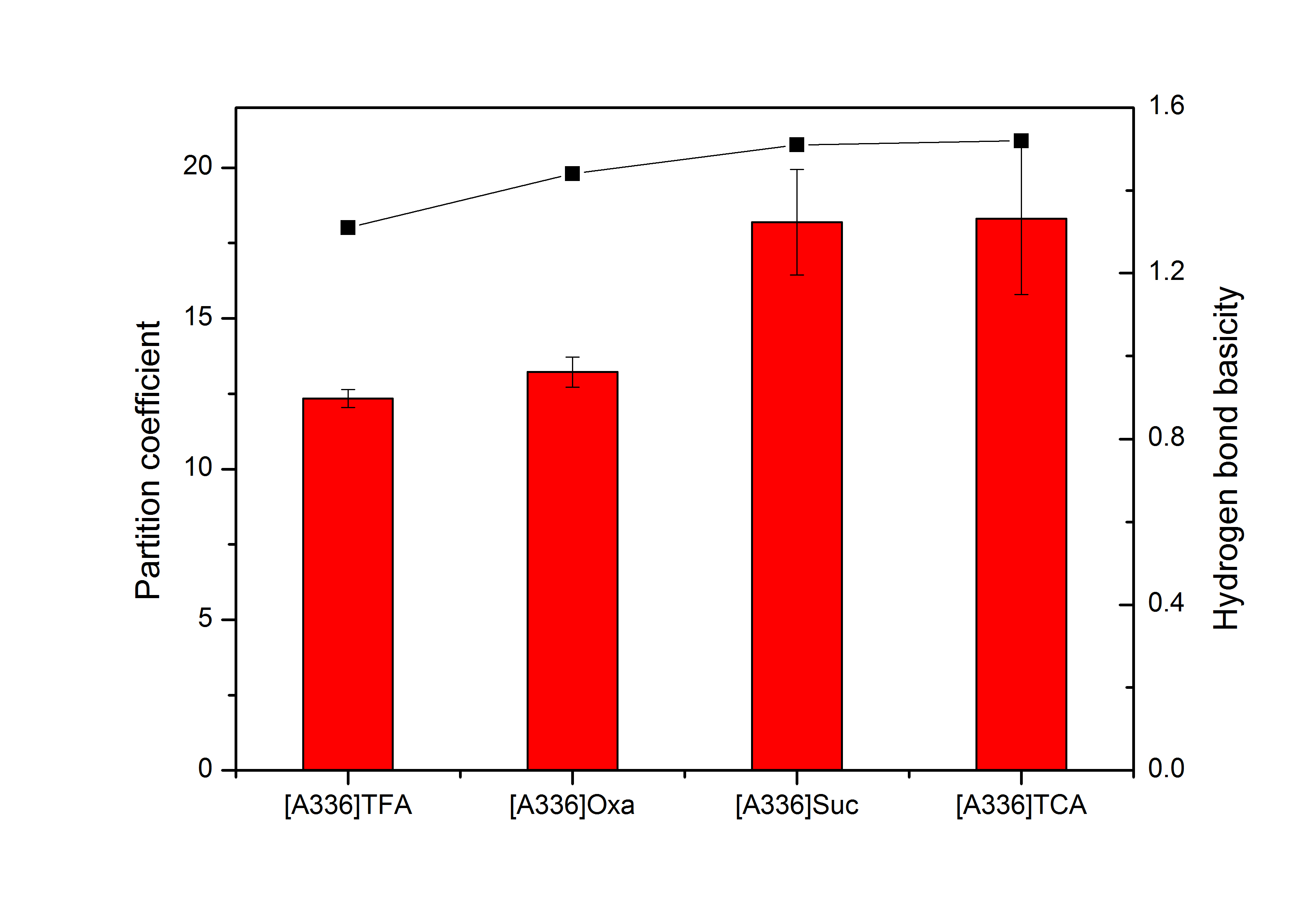
Figure 1. The partition coefficients of MAA between IL phase and water phase (Columns); the hydrogen bond basicity of [A336]TFA, [A336]Oxa, [A336]Suc and [A336]TCA (Line).
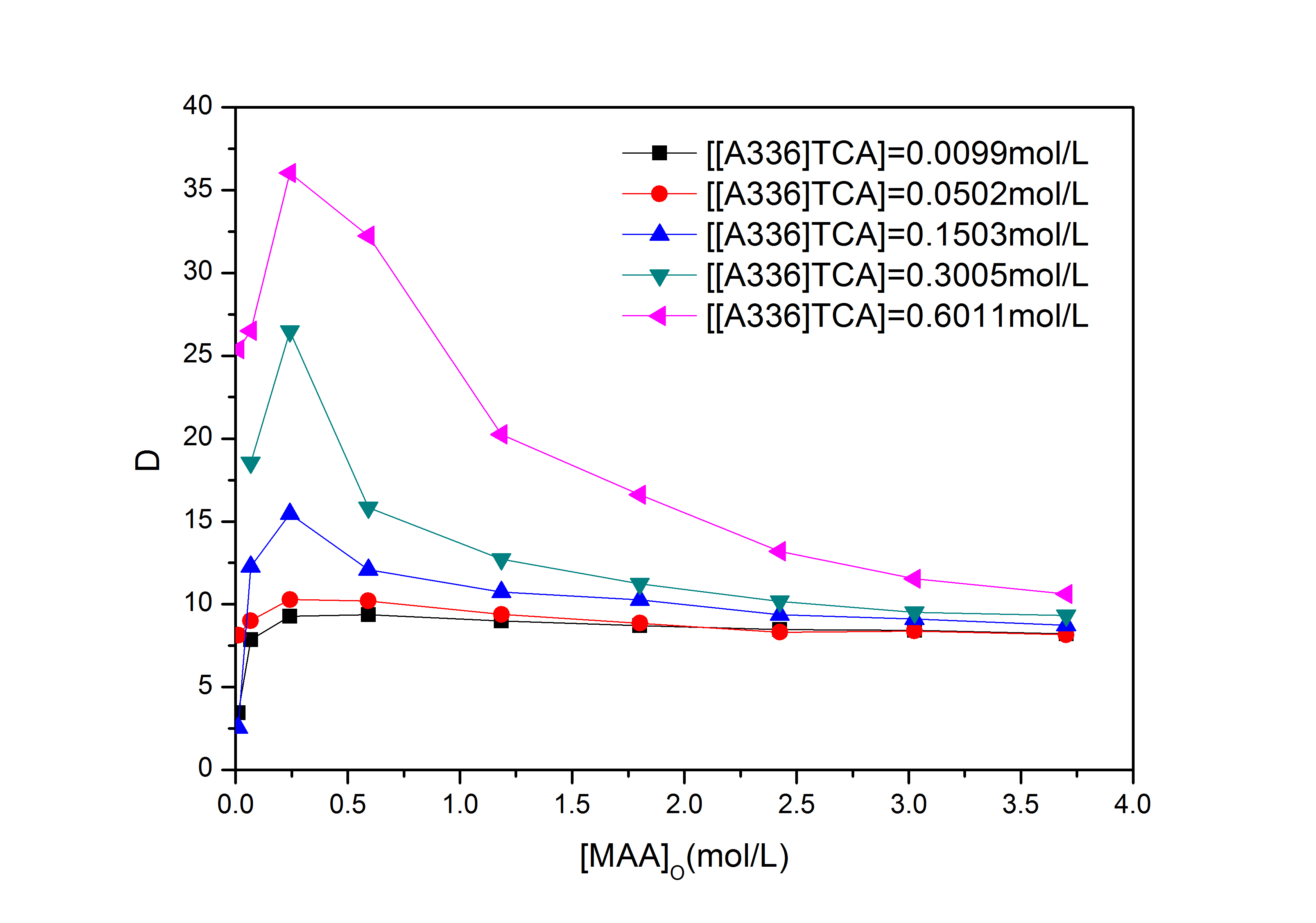
Figure 2. the partition coefficients of MAA for [A336]TCA at different concentration of MAA feed solution.
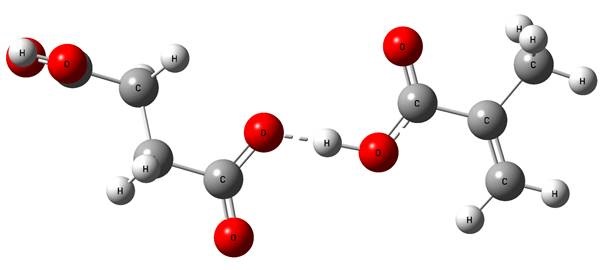
Figure 3. optimized structure of Suc-MAA complex at B3LYP/6-31++G(d,p) level.
[1] M.D. Waghmare, K.L. Wasewar, S.S. Sonawane, et al, Separation and Purification Technology, 120 (2013) 296-303.
[2] H. Uslu, D. Datta, H.S. Bamufleh, Industrial & Engineering Chemistry Research, 55 (2016) 3659-3667.
[3] A. Bekatorou, A. Dima, P. Tsafrakidou, et al, Bioresource technology, 220 (2016) 34-37.
See more of this Group/Topical: Topical Conference: Innovations of Green Process Engineering for Sustainable Energy and Environment