
Syngas i.e. a mixture of H2 and CO is the feedstock for the production of liquid transportation fuels such as gasoline, diesel, and jet fuel via the Fischer Tropsch process. Solar driven thermochemical splitting of H2O and CO2 using metal oxide based redox reactions is considered as a promising new technology for the production of syngas, bypassing the utilization of fossil fuels. As only (atmospheric) CO2 and H2O is consumed, the syngas produced can be considered a renewable product. Among the various metal oxides investigated in past, nonvolatile metal oxides such as ferrite, ceria, and perovskite based redox materials are considered as potential materials due to their excellent redox reactivity and high fuel production capacity. In recent years, most of the studies were published in terms of the water splitting ability of these nonvolatile metal oxides. Therefore, in this investigation the ability of these nonvolatile materials towards CO2 splitting and combined splitting of H2O and CO2 is studied. These non-volatile metal oxides were prepared via suitable synthesis approaches such as sol-gel, co-precipitation, combustion synthesis, etc., and tested towards the H2O/CO2 splitting reaction using a high temperature TGA, and packed bed reactor set-up. The pre-reaction and post-reaction characterization of the non-volatile metal oxides was also performed using different analytical methods such as powder XRD, BET surface area analyzer, scanning and transmission electron microscopy, and others. Obtained experimental results will be presented and compared with previously published literature.
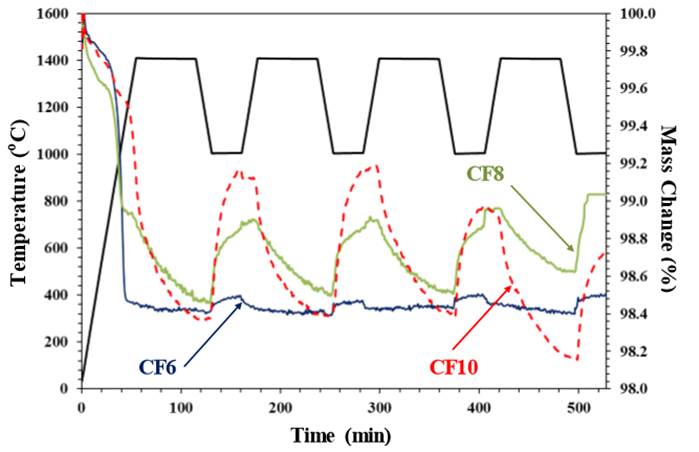
Figure 1: TGA of CO2-splitting experiments performed using sol-gel derived Co-ferrite.
See more of this Group/Topical: Topical Conference: Innovations of Green Process Engineering for Sustainable Energy and Environment