
LOW-CARBON POWER GENERATION WITH METHANE FUELED SOFCs
Introduction
Natural gas fueled power generation systems, such as large scale thermal power plants and solid oxide fuel cells (SOFCs), are promising technologies with high electrical efficiencies of higher than 50% (LHV), and give high temperature exhaust heats1. While the CO2 emission coefficient of the electrical power with a natural gas fuel will decrease with increasing the electrical efficiency, it remains to have non-negligible value even at the considerably high efficiency. Methane is a main component of natural gas. Recently thermal decomposition and catalytic thermal decomposition of methane have attracted attentions as advanced technologies producing COx-free hydrogen, which are simple ways to reduce the CO2 emission caused by methane fuel2.
Abstract
As a fuel of the SOFCs, methane is typically mixed with steam and reformed to hydrogen and carbon monoxide by steam-reforming reaction before supplied to SOFC stacks. The thermal energy needed for the endothermic steam-reforming reaction is supplied by the heat generated as a co-product accompanied by power generation from SOFCs. Methane fueled SOFCs have high electrical efficiencies, however, they accompany CO2 emission of 0.198 η-1 kg-CO2 / kWh, where η is electrical efficiency. While the CO2 emission coefficient decreases with increasing the electrical efficiency, the reduction of the coefficient has a lower limit of 0.198 kg-CO2 / kWh by means of merely increasing the electrical efficiency.
We have conducted feasibility study of the innovative low-carbon methane-fueled power generation, in which methane was partly decomposed to form hydrogen and solid carbon before power generation, and a mixture of the generated hydrogen and undecomposed methane was used as a fuel. Figure 1 shows the schematic illustration of the system designed for the low-carbon power generation with the methane fueled SOFC. In the SOFC system, partially replacing the steam-reforming methane fuel by the decomposed methane fuel was found to result in a lower CO2 emission coefficient of the electrical power generated in the system without a serious increase of the thermal energy needed for the fuel processing. The coefficient had strong dependence on the ratio of the decomposition to the steam-reforming.
The solid carbon deposited by the decomposition will be able to be utilized as carbon materials such as carbon black and carbon fiber, or source material of syngas which leads to liquid chemicals. Thus by using this system, carbon fixation in methane fueled power generation will be materialized through forming the co-products such as solid carbon, syngas, and/or liquid organic compounds.
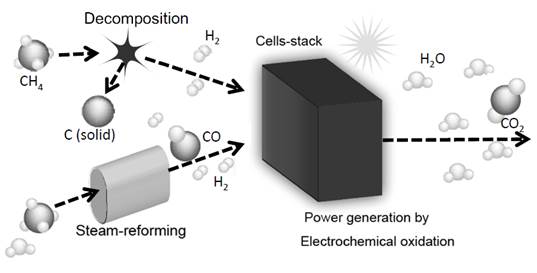
Fig. 1. Schematics of the system used in this study,
Acknowledgement
This research is supported by The Japan Science and Technology Agency (JST) through its “Center of Innovation Science and Technology-based Radical Innovation and Entrepreneurship Program (COI Program).
References
1. Yoshio Matsuzaki, Yuya Tachikawa, Takaaki Somekawa, Toru Hatae, Hiroshige Matsumoto, Shunsuke Taniguchi, Kazunari Sasaki (2015)., “Effect of proton-conduction in electrolyte on electric efficiency of multi-stage solid oxide fuel cells”, Sci. Rep. 5, 12640, pp 1-10
2. Hazzim F. Abbas, W.M.A. Wan Daud (2010), “Hydrogen production by methane decomposition: A review”, Int. J. Hydrog. Energy 35 (3) pp. 1160-1190
See more of this Group/Topical: Transport and Energy Processes