Title: |
Imidazole quartet -I4- water and proton dipolar channels |
Authors & affiliations: |
Y.-M. Legrand, Y. Le Duc, M. Michau, A. Gilles, V. Gence, A. van der Lee, S. Tingry, M. Barboiu Adaptative Supramolecular Nanosystems, Institut Européen des Membranes -UMR CNRS 5635, Place Eugène Bataillon, CC 047, F-34095 Montpellier, France. E-mail: barboiu@iemm.univ-montp2.fr
|
Abstract: (Your abstract must use Normal style and must fit in this box. The abstract should be written in English and should be around 1000 words long, i.e., 2 pages excluding title, authors & affiliations, keywords and references. Authors are encouraged to show important figures/tables etc in the abstract so as to make a full presentation.) |
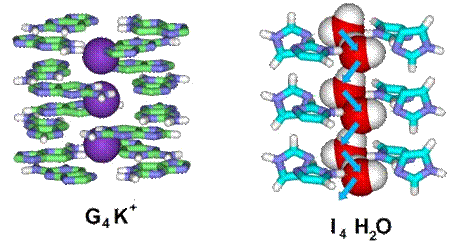
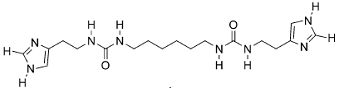
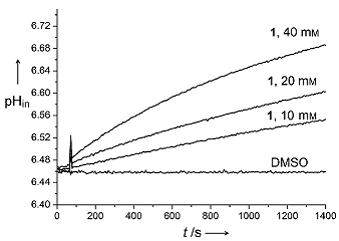
The complementarity of shape, dimensions and electrostatic profiles between interactional surfaces of biomolecules are considered to be major determinants of their functions. Interfacial or encapsulated water molecules, necessarily present in the contact space, are of crucial relevance for many biological scenarios like: biomolecular recognition and self-assembly, protein structure and activity, DNA conformation and recognition, proton(ion) and water-channel selectivity, etc. Regarding the basic principles of ion-transport along protein channels, they are related to large water-filled cavities in which the dipolar structure of the proteins help to overcome the high energy barrier of the translocation of the ions toward the selectivity filter. Synthetic robust counterparts have been developed with the hope of reproducing the complicate biological machinery. Electrostatic asymmetry, push and pull rigid rods or polarizable materials have been used to generate dipolar ion-pumping as observed with natural protein systems. Intuitively, interactions between chiral asymmetric surfaces and water might imply the generation of oriented dipolar surface-bonded water clusters. Within this context, it has been shown that chiral interactional surfaces are determinant for asymmetric tissue morphogenesis. Chiral imidazole-quartet nanotubes in which confined water molecules present a unique dipolar orientation can preserve the electrochemical potential along the channel (Fig.1). Figure 1. Crystal structures of a Guanidinium quartet—K+ channel and Imidazole quartet—water channels Water transport across bilayer membranes incorporating ligand 1 has been performed using dynamic light scattering (DLS) experiments and experiments monitoring changes in fluorescence intensity ratio with vesicle internal pH by a pH-gradient (Fig.2). Figure 2. Transport of protons as determined in an osmotic gradient assay using EYPL liposomes (100 nm) containing HPTS dye (0.1 mm) Transport of protons along water wires of monodipolar orientation may occur through a Grothuss mechanism. Strong translational and orientational control of water molecules, involving dipole conservation along the channel has been evidence. Further progress and mechanistic simplicity for ionic can be imagined by using dipolar water wires to control dipolar ion-pumping along chiral channels. Herein, nanosized pores with internal chiral surfaces have been used to generate electrostatic dipolar profiles of oriented water wires preserving electrochemical potential conservation along the channel in which protons and ions are envisioned to diffuse along the dipolar hydrophilic pathways. These systems has provided excellent reasons to consider that chirality and water induced polarization generating dipolar ion-pumping in ion-channels may in principle to be strongly associated. 1. Y. Le Duc, M. Michau, A. Gilles, V. Gence, Y.-M. Legrand, A. van der Lee, S. Tingry, M. Barboiu, Angew. Chem. Int. Ed. 2011, 50(48), 11366-11372. 2. M. Barboiu, Chem. Commun. 2010, 46, 7466-7476. 3. A. Cazacu, Y.M. Legrand, A. Pasc, G. Nasr, A. van der Lee, M. Barboiu, Proc. Natl. Acad. Sci., 2009, 106, 8117-8122.
|